UPSC Current Affairs
Kailash Mansarovar Yatra: Routes, Location and Significance
The Kailash Mansarovar Yatra is a major pilgrimage to Mount Kailash and Lake Manasarovar in the Tibet Autonomous Region of China. Its religious importance, difficult Himalayan routes and dependence on India-China coordination make it relevant to culture, geography and international relations.
VRAuthor Desk
3 min read
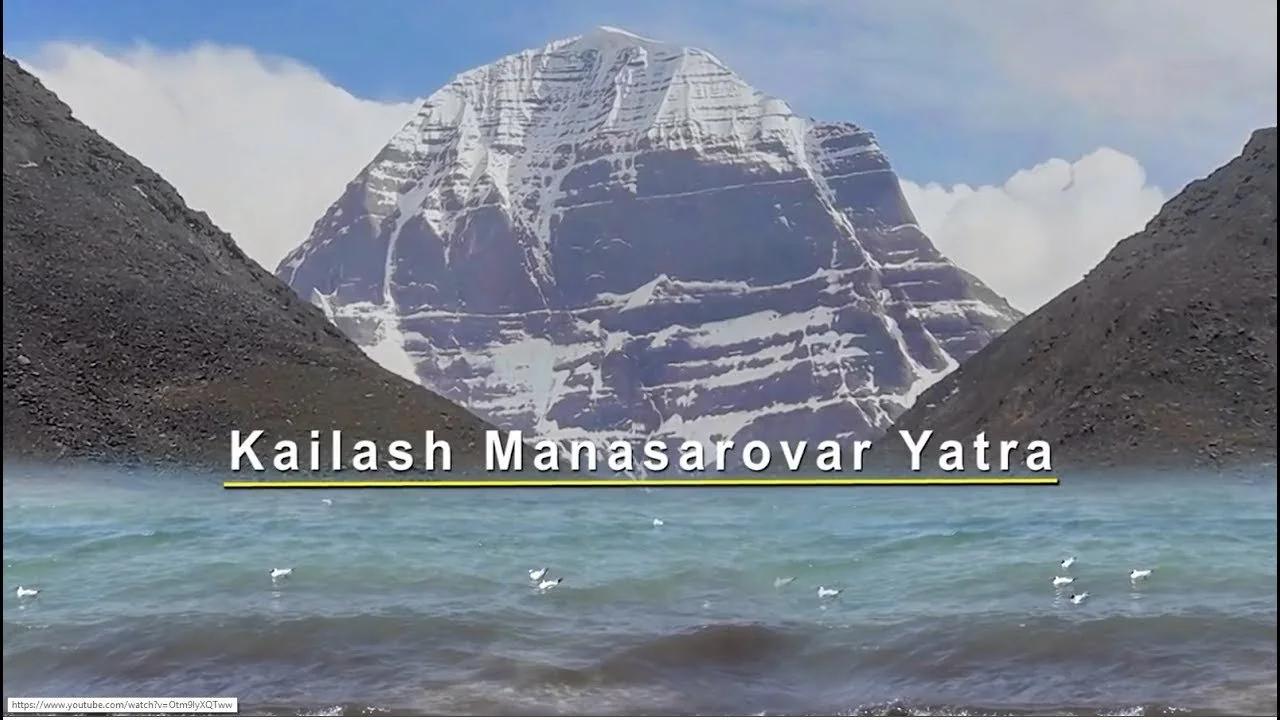
In brief: The Kailash Mansarovar Yatra is a major pilgrimage to Mount Kailash and Lake Manasarovar in the Tibet Autonomous Region of China. Its religious importance, difficult Himalayan routes and dependence on India-China coordination make it relevant to culture, geography and international relations.
The Kailash Mansarovar Yatra is a major pilgrimage to Mount Kailash and Lake Manasarovar in the Tibet Autonomous Region of China. Its religious importance, difficult Himalayan routes and dependence on India-China coordination make it relevant to culture, geography and international relations.
Why in News?
- Pilgrims undertaking the Kailash Mansarovar Yatra were not permitted to take a holy dip in Lake Mansarovar, as Chinese authorities continued the ban on bathing in the lake.
- Pilgrims also highlighted the shortage of toilet facilities along the Kailash Parikrama
KEY HIGHLIGHTS
Ban on Holy Dip in Lake Mansarovar - Chinese authorities continued the prohibition on bathing in Lake Mansarovar.
- The restriction has been in place since 2018 to prevent pollution of the lake.
- Chinese security personnel and guides maintained strict vigil along the lake, preventing pilgrims from entering the water.
Alternative Arrangement for Pilgrims - Pilgrims were allowed to:
- Draw water from the lake using buckets.
- Bathe at a short distance from the lake.
- This arrangement enabled pilgrims to perform their religious rituals while complying with Chinese regulations.
Shortage of Toilet Facilities - Pilgrims reported inadequate toilet facilities along the Kailash Parikrama route, particularly at:
- The shortage caused significant inconvenience, especially for women pilgrims.
Demand Raised by Pilgrims - Pilgrims urged the Government of India to take up the issue with the Chinese authorities.
- They requested the provision of:
- Adequate toilet facilities.
- Clean sanitation facilities.
- Better basic amenities along the parikrama route.
Facilities on the Indian Side - Pilgrims stated that arrangements made by the Kumaon Mandal Vikas Nigam (KMVN) on the Indian side were satisfactory.
ABOUT KAILASH MANSAROVAR YATRA
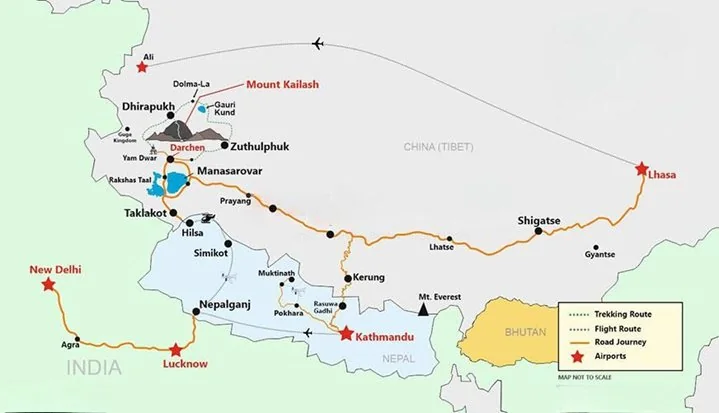
Route - The pilgrimage begins from Delhi.
- Total distance: Approximately 1,738 km.
- Road journey: Approximately 1,690 km.
- Trekking: Approximately 38 km.
Recent Improvement - Before 2019, pilgrims had to trek around 60 km.
- Construction of roads on both the Indian and Chinese sides has reduced the trekking distance to 38 km, making the pilgrimage comparatively easier.
SIGNIFICANCE
- Kailash Mansarovar Yatra is one of the world's most significant religious pilgrimages.
- The issue highlights the importance of:
- Providing adequate basic amenities for pilgrims.
- Ensuring better sanitation facilities along the pilgrimage route.
- Facilitating religious practices while complying with local regulations.
- The yatra includes visits to Mount Kailash and Mansarovar Lake in Tibet.
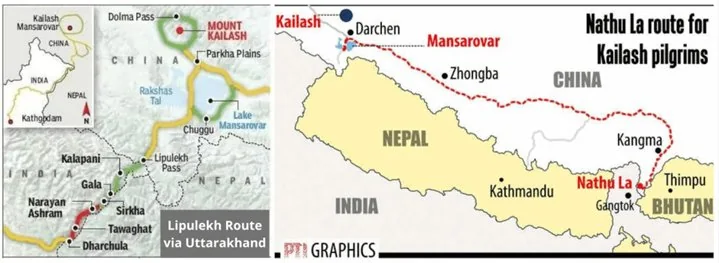
- The Ministry of External Affairs, India organises the Yatra during June to September through two different routes:
- Lipulekh Pass (Uttarakhand)
- Nathu La Pass (Sikkim).
- It is open to eligible Indian citizens holding valid Indian passports.
- The Yatra is organised with the support from state governments of Uttarakhand, Delhi, and Sikkim; and cooperation of Indo Tibetan Border Police.
- Ministry of External Affairs (MEA) does not provide any subsidy or financial assistance to Yatris.
LOCATION
- Mount Kailash is located in the Kailash Range (forms part of the Trans Himalaya) in Tibet.
- Lake Manasarovar is a high altitude freshwater lake near Mount Kailash in Tibet.
- Four rivers emerge from the Kailash-Mansarovar region: Sutlej, Brahmaputra, Indus and Kamali (Karnali).
RELIGIOUS SIGNIFICANCE OF KAILASH MANSAROVAR YATRA
- Hindus believe Mount Kailash is the abode of Lord Shiva. Mansarovar lake is said to be one of Goddess Sati’s 51 Shakti Peethas.
- Tibetans, Buddhists and Jains revere it as the ‘Stairway to heaven’.
- Jains hold that Rishabhanatha, the first Tirthankar (Jains’ spiritual preacher), found enlightenment at Mount Kailash.
- The Mount is referred to in Jain literature as “Ashtapada,” or “the eight steps,” which can pave the way to enlightenment and spiritual advancement.
Why This Topic Matters for UPSC
- Prelims: Revise definitions, institutions, locations, reports and factual features connected with Kailash Mansarovar Yatra: Routes, Location and Significance.
- Mains: Link the topic with Art and Culture, Geography, International Relations and organise the answer under background, significance, challenges and way forward.
- Interview: Explain the issue in balanced language and distinguish verified facts from opinion.
Key Takeaway
The Kailash Mansarovar Yatra is a major pilgrimage to Mount Kailash and Lake Manasarovar in the Tibet Autonomous Region of China. Its religious importance, difficult Himalayan routes and dependence on India-China coordination make it relevant to culture, geography and international relations.
- Prelims: Revise the key facts and terminology.
- Mains: Connect the topic with Art and Culture, Geography, International Relations.
- Revision: Prepare notes under background, features, significance, challenges and way forward.
Test your understanding
Questions from this article
Prelims practiceWith reference to Kailash Mansarovar Yatra, consider the following statements:
- The yatra includes visits to Mount Kailash and Mansarovar Lake in Tibet.
- The Ministry of External Affairs, India organises the Yatra during June to September through two different routes: Lipulekh Pass (Uttarakhand) Nathu La Pass (Sikkim).
- Lipulekh Pass (Uttarakhand)
Which of the statements given above are correct?
- 1 and 2 only
- 2 and 3 only
- 1 and 3 only
- 1, 2 and 3
View answer
Answer: (d) 1, 2 and 3. All three statements are drawn from the article.
Mains practiceDiscuss the background, key issues and significance of Kailash Mansarovar Yatra for India.
Answer in 250 words.
View answer approach
- LOCATION
- RELIGIOUS SIGNIFICANCE OF KAILASH MANSAROVAR YATRA
- Background and context
- Key facts and institutional framework
- Significance and way forward
Frequently asked questionsFrequently asked questions
What is Kailash Mansarovar Yatra?
The Kailash Mansarovar Yatra is a major pilgrimage to Mount Kailash and Lake Manasarovar in the Tibet Autonomous Region of China. Its religious importance, difficult Himalayan routes and dependence on India-China coordination make it relevant to culture, geography and international relations.
Why is Kailash Mansarovar Yatra important for UPSC?
It connects current developments with Art and Culture, Geography, International Relations and supports factual revision as well as analytical answer writing.
How should aspirants prepare Kailash Mansarovar Yatra?
Prepare a short definition, key facts, institutional or legal framework, significance, challenges and a balanced way forward. Revise the specific developments and examples explained in the article.