UPSC Current Affairs
Juneteenth
Juneteenth, a portmanteau of “June” and “Nineteenth,” is the oldest nationally celebrated commemoration of the ending of slavery in the United States. Observed on June 19 every year, it marks a pivotal moment in American history. THE ROAD TO JUNETEENTH On January 1, 1863, President Abraham Lincoln issued the Emancipation Proclamation, declaring the freedom of all enslaved people within the rebellious states.
VRAuthor Desk
2 min read
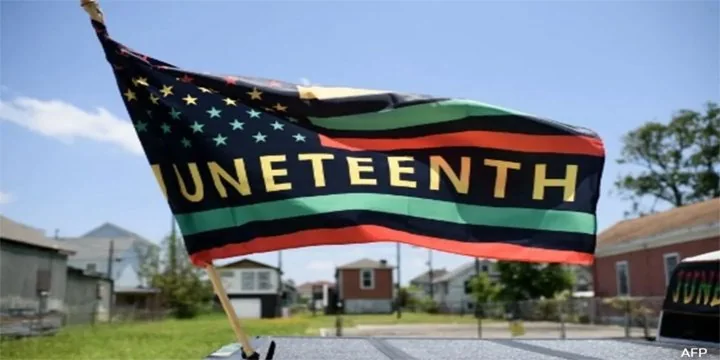
Juneteenth, a portmanteau of “June” and “Nineteenth,” is the oldest nationally celebrated commemoration of the ending of slavery in the United States. Observed on June 19 every year, it marks a pivotal moment in American history. THE ROAD TO JUNETEENTH On January 1, 1863, President Abraham Lincoln issued the Emancipation Proclamation, declaring the freedom of all enslaved people within the rebellious states.
Juneteenth, a portmanteau of
“June” and “Nineteenth,” is the
oldest nationally celebrated commemoration of the ending of slavery in the United States.
WHEN IS IT OBSERVED?
Observed on June 19 every year, it marks a pivotal moment in American history.
THE ROAD TO JUNETEENTH
On
January 1, 1863, President
Abraham Lincoln issued the Emancipation Proclamation, declaring the freedom of all enslaved people within the rebellious states.
THE IMPACT OF THE PROCLAMATION:
However, this proclamation
did not immediately free all enslaved individuals, as many
slave owners in Confederate territories — Texas, Arkansas, Louisiana, Tennessee, Mississippi, Alabama, Georgia, Florida, South Carolina, North Carolina and Virginia —
refused to comply.
THE EVENT IN 1865
It wasn’t until
June 19, 1865, that the
last enslaved African Americans in the Confederate states were freed.
Major General Gordon Granger arrived in Galveston, Texas, and issued
General Order
No. 3, announcing the end of slavery in Texas and proclaiming that all enslaved people were free.
This date, more than two years after the Emancipation Proclamation, came to be known as Juneteenth.
THE JOURNEY TO RECOGNITION OF JUNETEENTH
- The modern movement for greater recognition of Juneteenth began in 1994, when advocates from various groups gathered to push for its national observance.
- This momentum continued to grow, particularly in the context of racial justice movements such the Black Lives Matter (which began in 2013) of the 21st century.
- On June 17, 2021, President Joe Biden signed the Juneteenth National Independence Day Act into law, making Juneteenth a federal holiday.
- Despite its federal status, only 18 states have passed laws to fund Juneteenth as a paid state holiday as of 2024.
- Juneteenth became the first new federal holiday since Martin Luther King Jr Day was established in 1983.
- Prelims: Key facts, institutions, locations and terminology in the article.
- Mains: Connect the topic with Polity & Governance.
- Revision: Use the article headings to prepare concise notes and answer-writing points.
Test your understanding
Questions from this article
Prelims practiceWith reference to Juneteenth, consider the following statements:
- The modern movement for greater recognition of Juneteenth began in 1994, when advocates from various groups gathered to push for its national observance.
- This momentum continued to grow, particularly in the context of racial justice movements such the Black Lives Matter (which began in 2013) of the 21st century.
- On June 17, 2021, President Joe Biden signed the Juneteenth National Independence Day Act into law, making Juneteenth a federal holiday. Despite its federal status, only 18 states have passed laws to fund Juneteenth as a…
Which of the statements given above are correct?
- 1 and 2 only
- 2 and 3 only
- 1 and 3 only
- 1, 2 and 3
View answer
Answer: (d) 1, 2 and 3. All three statements are drawn from the article.
Mains practiceDiscuss the background, key issues and significance of Juneteenth for India.
Answer in 250 words.
View answer approach
- THE JOURNEY TO RECOGNITION OF JUNETEENTH
- Background and context
- Key facts and institutional framework
- Significance and way forward
Frequently asked questionsFrequently asked questions
Why is Juneteenth in the news?
Juneteenth, a portmanteau of “June” and “Nineteenth,” is the oldest nationally celebrated commemoration of the ending of slavery in the United States. Observed on June 19 every year, it marks a pivotal moment in American history.
What are the key facts about Juneteenth?
THE ROAD TO JUNETEENTH On January 1, 1863, President Abraham Lincoln issued the Emancipation Proclamation, declaring the freedom of all enslaved people within the rebellious states. THE IMPACT OF THE PROCLAMATION: However, this proclamation did not immediately free all enslaved individuals, as many slave owners in Confederate territories — Texas, Arkansas, Louisiana, Tennessee, Mississippi, Alabama, Georgia, Florida, South Carolina, North… THE EVENT IN 1865 It wasn’t until June 19, 1865, that the last enslaved African Americans in the Confederate states were freed.
Why is Juneteenth important for UPSC preparation?
The topic connects current developments with Polity & Governance and is relevant for both objective revision and analytical answer writing.