7.1-magnitude earthquake shook southern Japan on Thursday (August 8), the country’s meteorological agency issued its
first-ever “megaquake advisory”.
The warning said the
likelihood of strong shaking and large tsunamis is higher than normal on the
Nankai Trough,
a subduction zone (a region where tectonic plates collide with each other, and the heavier one slides under another) along Japan’s southwest Pacific coast.
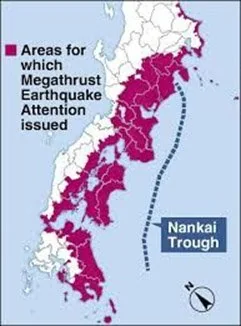 WHAT IS A MEGAQUAKE?
A megaquake is a term used to describe
an earthquake of exceptional destructive power, typically with a magnitude of 8 or greater.
These seismic events are
capable of causing widespread devastation, including massive structural damage, tsunamis, and loss of life.
Key characteristics of a megaquake:
- Magnitude: Exceeds 8 on the Richter scale.
- Destructive power: Can cause catastrophic damage over a large area.
- Tsunami potential: Often triggers massive and destructive waves.
ABOUT THE NANKAI TROUGH
The
Nankai Trough is an
underwater subduction zone (nearly 900 km long) where
the Eurasian Plate collides with the Philippine Sea Plate, pushing the latter under the former and into the Earth’s mantle.
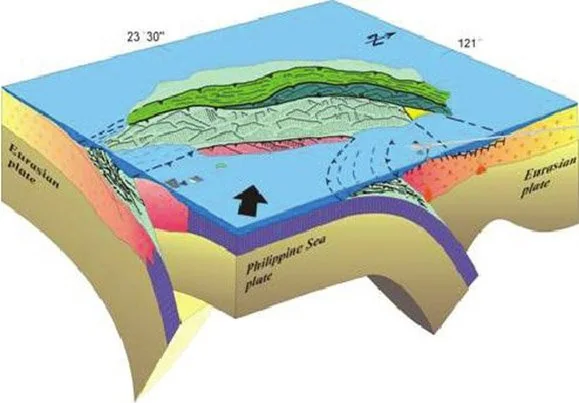
This
accumulates tectonic stress which can cause a megaquake — an earthquake with a magnitude larger than 8.
HAS NANKAI TROUGH PRODUCED MEGAQUAKES EARLIER?
The trough has
produced large earthquakes roughly every 100 to 150 years, according to the 2023 study,
‘High probability of successive occurrence of Nankai megathrust earthquakes’, published in the journal Nature.
These tremors usually
come in pairs, with
the second often rupturing in the subsequent two years — the
most recent “twin” earthquakes took place in
1944 and 1946.
POSSIBLE IMPACT OF THE MEGAQUAKE
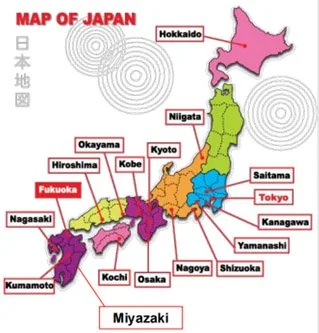
- Such a megaquake could send tremors to areas from central Shizuoka — about 150 km south of Tokyo — to southwestern Miyazaki.
- Tsunami waves of up to 98 feet may reach Japan’s Pacific coasts within minutes.
- A 2013 government report found that a major Nankai Trough earthquake could impact an area that covers about a third of Japan and where about half the country’s population of more than 120 million people lives.
- The economic damage due to the disaster could go up to $1.50 trillion, or more than a third of Japan’s annual gross domestic product.
CAN EARTHQUAKES BE PREDICTED?
No. An
accurate prediction of an earthquake needs a precursory signal from within the earth, indicating a big quake is on the way. The
signal must also occur only before large earthquakes so that
it does not indicate every small movement within the earth’s surface. Currently,
there is no equipment to find such precursors.
THEN HOW DID JAPAN PREDICT IT?
Thursday’s advisory by Japan’s meteorological agency was
just a warning not a prediction — it had nothing to do with science, Robert Geller, professor emeritus of seismology at the University of Tokyo, told the BBC.
The advisory
asked residents to prepare, review evacuation routes, and consider potential future warnings.
Test your understanding
Questions from this article
Prelims practiceWith reference to Japan's Advisory For Megaquake, consider the following statements:
- Magnitude: Exceeds 8 on the Richter scale.
- Destructive power: Can cause catastrophic damage over a large area.
- Tsunami potential: Often triggers massive and destructive waves.
Which of the statements given above are correct?
- 1 and 2 only
- 2 and 3 only
- 1 and 3 only
- 1, 2 and 3
View answer
Answer: (d) 1, 2 and 3. All three statements are drawn from the article.
Mains practiceDiscuss the background, key issues and significance of Japan's Advisory For Megaquake for India.
Answer in 250 words.
View answer approach
- POSSIBLE IMPACT OF THE MEGAQUAKE
- CAN EARTHQUAKES BE PREDICTED?
- Background and context
- Key facts and institutional framework
- Significance and way forward
Frequently asked questionsFrequently asked questions
Why is Japan'S Advisory For Megaquake in the news?
7.1-magnitude earthquake shook southern Japan on Thursday (August 8), the country’s meteorological agency issued its first-ever “megaquake advisory”. The warning said the likelihood of strong shaking and large tsunamis is higher than normal on the Nankai Trough, a subduction zone (a region where tectonic plates collide with each other, and the heavier one slides under another) along Japan’s southwest…
What are the key facts about Japan'S Advisory For Megaquake?
A megaquake is a term used to describe an earthquake of exceptional destructive power, typically with a magnitude of 8 or greater. These seismic events are capable of causing widespread devastation, including massive structural damage, tsunamis, and loss of life. Key characteristics of a megaquake: Magnitude: Exceeds 8 on the Richter scale.
Why is Japan'S Advisory For Megaquake important for UPSC preparation?
The topic connects current developments with Environment, Economy, Defence and is relevant for both objective revision and analytical answer writing.