UPSC Current Affairs
INTENSIVE AGRICULTURE
Recently, United Nations Food and Agriculture Organization (FAO) published report which focuses on the staggering hidden costs of our global agrifood systems,surpassing an astonishing $10 trillion. Intensive agriculture is a method of farming that uses large amounts of labor and investment to increase the yield of the land. It is “intensive” in that it concentrates high levels of technology, machinery, seeds, animals, and supportive inputs (including water and chemical fertilizers, herbicides, and pesticides) on relatively small areas of land.
VRAuthor Desk
4 min read
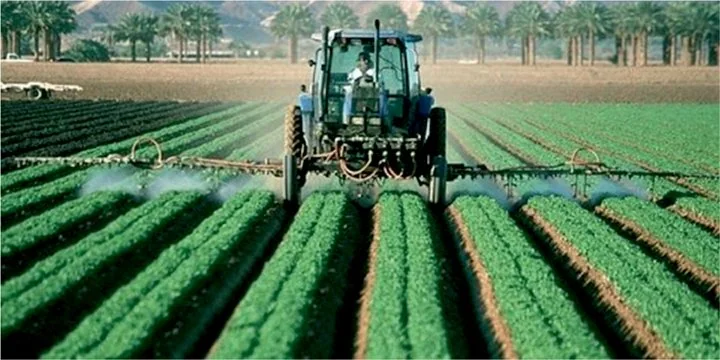
Recently, United Nations Food and Agriculture Organization (FAO) published report which focuses on the staggering hidden costs of our global agrifood systems,surpassing an astonishing $10 trillion. Intensive agriculture is a method of farming that uses large amounts of labor and investment to increase the yield of the land. It is “intensive” in that it concentrates high levels of technology, machinery, seeds, animals, and supportive inputs (including water and chemical fertilizers, herbicides, and pesticides) on relatively small areas of land.
WHY IN NEWS?
- Recently, United Nations Food and Agriculture Organization (FAO) published report which focuses on the staggering hidden costs of our global agrifood systems,surpassing an astonishing $10 trillion.
WHAT IS INTENSIVE AGRICULTURE?
- Intensive agriculture is a method of farming that uses large amounts of labor and investment to increase the yield of the land.
- It is “intensive” in that it concentrates high levels of technology, machinery, seeds, animals, and supportive inputs (including water and chemical fertilizers, herbicides, and pesticides) on relatively small areas of land.
- In an industrialized society this typically means the use of pesticides, fertilizers, and other chemicals that boost yield, and the acquisition and use of machinery to aid planting, chemical application, and picking.
- In theory, this reduces the amount of land needed for an economically viable farm to grow crops or raise animals.
- The system of intensive agriculture, including crop production, largely supports industrial animal farming.
- In the US, more than two-thirds of the calories produced by intensive crop agriculture (67%, including all the soy grown in the Midwest) are used for animal feed.
- Just 27% of crop calories are consumed by humans, and the remainder goes mainly to biofuels like ethanol.
- Worldwide, only 55% of the crop calories produced by intensive agriculture are eaten by humans.
CHARACERSTICS OF INENSIVE AGRICULTURE:
IN CROP AGRICULTURE
- Monocropping of commodity crops, many of them animal feed crops
- High use of synthetic fertilizers, herbicides, pesticides, and fungicides
- Genetic modification of plant species through biotechnology to enable crops to withstand the application of highly toxic herbicides and pesticides
- Limited or zero crop rotation
- Lack of attention to building soil health and soil carbon sequestration
- All-season production
- Intensive use of chemical fertilizers, pesticides, and insecticides
- Vertical integration of most production elements, enabling full control of inputs, outputs, marketing, and pricing
- Corporate concentration and consolidation
- Global supply chains
IN ANIMAL AGRICULTURE
- Confining thousands of animals in restricted indoor spaces
- Routine, subtherapeutic antibiotic use in animals to promote growth
- Abusive animal-management practices, such as debeaking and use of small gestation crates
- Substitution of free-roaming animal diets with off-farm industrial feed crops
- Reliance on a single breed and sometimes a single genetic line of animal
- Intensive animal breeding to maximize body size, weight gain, and speed to maturity
- Corporate concentration and consolidation
DISADVANTAGES OF INTENSIVE AGRICULTURE:
- Intensive agriculture damages the environment, wastes natural resources, contributes to climate change by emitting high levels of greenhouse gases, and harms both animals and humans.
- Animals are overfed to encourage weight gain and sent to slaughter at a few weeks to a few months of age.
- Animals in intensive operations face physically invasive and painful management procedures, like tail amputation and castration.
- Intensive agriculture is a main driver of deforestation worldwide, notably in the Amazon rainforest, where nearly a million square kilometers have been burned and clearcut for animal grazing and monocropping.
- Intensive agriculture is linked to myriad adverse health effects in people, including increased cancer risk, birth defects, respiratory illnesses, and heart conditions.
- The modern system of intensive agriculture markets cheap, processed meat and dairy products that are designed to maximize profits, typically with little attention to nutritional value.
ADDRESSING ILL-EFFECTS OF INTENSIVE AGRICULTURE:
- Diversified multicropping systems, rooted in agroecology principles, could be a viable solution to revitalise degraded land and soil.
- Transitioning from mono-cultivation of wheat and rice.
- Farmers can diversify income through value addition, incorporating livestock and poultry.
- The fraction of commercial crops could be lowered to 50% and border crops could be replaced with locally suitable tree species for fruits and fodder.
- Addressing challenges related to local seeds, institutional arrangements for market access and drudgery.
WAY FORWARD:
- Widespread deployment of sustainable farming approaches supported by well-funded research, together with equitable food distribution and significant reduction of animal farming and meat consumption, are critical to safeguarding and restoring the Earth’s resources.
SYLLABUS: MAINS, GS-3, AGRICULTURE
SOURCE: THE HINDU
- Prelims: Key facts, institutions, locations and terminology in the article.
- Mains: Connect the topic with Environment, Economy, Polity & Governance.
- Revision: Use the article headings to prepare concise notes and answer-writing points.
Test your understanding
Questions from this article
Prelims practiceWith reference to INTENSIVE AGRICULTURE, consider the following statements:
- Recently, United Nations Food and Agriculture Organization (FAO) published report which focuses on the staggering hidden costs of our global agrifood systems,surpassing an astonishing $10 trillion.
- Intensive agriculture is a method of farming that uses large amounts of labor and investment to increase the yield of the land.
- It is “intensive” in that it concentrates high levels of technology, machinery, seeds, animals, and supportive inputs (including water and chemical fertilizers, herbicides, and pesticides) on relatively small areas of…
Which of the statements given above are correct?
- 1 and 2 only
- 2 and 3 only
- 1 and 3 only
- 1, 2 and 3
View answer
Answer: (d) 1, 2 and 3. All three statements are drawn from the article.
Mains practiceDiscuss the background, key issues and significance of INTENSIVE AGRICULTURE for India.
Answer in 250 words.
View answer approach
- WHY IN NEWS?
- WHAT IS INTENSIVE AGRICULTURE?
- CHARACERSTICS OF INENSIVE AGRICULTURE:
- IN CROP AGRICULTURE
- IN ANIMAL AGRICULTURE
Frequently asked questionsFrequently asked questions
Why is Intensive Agriculture in the news?
Recently, United Nations Food and Agriculture Organization (FAO) published report which focuses on the staggering hidden costs of our global agrifood systems,surpassing an astonishing $10 trillion. Intensive agriculture is a method of farming that uses large amounts of labor and investment to increase the yield of the land.
What are the key facts about Intensive Agriculture?
It is “intensive” in that it concentrates high levels of technology, machinery, seeds, animals, and supportive inputs (including water and chemical fertilizers, herbicides, and pesticides) on relatively small areas of land. In an industrialized society this typically means the use of pesticides, fertilizers, and other chemicals that boost yield, and the acquisition and use of machinery to aid planting, chemical application, and picking. In theory, this reduces the amount of land needed for an economically viable farm to grow crops or raise animals.
Why is Intensive Agriculture important for UPSC preparation?
The topic connects current developments with Environment, Economy, Polity & Governance and is relevant for both objective revision and analytical answer writing.