UPSC Current Affairs
India's Nuclear Sector: Capacity, Policy and Challenges
Nuclear power can provide low-carbon, round-the-clock electricity and support India's energy-security and climate goals. This guide covers installed capacity, expansion plans, small modular reactors, fuel and technology constraints, regulation, safety and private-sector participation.
VRAuthor Desk
10 min read
In brief: Nuclear power can provide low-carbon, round-the-clock electricity and support India's energy-security and climate goals. This guide covers installed capacity, expansion plans, small modular reactors, fuel and technology constraints, regulation, safety and private-sector participation.
Nuclear power can provide low-carbon, round-the-clock electricity and support India's energy-security and climate goals. This guide covers installed capacity, expansion plans, small modular reactors, fuel and technology constraints, regulation, safety and private-sector participation.
nuclear energy sector to private participation, mirroring the successful reforms in the space industry. This move is aimed at boosting the nation's energy security, fostering innovation, and meeting India's long-term clean energy goals.
KEY HIGHLIGHTS OF PM MODI’S SPEECH
- Private Sector Entry: For the first time since the Atomic Energy Act of 1962, private companies will be allowed to invest and participate in the nuclear power sector. This is a significant departure from the previous state-controlled monopoly held by the Nuclear Power Corporation of India Limited (NPCIL).
- Focus on Advanced Technologies: The reforms aim to create opportunities in developing and deploying new technologies, specifically in Small Modular Reactors (SMRs) and advanced reactors, which are considered crucial for the future of nuclear power.
- Energy Security and Clean Energy Goals: PM Modi emphasized that this reform will strengthen India's energy security and technological leadership. It aligns with India's commitment to generate 500 GW of non-fossil fuel-based energy by 2030 and achieve a target of 100 GW of nuclear energy by 2047.
- Legislative Changes: To facilitate private involvement, the government is preparing to table the Atomic Energy Bill, 2025, in the Winter Session of Parliament. Amendments to the Civil Liability for Nuclear Damage (CLND) Act are also planned to address liability concerns that have deterred private and foreign investors in the past.
- Research and Innovation: The government is committed to providing maximum opportunities for the nation's youth in research and innovation, including a ₹1 lakh crore Research, Development, and Innovation Fund.
INDIA’S NUCLEAR SECTOR
- Context: In March 2025, IAEA Director General Rafael Mariano Grossi praised India’s nuclear sector for being one of the most dynamic globally.
- India is increasing its cooperation with the IAEA on nuclear technology, safety, and security.
KEY HIGHLIGHTS
- Global Recognition: Grossi highlighted India's growing role in nuclear energy, especially in Asia. India is collaborating closely with the IAEA on safety, technology, and regulations.
- Diplomatic Engagements: External Affairs Minister S. Jaishankar met Grossi during the Raisina Dialogue 2025, discussing nuclear safety and non-proliferation, highlighting India’s role in nuclear diplomacy.
- Workforce Development: India’s efforts in training nuclear experts were praised, with the IAEA collaborating with India’s Department of Atomic Energy (DAE) and the Global Centre for Nuclear Energy Partnership (GCNEP) to build a skilled workforce, including the launch of a new Nuclear Engineering Course.
- Raisina Dialogue 2025: The dialogue showcased India’s growing importance in global nuclear discussions.
BUDGETARY FOCUS
Union Budget 2025-26: Nuclear Energy in India’s Future - Objective: Strengthening nuclear capabilities as part of the long-term energy strategy for a sustainable and developed India (Viksit Bharat). The government aims to increase nuclear power capacity to 100 GW by 2047.
Key Budget Highlights:
- Nuclear Energy Mission: ₹20,000 crore allocated for Small Modular Reactors (SMRs) R&D with the goal of building five indigenous SMRs by 2033.
- Policy Reforms: Amendments to the Atomic Energy Act and Civil Liability for Nuclear Damage Act to encourage private sector involvement.
- Private Sector Partnerships: Collaborations on Bharat Small Reactors (BSRs) and SMRs, focusing on cost-effective energy solutions for industries like steel and aluminum.
INDIA’S NUCLEAR CAPACITY EXPANSION
- Objective: Increase nuclear power from 8,180 MW to 22,480 MW by 2031-32.
- New Projects: 10 new reactors in Gujarat, Rajasthan, Tamil Nadu, Haryana, Karnataka, and Madhya Pradesh. Notable project: Kovvada Plant (6 x 1208 MW) in Andhra Pradesh in partnership with the USA.
- Recent Developments:
- Rajasthan Atomic Power Project Unit-7 (RAPP-7) achieved criticality in September 2024.
- Prototype Fast Breeder Reactor (PFBR) made significant progress, achieving milestones in March 2024.
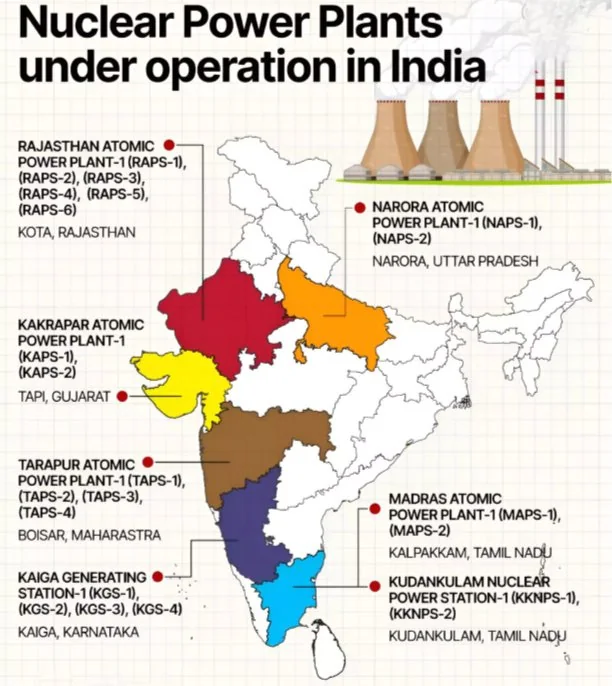
NUCLEAR POWER PLANTS IN INDIA
STRATEGIC FOCUS AREAS
- Energy Security: Nuclear power as a long-term energy solution.
- Environmental Sustainability: Integrating nuclear energy with renewables to reduce carbon emissions.
- Private Sector Role: Expanding private sector participation through public-private partnerships.
- Technological Innovation: Developing advanced reactors like SMRs and PFBR to enhance India’s position in global nuclear energy.
REGULATORY LANDSCAPE
- Atomic Energy Act, 1962: Grants exclusive government authority over nuclear energy.
- Atomic Energy Regulatory Board (AERB): Regulates safety and compliance in nuclear facilities.
- Civil Liability for Nuclear Damage Act, 2010: Caps liability at ₹1,500 crore, with government backing.
SIGNIFICANCE OF NUCLEAR ENERGY
- Current Contribution: Nuclear energy accounts for 6% of India’s energy generation.
- Energy Diversification: Reduces reliance on coal (55% of India’s energy mix).
- Climate Change Mitigation: Nuclear energy is a low-carbon source, supporting India’s net-zero emissions target by 2070.
- Reducing Import Dependence: Helps reduce reliance on imported fossil fuels (e.g., 85% crude oil, 50% natural gas).
KEY ISSUES IN INDIA’S NUCLEAR SECTOR
- Limited Share in Energy Mix: Nuclear still contributes only 6% of India’s total energy.
- Investment Challenges: High capital cost and long timelines for nuclear projects.
- Dependence on Imported Nuclear Fuel: Limited domestic uranium reserves lead to reliance on imports.
- Safety Concerns: Public opposition due to safety fears (e.g., Fukushima incident).
- Technological Delays: Delays in projects like the Prototype Fast Breeder Reactor (PFBR).
- High Cost: Nuclear energy has higher capital costs compared to renewable energy sources.
- Waste Management: India lacks a permanent radioactive waste disposal system.
MEASURES TO REVAMP INDIA’S NUCLEAR SECTOR
- Enhancing Private Sector Participation: Amend the Atomic Energy Act, 1962 to allow private sector involvement in reactor operations.
- Expanding Indigenous Technology: Focus on developing technologies like Fast Breeder Reactors and Small Modular Reactors (SMRs).
- Streamlining Land Acquisition: Integrate the Right to Fair Compensation and Transparency in Land Acquisition Act, 2013 for easier land acquisition.
- Strategic Nuclear Fuel Reserves: Secure long-term uranium supplies through agreements with countries like Russia, Kazakhstan, and Canada.
- Fast-Tracking Regulatory Approvals: Reform the Atomic Energy Regulatory Board (AERB) and establish the National Nuclear Energy Authority (NNEA) for quicker regulatory approvals.
- Sovereign Green Bonds: Issue green bonds to attract international investment in nuclear energy projects.
- Skill Development: Expand training programs at BARC and other institutions for reactor operations, R&D, and waste management.
- Local Manufacturing: Integrate nuclear energy into Make in India and Production Linked Incentive (PLI)
- Promoting SMRs: Develop Small Modular Reactors to meet decentralized energy needs, especially in remote areas.
- International Technology Transfer: Pursue agreements with countries like USA, Japan, and South Korea for advanced reactor designs.
- Context: In March 2025, IAEA Director General Rafael Mariano Grossi praised India’s nuclear sector for being one of the most dynamic globally.
- India is increasing its cooperation with the IAEA on nuclear technology, safety, and security.
KEY HIGHLIGHTS
- Global Recognition: Grossi highlighted India's growing role in nuclear energy, especially in Asia. India is collaborating closely with the IAEA on safety, technology, and regulations.
- Diplomatic Engagements: External Affairs Minister S. Jaishankar met Grossi during the Raisina Dialogue 2025, discussing nuclear safety and non-proliferation, highlighting India’s role in nuclear diplomacy.
- Workforce Development: India’s efforts in training nuclear experts were praised, with the IAEA collaborating with India’s Department of Atomic Energy (DAE) and the Global Centre for Nuclear Energy Partnership (GCNEP) to build a skilled workforce, including the launch of a new Nuclear Engineering Course.
- Raisina Dialogue 2025: The dialogue showcased India’s growing importance in global nuclear discussions.
BUDGETARY FOCUS
Union Budget 2025-26: Nuclear Energy in India’s Future - Objective: Strengthening nuclear capabilities as part of the long-term energy strategy for a sustainable and developed India (Viksit Bharat). The government aims to increase nuclear power capacity to 100 GW by 2047.
Key Budget Highlights:
- Nuclear Energy Mission: ₹20,000 crore allocated for Small Modular Reactors (SMRs) R&D with the goal of building five indigenous SMRs by 2033.
- Policy Reforms: Amendments to the Atomic Energy Act and Civil Liability for Nuclear Damage Act to encourage private sector involvement.
- Private Sector Partnerships: Collaborations on Bharat Small Reactors (BSRs) and SMRs, focusing on cost-effective energy solutions for industries like steel and aluminum.
INDIA’S NUCLEAR CAPACITY EXPANSION
- Objective: Increase nuclear power from 8,180 MW to 22,480 MW by 2031-32.
- New Projects: 10 new reactors in Gujarat, Rajasthan, Tamil Nadu, Haryana, Karnataka, and Madhya Pradesh. Notable project: Kovvada Plant (6 x 1208 MW) in Andhra Pradesh in partnership with the USA.
- Recent Developments:
- Rajasthan Atomic Power Project Unit-7 (RAPP-7) achieved criticality in September 2024.
- Prototype Fast Breeder Reactor (PFBR) made significant progress, achieving milestones in March 2024.
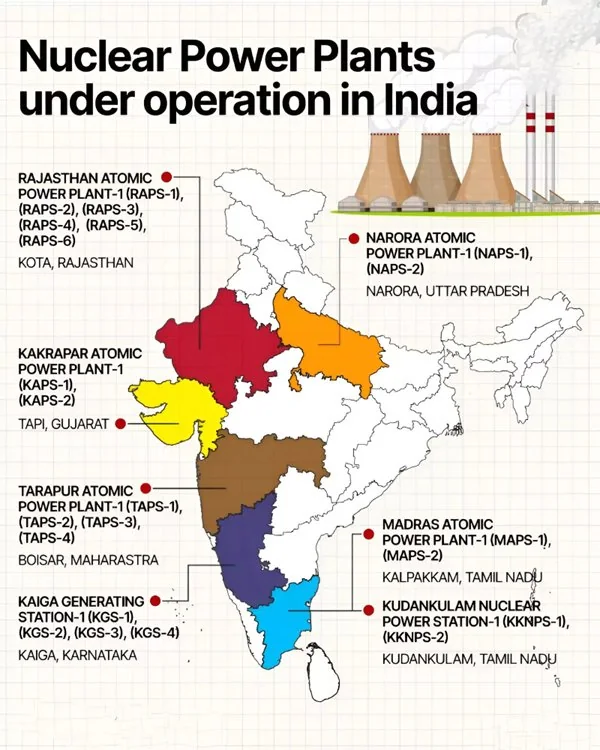
NUCLEAR POWER PLANTS IN INDIA
STRATEGIC FOCUS AREAS
- Energy Security: Nuclear power as a long-term energy solution.
- Environmental Sustainability: Integrating nuclear energy with renewables to reduce carbon emissions.
- Private Sector Role: Expanding private sector participation through public-private partnerships.
- Technological Innovation: Developing advanced reactors like SMRs and PFBR to enhance India’s position in global nuclear energy.
REGULATORY LANDSCAPE
- Atomic Energy Act, 1962: Grants exclusive government authority over nuclear energy.
- Atomic Energy Regulatory Board (AERB): Regulates safety and compliance in nuclear facilities.
- Civil Liability for Nuclear Damage Act, 2010: Caps liability at ₹1,500 crore, with government backing.
SIGNIFICANCE OF NUCLEAR ENERGY
- Current Contribution: Nuclear energy accounts for 1.6% of India’s energy generation.
- Energy Diversification: Reduces reliance on coal (55% of India’s energy mix).
- Climate Change Mitigation: Nuclear energy is a low-carbon source, supporting India’s net-zero emissions target by 2070.
- Reducing Import Dependence: Helps reduce reliance on imported fossil fuels (e.g., 85% crude oil, 50% natural gas).
KEY ISSUES IN INDIA’S NUCLEAR SECTOR
- Limited Share in Energy Mix: Nuclear still contributes only 1.6% of India’s total energy.
- Investment Challenges: High capital cost and long timelines for nuclear projects.
- Dependence on Imported Nuclear Fuel: Limited domestic uranium reserves lead to reliance on imports.
- Safety Concerns: Public opposition due to safety fears (e.g., Fukushima incident).
- Technological Delays: Delays in projects like the Prototype Fast Breeder Reactor (PFBR).
- High Cost: Nuclear energy has higher capital costs compared to renewable energy sources.
- Waste Management: India lacks a permanent radioactive waste disposal system.
MEASURES TO REVAMP INDIA’S NUCLEAR SECTOR
- Enhancing Private Sector Participation: Amend the Atomic Energy Act, 1962 to allow private sector involvement in reactor operations.
- Expanding Indigenous Technology: Focus on developing technologies like Fast Breeder Reactors and Small Modular Reactors (SMRs).
- Streamlining Land Acquisition: Integrate the Right to Fair Compensation and Transparency in Land Acquisition Act, 2013 for easier land acquisition.
- Strategic Nuclear Fuel Reserves: Secure long-term uranium supplies through agreements with countries like Russia, Kazakhstan, and Canada.
- Fast-Tracking Regulatory Approvals: Reform the Atomic Energy Regulatory Board (AERB) and establish the National Nuclear Energy Authority (NNEA) for quicker regulatory approvals.
- Sovereign Green Bonds: Issue green bonds to attract international investment in nuclear energy projects.
- Skill Development: Expand training programs at BARC and other institutions for reactor operations, R&D, and waste management.
- Local Manufacturing: Integrate nuclear energy into Make in India and Production Linked Incentive (PLI)
- Promoting SMRs: Develop Small Modular Reactors to meet decentralized energy needs, especially in remote areas.
- International Technology Transfer: Pursue agreements with countries like USA, Japan, and South Korea for advanced reactor designs.
Why This Topic Matters for UPSC
- Prelims: Revise definitions, institutions, locations, reports and factual features connected with India's Nuclear Sector: Capacity, Policy and Challenges.
- Mains: Link the topic with Energy, Science and Technology, Economy, Environment and organise the answer under background, significance, challenges and way forward.
- Interview: Explain the issue in balanced language and distinguish verified facts from opinion.
Key Takeaway
Nuclear power can provide low-carbon, round-the-clock electricity and support India's energy-security and climate goals. This guide covers installed capacity, expansion plans, small modular reactors, fuel and technology constraints, regulation, safety and private-sector participation.
- Prelims: Revise the key facts and terminology.
- Mains: Connect the topic with Energy, Science and Technology, Economy, Environment.
- Revision: Prepare notes under background, features, significance, challenges and way forward.
Test your understanding
Questions from this article
Prelims practiceWith reference to India's Nuclear Sector, consider the following statements:
- Context: In March 2025, IAEA Director General Rafael Mariano Grossi praised India’s nuclear sector for being one of the most dynamic globally.
- India is increasing its cooperation with the IAEA on nuclear technology, safety, and security.
- Global Recognition: Grossi highlighted India's growing role in nuclear energy, especially in Asia. India is collaborating closely with the IAEA on safety, technology, and regulations.
Which of the statements given above are correct?
- 1 and 2 only
- 2 and 3 only
- 1 and 3 only
- 1, 2 and 3
View answer
Answer: (d) 1, 2 and 3. All three statements are drawn from the article.
Mains practiceDiscuss the background, key issues and significance of India's Nuclear Sector for India.
Answer in 250 words.
View answer approach
- KEY HIGHLIGHTS
- BUDGETARY FOCUS
- Key Budget Highlights:
- INDIA’S NUCLEAR CAPACITY EXPANSION
- NUCLEAR POWER PLANTS IN INDIA
Frequently asked questionsFrequently asked questions
What is India's Nuclear Sector?
Nuclear power can provide low-carbon, round-the-clock electricity and support India's energy-security and climate goals. This guide covers installed capacity, expansion plans, small modular reactors, fuel and technology constraints, regulation, safety and private-sector participation.
Why is India's Nuclear Sector important for UPSC?
It connects current developments with Energy, Science and Technology, Economy, Environment and supports factual revision as well as analytical answer writing.
How should aspirants prepare India's Nuclear Sector?
Prepare a short definition, key facts, institutional or legal framework, significance, challenges and a balanced way forward. Revise the specific developments and examples explained in the article.