UPSC Current Affairs
INDIA’S INTERNAL SECURITY & COUNTER TERRORISM STRATEGY
Incident: A deadly car blast near Delhi’s Red Fort has raised serious concerns about India’s internal security. Suspicion: Investigators suspect a professional organised terror module was involved. Legal Action: The First Information Report (FIR) has been filed under the Unlawful Activities (Prevention) Act, 1967 (UAPA).
VRAuthor Desk
3 min read
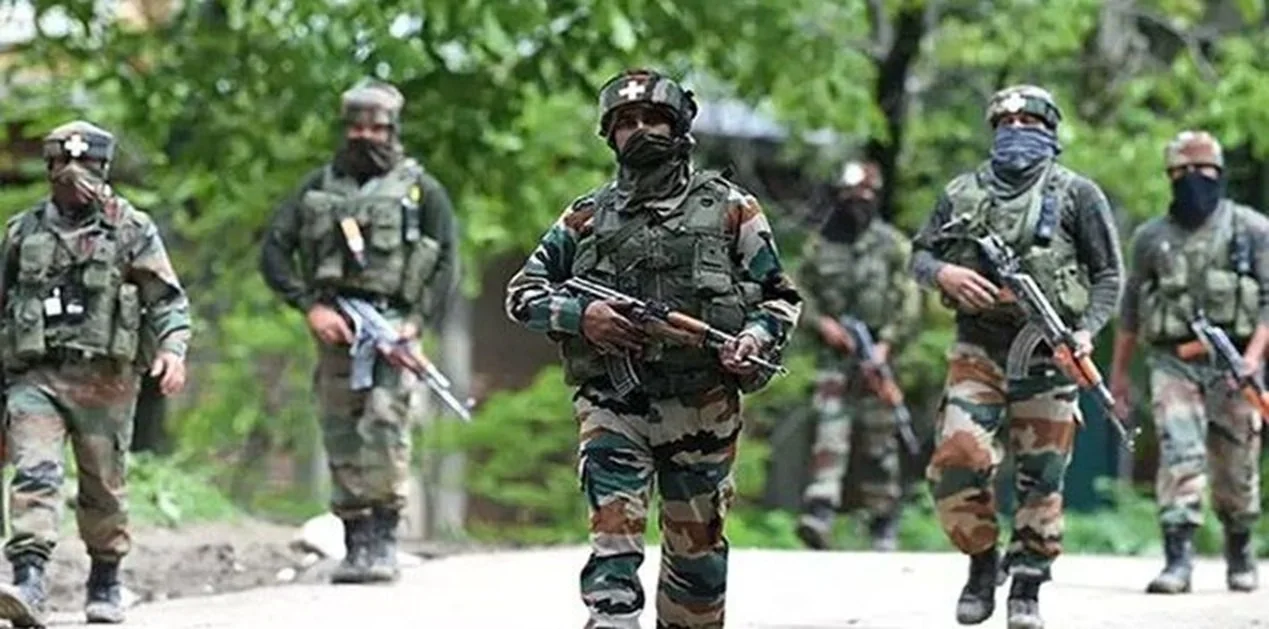
Incident: A deadly car blast near Delhi’s Red Fort has raised serious concerns about India’s internal security. Suspicion: Investigators suspect a professional organised terror module was involved. Legal Action: The First Information Report (FIR) has been filed under the Unlawful Activities (Prevention) Act, 1967 (UAPA).
Why in News?
- Incident: A deadly car blast near Delhi’s Red Fort has raised serious concerns about India’s internal security.
- Suspicion: Investigators suspect a professional organised terror module was involved.
- Legal Action: The First Information Report (FIR) has been filed under the Unlawful Activities (Prevention) Act, 1967 (UAPA).
- Context: The incident highlights the urgent need for a strong, coordinated national strategy to combat terrorism.
INDIA’S COUNTER TERRORISM DOCTRINE
This doctrine, unveiled after
Operation Sindoor, marks a shift towards a more aggressive and punitive security stance.
A. New Counterterrorism Doctrine Principles
- Decisive Retaliation: India will strike back firmly and on its own terms, targeting terror hubs at their source to raise the cost for state sponsors (seen in strikes on LeT and JeM bases).
- Zero Tolerance for Nuclear Blackmail: India will not be stopped by nuclear threats and will strike terrorist safe havens even if they are under a nuclear shield, asserting the right to self-defence.
- No Distinction Between Terrorists & their Sponsors: India now treats terror groups and the states supporting them as the same target, as reflected in Operation Sindoor, which struck deep inside Pakistan.
B. Doval Doctrine (Shaped by NSA Ajit Doval)
- Blend: It mixes hard power, intelligence, diplomacy, and psychological warfare.
- Core Principles:
- Proactive National Defense: Right to strike first or strike back decisively (2016 Surgical Strikes, 2019 Balakot Airstrikes).
- Whole-of-Government Coordination: Integrated operation of military, intelligence, police, and diplomatic institutions.
- Security Linked with Development: Security measures are combined with welfare and governance (e.g., Abrogation of Article 370 in Kashmir).
- Defensive–Offense Strategy: Signalling readiness for offensive action to deter adversaries, rather than just waiting to be attacked.
| Area of Action |
Key Steps Required |
| Intelligence & Coordination |
1. Statutory MAC: Convert the Multi-Agency Centre (MAC) into a statutory, 24x7 national fusion centre for mandatory data sharing.
2. Predictive Analytics: Use AI and big data to analyse and predict terror patterns, including online radicalisation.
3. Regional Cooperation: Improve intelligence sharing with neighbours like Bangladesh, Sri Lanka, and Afghanistan. |
| Policing & Forensics |
1. Modernisation: Equip police with drones, cyber-forensics, and predictive policing software.
2. Justice: Establish fast-track anti-terror courts to speed up trials and increase conviction rates. |
| Anti-Terror Financing |
1. Stronger Laws: Track cryptocurrency, hawala operations, and illegal charities.
2. Global Efforts: Enhance international partnerships like ‘No Money for Terror’ (NMFT). |
| Coastal Security |
1. Tech Deployment: Use automated drones, radar systems, and marine surveillance to prevent maritime terrorism and smuggling. |
| Diplomatic Pressure |
1. UN Forums: Push for international cooperation, especially against state-sponsored terrorism.
2. CCIT: Increase efforts for the Comprehensive Convention on International Terrorism (CCIT) at the UN to criminalise all forms of terrorism globally. |
| Psychological Warfare |
1. Counter-Propaganda: Develop an information warfare strategy to fight terrorist propaganda and radicalisation on social media.
2. Counter-Radicalisation: Create a national framework based on successful global models (like Singapore, UK).
3. Deterrence: Institutionalise the post–Operation Sindoor doctrine, using a mix of precision strikes and cyber tools. |
- Prelims: Key facts, institutions, locations and terminology in the article.
- Mains: Connect the topic with Defence, Polity & Governance.
- Revision: Use the article headings to prepare concise notes and answer-writing points.
Test your understanding
Questions from this article
Prelims practiceWith reference to INDIA’S INTERNAL SECURITY & COUNTER TERRORISM STRATEGY, consider the following statements:
- Incident: A deadly car blast near Delhi’s Red Fort has raised serious concerns about India’s internal security.
- Suspicion: Investigators suspect a professional organised terror module was involved.
- Legal Action: The First Information Report (FIR) has been filed under the Unlawful Activities (Prevention) Act, 1967 (UAPA).
Which of the statements given above are correct?
- 1 and 2 only
- 2 and 3 only
- 1 and 3 only
- 1, 2 and 3
View answer
Answer: (d) 1, 2 and 3. All three statements are drawn from the article.
Mains practiceDiscuss the background, key issues and significance of INDIA’S INTERNAL SECURITY & COUNTER TERRORISM STRATEGY for India.
Answer in 250 words.
View answer approach
- Why in News?
- Background and context
- Key facts and institutional framework
- Significance and way forward
Frequently asked questionsFrequently asked questions
Why is India’S Internal Security & Counter Terrorism Strategy in the news?
Incident: A deadly car blast near Delhi’s Red Fort has raised serious concerns about India’s internal security. Suspicion: Investigators suspect a professional organised terror module was involved.
What are the key facts about India’S Internal Security & Counter Terrorism Strategy?
Legal Action: The First Information Report (FIR) has been filed under the Unlawful Activities (Prevention) Act, 1967 (UAPA). Context: The incident highlights the urgent need for a strong, coordinated national strategy to combat terrorism. INDIA’S COUNTER TERRORISM DOCTRINE This doctrine, unveiled after Operation Sindoor, marks a shift towards a more aggressive and punitive security stance.
Why is India’S Internal Security & Counter Terrorism Strategy important for UPSC preparation?
The topic connects current developments with Defence, Polity & Governance and is relevant for both objective revision and analytical answer writing.