UPSC Current Affairs
INDIA CHINA RELATIONS: BILATERAL RESET
On August 18–19, 2025, Chinese Foreign Minister Wang Yi visited New Delhi to hold bilateral talks with External Affairs Minister S. Jaishankar and National Security Advisor Ajit Doval. The discussions focused on: De-escalation at the Line of Actual Control (LAC) Improving bilateral ties and trad This marks the first high-level visit since the October 2024 meeting between PM Modi and President Xi Jinping in Kazan, where both sides agreed to…
VRAuthor Desk
4 min read
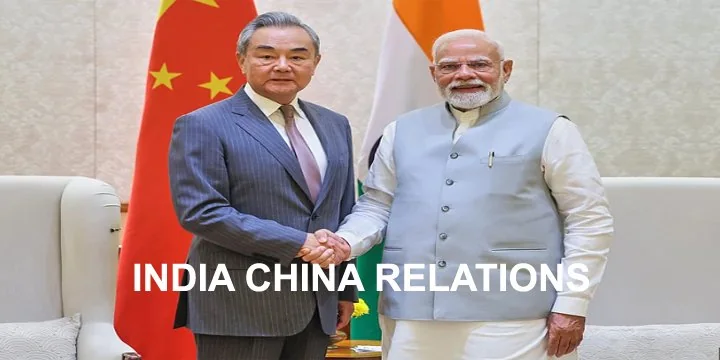
On August 18–19, 2025, Chinese Foreign Minister Wang Yi visited New Delhi to hold bilateral talks with External Affairs Minister S. Jaishankar and National Security Advisor Ajit Doval. The discussions focused on: De-escalation at the Line of Actual Control (LAC) Improving bilateral ties and trad This marks the first high-level visit since the October 2024 meeting between PM Modi and President Xi Jinping in Kazan, where both sides agreed to…
Why in News?
- On August 18–19, 2025, Chinese Foreign Minister Wang Yi visited New Delhi to hold bilateral talks with External Affairs Minister S. Jaishankar and National Security Advisor Ajit Doval.
- The discussions focused on:
- De-escalation at the Line of Actual Control (LAC)
- Improving bilateral ties and trad
- This marks the first high-level visit since the October 2024 meeting between PM Modi and President Xi Jinping in Kazan, where both sides agreed to work towards normalising relations after years of military tensions.
- The visit aimed to push forward the stalled de-escalation process along the Line of Actual Control (LAC) and review overall bilateral ties.
- Preparations are also underway for PM Modi’s upcoming visit to China for the SCO Summit in Tianjin (August 31–September 1, 2025).
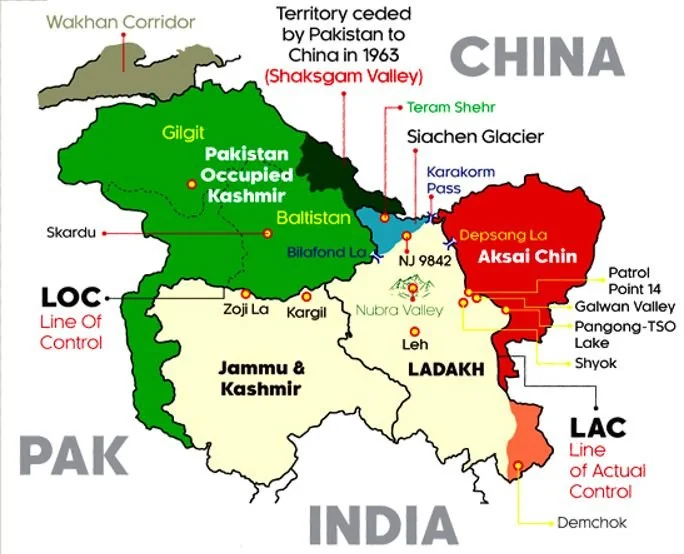
INDIA CHINA BORDER STANDOFF (2020 TO PRESENT)
- April–May 2020: PLA incursions in Eastern Ladakh began.
- June 15, 2020: Galwan Valley clash – 20 Indian soldiers martyred; significant loss on Chinese side too (undisclosed).
- Led to the worst diplomatic and military crisis since the 1962 war.
- Multiple rounds of diplomatic, military, and Special Representatives’ talks have occurred since, but full disengagement remains incomplete.
KEY DEVELOPMENTS FROM AUGUST 2025 MEETING
1. Statements by EAM Dr. S. Jaishankar
- India and China “have seen a difficult period” but “now seek to move ahead”.
- Called for a “candid and constructive approach”, guided by the Three Mutuals:
- Mutual Respect
- Mutual Sensitivity
- Mutual Interest
- Reiterated that:
- “Differences must not become disputes”
- “Competition must not become conflict”
2. Emphasis on Border Peace
- “Peace and tranquillity at the border is the basis for any positive momentum.”
- Asserted that the de-escalation process at the LAC must move forward.
- Urged joint responsibility in maintaining border stability.
3. Follow-up on Prior Issues Raised
- Jaishankar brought up “particular concerns” from his July 2025 Beijing visit, including:
- Restrictive trade practices by China
- Export curbs on rare earth elements and fertilisers
- Note: Rare earths are vital for EVs, electronics, defense, and semiconductors.
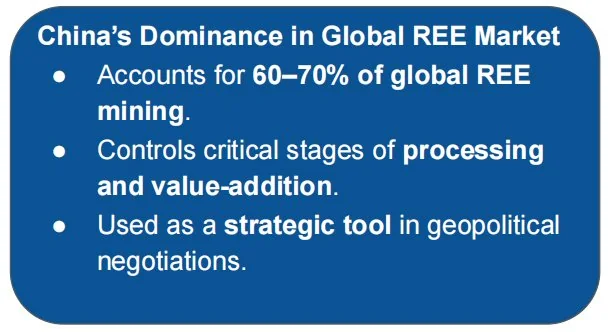
- China controls over 85% of global rare earth processing.
REBUILDING BILATERAL TIES
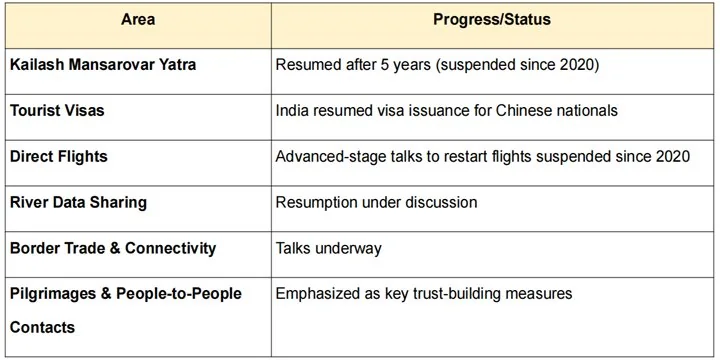
BROADER GEOPOLITICAL DIALOGUE
- India reaffirmed its commitment to:
- A fair, balanced, and multipolar world
- A multipolar Asia
- Reformed multilateralism in global institutions
- Emphasized stability in global economy and fighting all forms of terrorism.
CHINA’S POSITION (WANG YI’s POSITION)
- India-China relations have gained “shared confidence”.
- Highlighted:
- Efforts to “dispel interference”
- Desire to “expand cooperation” and “consolidate momentum”
- Asserted that:
“India and China can provide the most-needed certainty and stability to Asia and the world.”
- Blamed “rampant unilateralism” and disruption of free trade — indirectly referencing U.S. global policies (particularly under the Trump administration).
- Called for both countries to promote:
- Dignity for developing nations
- Global South unity
- Dialogue over confrontation
- Also China has made an in-principle commitment to address India’s requirements for:
- Rare earth elements (REEs)
- Fertilisers
- Tunnel-boring machines
WHAT ARE REEs?
- Rare Earths: Group of 17 metals with crucial applications in:
- Electronics
- Green energy (e.g. wind turbines, EVs)
- Defence (missiles, radars)
- Medical tech
- Telecommunications
- India’s REE status:
- India imports REEs worth ~$33 million annually (SBI Report).
- 30 minerals identified as critical to India’s economic security.
- Challenges in imports from China:
- No outright ban, but stringent export controls & licensing.
- Supply chain disruptions for Indian sectors:
- Transport equipment
- Basic metals
- Electrical & electronics
- Construction
- Machinery
GEOPOLITICAL CONTEXT
India–US Trade Tensions:
- US under President Trump (2.0) has:
- Imposed 50% tariffs on Indian goods.
- Penalised India for importing Russian oil (25% tariff).
- In contrast, China imports more Russian oil, but faces no such sanctions.
US–China Deal:
- Trump announced rare-earth cooperation with China:
- Full supply of rare earths and magnets.
- Visa access for Chinese students to US institutions.
- Raises questions about US reliability as a trade partner for India.
CHINA’S MESSAGING
- Urges India to counter “unilateral bullying” (hint at US).
- Advocates for multipolarity and South-South cooperation.
- Signals interest in resetting bilateral ties with India via economic cooperation.
SPECIAL REPRESENTATIVE TALKS
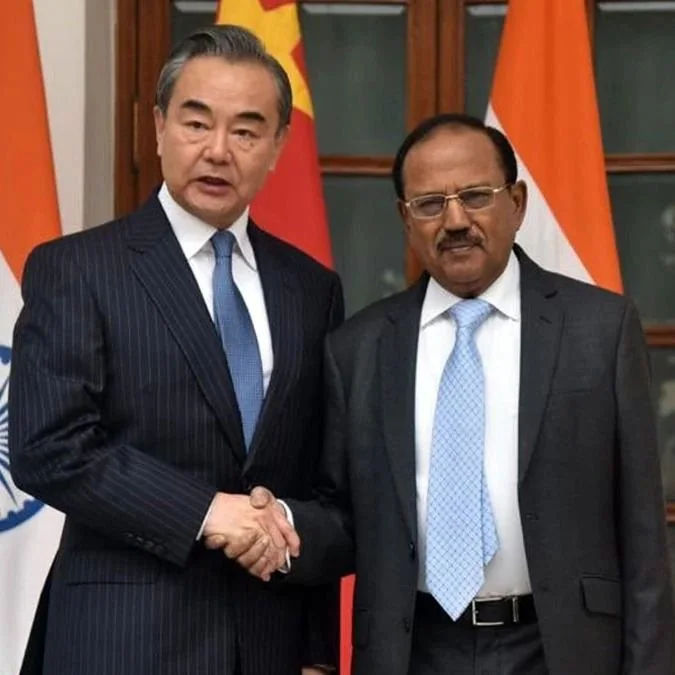
- 24th Round of Talks between:
- Indian NSA Ajit Doval
- Chinese Foreign Minister Wang Yi
- Agenda:
- Border delimitation & demarcation
- Military disengagement
- Confidence-Building Measures (CBMs)
- Cross-border exchange frameworks
* This mechanism is the highest institutional format for addressing the India-China boundary quest
STRATEGIC & DIPLOMATIC SIGNIFICANCE
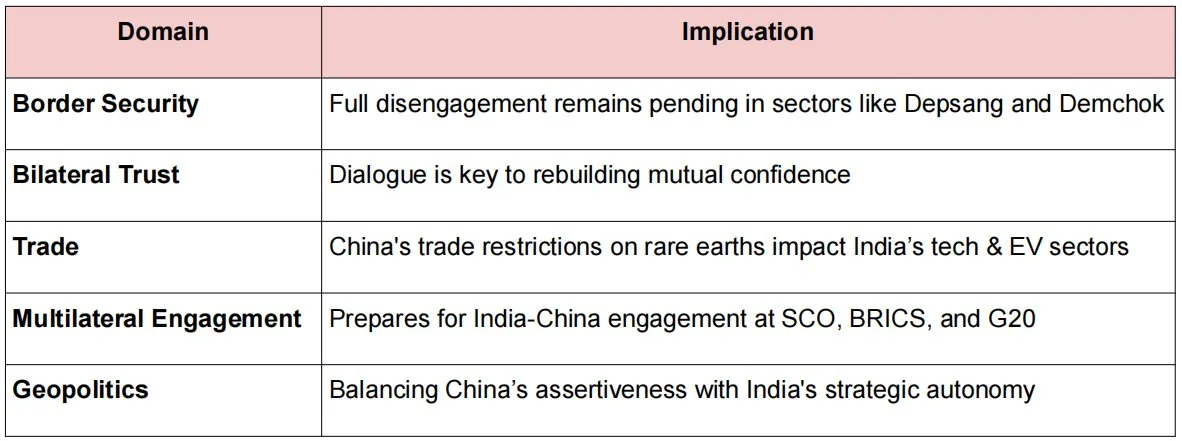
- Prelims: Key facts, institutions, locations and terminology in the article.
- Mains: Connect the topic with Economy, International Relations, Defence.
- Revision: Use the article headings to prepare concise notes and answer-writing points.
Test your understanding
Questions from this article
Prelims practiceWith reference to INDIA CHINA RELATIONS: BILATERAL RESET, consider the following statements:
- On August 18–19, 2025, Chinese Foreign Minister Wang Yi visited New Delhi to hold bilateral talks with External Affairs Minister S. Jaishankar and National Security Advisor Ajit Doval.
- The discussions focused on: De-escalation at the Line of Actual Control (LAC) Improving bilateral ties and trad
- De-escalation at the Line of Actual Control (LAC)
Which of the statements given above are correct?
- 1 and 2 only
- 2 and 3 only
- 1 and 3 only
- 1, 2 and 3
View answer
Answer: (d) 1, 2 and 3. All three statements are drawn from the article.
Mains practiceDiscuss the background, key issues and significance of INDIA CHINA RELATIONS: BILATERAL RESET for India.
Answer in 250 words.
View answer approach
- INDIA CHINA BORDER STANDOFF (2020 TO PRESENT)
- KEY DEVELOPMENTS FROM AUGUST 2025 MEETING
- REBUILDING BILATERAL TIES
- BROADER GEOPOLITICAL DIALOGUE
- WHAT ARE REEs?
Frequently asked questionsFrequently asked questions
Why is India China Relations: Bilateral Reset in the news?
On August 18–19, 2025, Chinese Foreign Minister Wang Yi visited New Delhi to hold bilateral talks with External Affairs Minister S. Jaishankar and National Security Advisor Ajit Doval.
What are the key facts about India China Relations: Bilateral Reset?
The discussions focused on: De-escalation at the Line of Actual Control (LAC) Improving bilateral ties and trad This marks the first high-level visit since the October 2024 meeting between PM Modi and President Xi Jinping in Kazan, where both sides agreed to… The visit aimed to push forward the stalled de-escalation process along the Line of Actual Control (LAC) and review overall bilateral ties. Preparations are also underway for PM Modi’s upcoming visit to China for the SCO Summit in Tianjin (August 31–September 1, 2025).
Why is India China Relations: Bilateral Reset important for UPSC preparation?
The topic connects current developments with Economy, International Relations, Defence and is relevant for both objective revision and analytical answer writing.