UPSC Current Affairs
Green Hydrogen
Ministry of New and Renewable Energy (MNRE) has announced a Rs-496-crore (until 2025-26) scheme to support pilot projects that either test the viability of green hydrogen as a vehicle fuel or develop secure supporting infrastructure such as refuelling… Big Indian commercial vehicle manufacturers such as Tata Motors, Volvo Eicher, and Ashok Leyland are doubling down on efforts to develop hydrogen-powered trucks and buses by ramping up research and development, and building manufacturing capacities. Indian energy companies too are trying to scale up production of green hydrogen and bring down costs to make it affordable enough to compete with other fuels.
VRAuthor Desk
3 min read
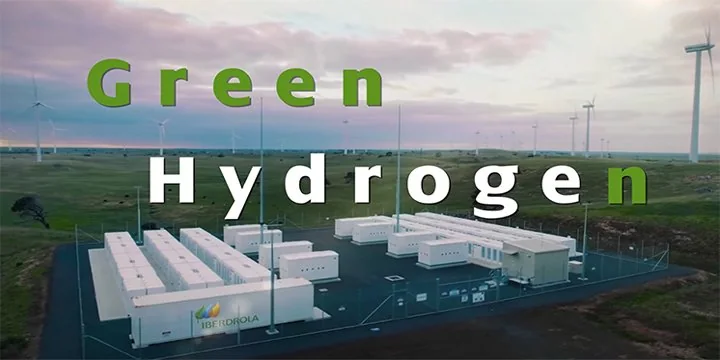
Ministry of New and Renewable Energy (MNRE) has announced a Rs-496-crore (until 2025-26) scheme to support pilot projects that either test the viability of green hydrogen as a vehicle fuel or develop secure supporting infrastructure such as refuelling… Big Indian commercial vehicle manufacturers such as Tata Motors, Volvo Eicher, and Ashok Leyland are doubling down on efforts to develop hydrogen-powered trucks and buses by ramping up research and development, and building manufacturing capacities. Indian energy companies too are trying to scale up production of green hydrogen and bring down costs to make it affordable enough to compete with other fuels.
Ministry of New and Renewable Energy (MNRE) has announced a
Rs-496-crore (until 2025-26) scheme to support pilot projects that either test the
viability of green hydrogen as
a vehicle fuel or
develop secure supporting infrastructure such as refuelling stations.
Big Indian commercial vehicle manufacturers such as
Tata Motors, Volvo Eicher, and Ashok Leyland are doubling down on efforts to develop hydrogen-powered trucks and buses by ramping up research and development, and building manufacturing capacities.
Indian energy companies too are trying to
scale up production of green hydrogen and bring down costs to make it affordable enough to compete with other fuels.
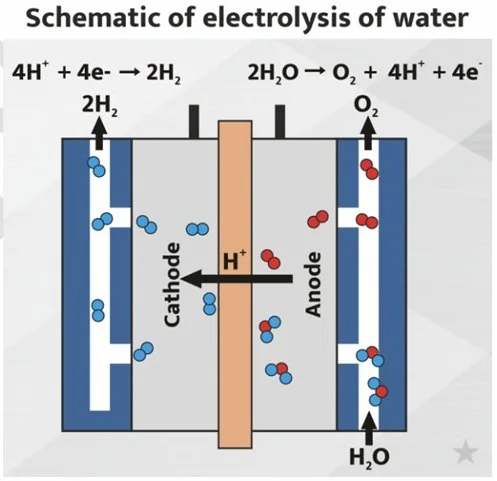
WHAT IS GREEN HYDROGEN & HOW IS IT PRODUCED?
- Green hydrogen is produced by renewable energy through electrolysis of water. Electrolyser technology is central to the green hydrogen production process.
- Alkaline, polymer electrolyte membrane (PEM) and Solid Oxide Electrolysers are commercially available technologies for green hydrogen production.
- Alkaline Electrolyzers: Alkaline electrolyzers operate via transport of hydroxide ions (OH-) through the electrolyte from the cathode to the anode with hydrogen being generated on the cathode side.
BENEFITS OF GREEN HYDROGEN
- Green hydrogen promises significant reductions of emissions to help slow global warming and climate change.
- Curbing pollution and meeting its climate goals.
- A business opportunity to become a global hub for the production and export of green hydrogen.
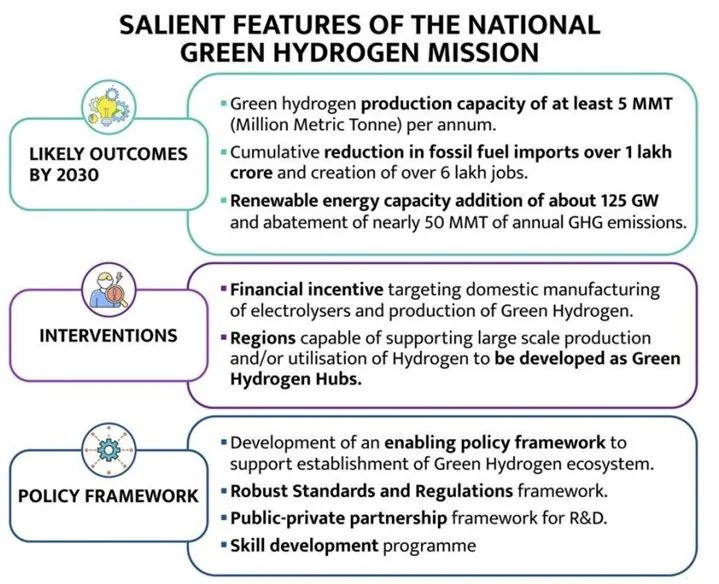
NATIONAL GREEN HYDROGEN MISSION
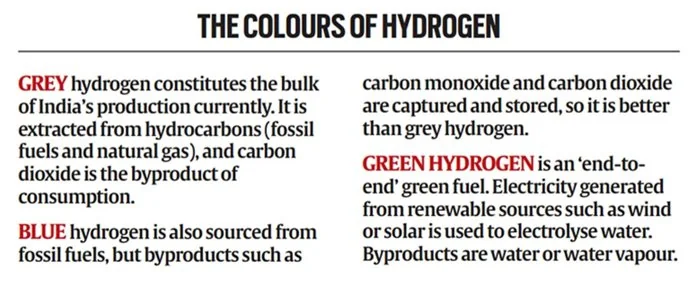
TYPES OF HYDROGEN
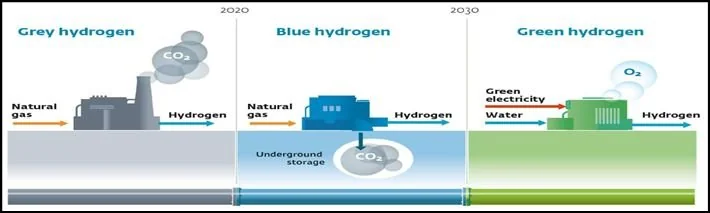
CONCERNS
- Transportation and Storage: Storage and transportation of hydrogen have traditionally been difficult due to the unique characteristics of the gas flammability, low density, ease of dispersion, and embrittlement.
- High cost: The cost of green hydrogen production is much higher than what is produced from fossil fuels, due to high prices of renewables and rare earth material used as electrodes.
- High energy consumption: The production of green hydrogen particular requires more energy than other fuels. Also, availability of renewable energy is not at par demand.
- Safety issues: Hydrogen is a highly volatile and flammable element and extensive safety measures are therefore required to prevent leakage and explosions.
OBJECTIVES OF THE SCHEME
- Validation of technical feasibility and performance of green hydrogen as a transportation fuel,
- Evaluation of the economic viability of green hydrogen-powered vehicles, and
- Demonstration of safe operation of hydrogen-powered vehicles and refuelling stations.
HOW WILL IT BE IMPLEMENTED?
The
Ministry of Road Transport & Highways will appoint a
scheme implementation agency that will invite proposals for pilot projects. The selected company or consortium will be the project’s executing agency.
Based on the recommendation of a
Project Appraisal Committee, the MNRE will
approve viability gap funding (VGF) for the project.
The VGF amount will be finalised after considering
“specific needs, merits, and feasibility of each project”.
The executing agency will be required to complete the pilot project within two years.
- Prelims: Key facts, institutions, locations and terminology in the article.
- Mains: Connect the topic with Environment, Economy, Polity & Governance.
- Revision: Use the article headings to prepare concise notes and answer-writing points.
Test your understanding
Questions from this article
Prelims practiceWith reference to Green Hydrogen, consider the following statements:
- Green hydrogen is produced by renewable energy through electrolysis of water. Electrolyser technology is central to the green hydrogen production process.
- Alkaline, polymer electrolyte membrane (PEM) and Solid Oxide Electrolysers are commercially available technologies for green hydrogen production.
- Alkaline Electrolyzers: Alkaline electrolyzers operate via transport of hydroxide ions (OH-) through the electrolyte from the cathode to the anode with hydrogen being generated on the cathode side.
Which of the statements given above are correct?
- 1 and 2 only
- 2 and 3 only
- 1 and 3 only
- 1, 2 and 3
View answer
Answer: (d) 1, 2 and 3. All three statements are drawn from the article.
Mains practiceDiscuss the background, key issues and significance of Green Hydrogen for India.
Answer in 250 words.
View answer approach
- WHAT IS GREEN HYDROGEN & HOW IS IT PRODUCED?
- BENEFITS OF GREEN HYDROGEN
- NATIONAL GREEN HYDROGEN MISSION
- TYPES OF HYDROGEN
- CONCERNS
Frequently asked questionsFrequently asked questions
Why is Green Hydrogen in the news?
Ministry of New and Renewable Energy (MNRE) has announced a Rs-496-crore (until 2025-26) scheme to support pilot projects that either test the viability of green hydrogen as a vehicle fuel or develop secure supporting infrastructure such as refuelling… Big Indian commercial vehicle manufacturers such as Tata Motors, Volvo Eicher, and Ashok Leyland are doubling down on efforts to develop hydrogen-powered trucks and buses by ramping up research and development, and building manufacturing capacities.
What are the key facts about Green Hydrogen?
Indian energy companies too are trying to scale up production of green hydrogen and bring down costs to make it affordable enough to compete with other fuels. WHAT IS GREEN HYDROGEN & HOW IS IT PRODUCED? Green hydrogen is produced by renewable energy through electrolysis of water.
Why is Green Hydrogen important for UPSC preparation?
The topic connects current developments with Environment, Economy, Polity & Governance and is relevant for both objective revision and analytical answer writing.