UPSC Current Affairs
GLOBAL EDUCATION CRISIS
The UNESCO Global Education Monitoring (GEM) Report, released on June 15, 2025, reveals that 272 million children and youth are currently out of school worldwide. This marks an increase of over 21 million compared to the last estimate. The report highlights a major concern regarding the global effort to meet Sustainable Development Goal 4 (SDG 4) — ensuring quality education for all by 2030.
VRAuthor Desk
3 min read
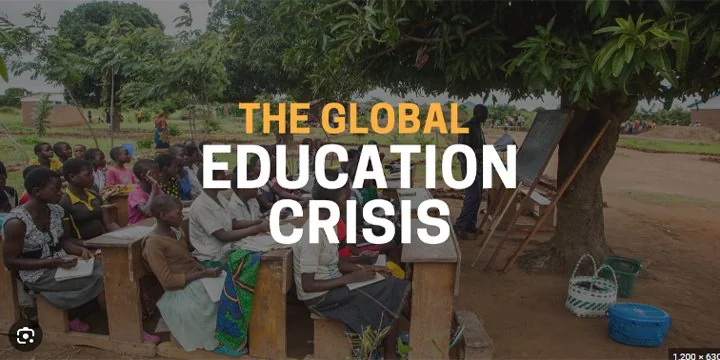
The UNESCO Global Education Monitoring (GEM) Report, released on June 15, 2025, reveals that 272 million children and youth are currently out of school worldwide. This marks an increase of over 21 million compared to the last estimate. The report highlights a major concern regarding the global effort to meet Sustainable Development Goal 4 (SDG 4) — ensuring quality education for all by 2030.
Why in News?
- The UNESCO Global Education Monitoring (GEM) Report, released on June 15, 2025, reveals that 272 million children and youth are currently out of school worldwide.
- This marks an increase of over 21 million compared to the last estimate. The report highlights a major concern regarding the global effort to meet Sustainable Development Goal 4 (SDG 4) — ensuring quality education for all by 2030.
- It also warns that most countries are not on track to meet their national education targets by 2025.
OUT OF SCHOOL DISTRIBUTION BY AGE GROUP
| Age Group |
Number Out of School |
Percentage of Group |
| Primary School (6–11 yrs) |
78 million |
11% |
| Lower Secondary (12–14) |
64 million |
15% |
| Upper Secondary (15–17) |
130 million |
31% |
- The numbers increase with age, indicating growing dropouts at higher levels of education.
REASONS
a) Improved Enrolment and Attendance Data
- Accounts for 8 million of the increase (about 38%).
- Better data collection has resulted in more accurate, higher counts of out-of-school children.
- For example, the ban on girls’ secondary education in Afghanistan since 2021 is a significant contributor.
b) Updated UN Population Estimates
- Accounts for 13 million of the increase (62%).
- The 2024 UN World Population Prospects showed a 49 million (3.1%) increase in the number of 6–17-year-olds.
- This increase in population naturally raises the total number of children out of school, especially when enrolment has not improved proportionally.
HOW POPULATION UPDATES IMPACT ESTIMATES?
- If enrolment data comes from administrative sources (like school records), the full increase in school-age population is added to the out-of-school estimate.
- If enrolment data comes from household surveys, the increased population is split between those in and out of school, depending on past trends.
PROGRESS TOWARDS SDG 4 & NATIONAL EDUCATION TARGETS
To "ensure inclusive and equitable quality education and promote lifelong learning opportunities for all" by 2030.
- Countries committed to reducing the global out-of-school population by 165 million by 2030.
Projected Shortfall by 2025:
- Countries are expected to fall 75 million short of their national targets.
| Education Level |
Estimated Shortfall |
| Primary & Lower Secondary |
4 percentage points |
| Upper Secondary |
6 percentage points |
- These gaps indicate that most countries are not on pace to achieve SDG 4 within the next five years.
Underestimated Impact of Conflicts and Emergencies
Key Challenges:
- Conflict zones often lack reliable data on education.
- The model assumes stable school progression, which does not apply in crisis situations.
- As a result, the true number of out-of-school children in conflict-affected areas is likely higher than reported.
Methodology of the GEM Report
- The figures are based on a statistical model that ensures consistency in trends across countries and regions.
Data Sources Used:
- Administrative data (from education ministries)
- Survey data (e.g., DHS, MICS)
- Census data
Features of the Model:
- Reconciles inconsistencies between data sources.
- Fills gaps where yearly data is missing.
- Makes short-term projections to estimate current numbers.
KEY CONCERNS & RECOMMENDATIONS
Key Concerns:
- A large number of out-of-school children means a loss of human potential and slower development.
- Vulnerable groups (girls, disabled children, refugees, and those in remote/conflict areas) are the most affected.
- Inequality is widening, and cycles of poverty are likely to continue.
Recommendations:
- Increase education funding, especially for marginalized groups.
- Strengthen data systems, particularly in fragile and conflict-affected areas.
- Adopt inclusive policies to remove barriers to education.
- Implement emergency education responses to maintain learning during crises.
- Enhance global cooperation to help high-burden countries meet their education goals.
- Prelims: Key facts, institutions, locations and terminology in the article.
- Mains: Connect the topic with Polity & Governance.
- Revision: Use the article headings to prepare concise notes and answer-writing points.
Test your understanding
Questions from this article
Prelims practiceWith reference to GLOBAL EDUCATION CRISIS, consider the following statements:
- The UNESCO Global Education Monitoring (GEM) Report, released on June 15, 2025, reveals that 272 million children and youth are currently out of school worldwide.
- This marks an increase of over 21 million compared to the last estimate. The report highlights a major concern regarding the global effort to meet Sustainable Development Goal 4 (SDG 4) — ensuring quality education for…
- It also warns that most countries are not on track to meet their national education targets by 2025.
Which of the statements given above are correct?
- 1 and 2 only
- 2 and 3 only
- 1 and 3 only
- 1, 2 and 3
View answer
Answer: (d) 1, 2 and 3. All three statements are drawn from the article.
Mains practiceDiscuss the background, key issues and significance of GLOBAL EDUCATION CRISIS for India.
Answer in 250 words.
View answer approach
- Why in News?
- OUT OF SCHOOL DISTRIBUTION BY AGE GROUP
- REASONS
- HOW POPULATION UPDATES IMPACT ESTIMATES?
- Projected Shortfall by 2025:
Frequently asked questionsFrequently asked questions
Why is Global Education Crisis in the news?
The UNESCO Global Education Monitoring (GEM) Report, released on June 15, 2025, reveals that 272 million children and youth are currently out of school worldwide. This marks an increase of over 21 million compared to the last estimate.
What are the key facts about Global Education Crisis?
The report highlights a major concern regarding the global effort to meet Sustainable Development Goal 4 (SDG 4) — ensuring quality education for all by 2030. It also warns that most countries are not on track to meet their national education targets by 2025. OUT OF SCHOOL DISTRIBUTION BY AGE GROUP Age Group Number Out of School Percentage of Group Primary School (6–11 yrs) 78 million 11% Lower Secondary (12–14) 64 million 15% Upper Secondary (15–17) 130 million 31% The numbers increase with age, indicating growing…
Why is Global Education Crisis important for UPSC preparation?
The topic connects current developments with Polity & Governance and is relevant for both objective revision and analytical answer writing.