Nationwide demonstrations in France against rising living costs and poor school conditions turned violent in several cities. Police arrested at least 1,800 people after clashes with security forces, arson, and looting. The violence damaged public buildings, including Limoges' historic City Hall. The protests have also intensified political disagreements ahead of the next presidential election.
Why in the News?
On October 17, 2026, nationwide demonstrations took place across France over rising living costs and poor conditions in schools.
- Authorities estimated that around 5.5 lakh people participated, while organisers put the figure at approximately 8 lakh.
- Police arrested at least 1,800 people following violent clashes and looting.
- Injuries: More than 500 police officers, gendarmes and firefighters were injured.
- Masked groups set fires and attacked public buildings, including city halls.
- The protests triggered political exchanges among leaders ahead of the next presidential election.
Major Developments During the Protests
The protests in France became more serious as demonstrations over rising living costs and poor conditions in schools were followed by property. The situation created challenges for law enforcement and increased political tensions across the country.
1. Violence and Damage to Public Property
Masked groups set fires and attacked public buildings in several French cities. In Limoges, a fire engulfed the 19th-century City Hall, causing its roof to collapse.
- Haute-Vienne prefect Maurice Barate said the fire had been deliberately set. It was brought under control on October 18, 2026.
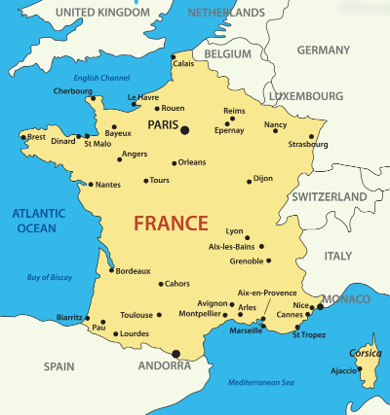
- Hundreds of businesses were reportedly looted in Paris, Marseille, Lyon and Bordeaux.
- Paris police reported that one person died of a heart attack. The Paris prosecutors’ office opened an investigation.
2. Government Response
The French government condemned the violence while recognising the right to peaceful protest. Interior Minister Laurent Nunez stated that the right to protest is a fundamental right, but deliberately creating disorder through violence is unacceptable.
- French authorities attributed some of the violence to radical far-left groups and people who joined the demonstrations to loot.
- Authorities and police had not linked immigrants to the rioting.
Political Leaders Trade Blame
The protests became a political issue as leaders across the political spectrum responded to the unrest ahead of the next presidential election.
- Marine Le Pen, a far-right leader and presidential hopeful, criticised far-left leader Jean-Luc Mélenchon, arguing that looting and attacks on law enforcement had undermined the demonstrations.
- Jordan Bardella, Le Pen’s political ally, called for the restoration of public order.
- Jean-Luc Mélenchon criticised Prime Minister Sébastien Lecornu, accusing him of worsening tensions among young people and workers’ unions. He also stated that those supporting his movement had no justification for looting or destruction.
- U.S. President Donald Trump commented on the unrest through his Truth Social platform and called for tighter border controls, linking the violence to immigration.
- French authorities had not established a link between immigration and the rioting.
Major Issues Highlighted by the Protests
Rising living costs were a major reason for the demonstrations. Poor conditions in schools were another key concern.
- Violence, looting, and attacks on public buildings created challenges for law enforcement.
- The protests intensified disagreements between far-right and far-left political leaders.
- Trump's remarks brought immigration into the political discussion, although French authorities had not linked immigrants to the violence.
France: Important Facts
- Location: Primarily in Western Europe, with overseas regions and territories across the Atlantic, Pacific and Indian Oceans.
- Capital: Paris, situated on the Seine River.
- Bordering countries: Metropolitan France shares land borders with eight countries: Belgium, Luxembourg, Germany, Switzerland, Italy, Monaco, Spain and Andorra.
- Mountain ranges: The Alps lie in southeastern France, while the Pyrenees form much of its border with Spain.
- Major rivers: The Seine flows through Paris. The Loire is France’s longest river, while the Rhône and Garonne are other major rivers.
- Coastlines: France has coastlines along the Atlantic Ocean, the English Channel and the Mediterranean Sea.
- Important cities:
- Paris: Capital of France.
- Marseille: Major Mediterranean port.
- Lyon: Located near the confluence of the Rhône and Saône rivers.
- Bordeaux: Located on the Garonne River.
- Limoges: City where the historic town hall was damaged during the protests.
- Political system: Semi-presidential republic, with an elected President and a government headed by the Prime Minister.
- International groupings: European Union (EU), Eurozone, Schengen Area, NATO and G7.
- United Nations: France is one of the five permanent members of the UN Security Council (UNSC) and holds veto power.
Conclusion
The October 2026 protests in France highlighted public concerns over rising living costs and school conditions. The violence, arrests and damage to public property also raised questions about maintaining public order while protecting the right to peaceful protest. The political response has further intensified debate over economic pressures, immigration and public security ahead of the next presidential election.
Test your understanding
Questions from this article
Prelims practiceQuestion: Consider the following pairs of
European regions and the countries to which they belong:
|
Region /
Province
|
Country
|
|
1. Catalonia
|
Spain
|
|
2. Bavaria
|
Germany
|
|
3. Normandy
|
France
|
|
4. Flanders
|
Belgium
|
Which of the pairs given above are correctly matched?
- 1, 2, 3 and 4
- 1, 2 and 3 only
- 2, 3 and 4 only
- 1 and 4 only
View answer and explanation
Suggested answer: (a) 1, 2, 3 and 4
Explanation: All four pairs are correctly matched:
Catalonia - Spain
Bavaria - Germany
Normandy - France
Flanders - Belgium
Mains practiceQuestion: “Recent protests in France reflect the continuing tension between popular aspirations and the authority of the state.” In this context, examine the similarities and differences between contemporary protests in France and the French Revolution of 1789. What lessons do they offer for modern democratic governance? (15 Marks | 250 Words)
View answer-writing approach
Answer approach:
Introduction: Briefly connect the 1789
Revolution with the French tradition of popular protest.
Similarities: Economic hardship,
inequality, demands for accountability and challenges to state legitimacy.
Differences: The 1789 Revolution dismantled
the ancien régime and transformed the political order; contemporary protests
operate within an established constitutional democracy.
Way forward: Responsive governance, equitable public services, dialogue, protection of peaceful protest and proportionate law enforcement.
Frequently asked questionsFrequently asked questions
What is France Unrest- Over 1,800 Arrested After Protests Turn Violent?
The France unrest as over 1,800 people are arrested following violent protests. Know the key reasons behind the demonstrations and their impact
Why is France Unrest- Over 1,800 Arrested After Protests Turn Violent relevant for UPSC preparation?
Police arrested at least 1,800 people after clashes with security forces, arson, and looting
What key points should aspirants remember about France Unrest- Over 1,800 Arrested After Protests Turn Violent?
The article covers Why in the News?, Major Developments During the Protests, 1. Violence and Damage to Public Property and 2. Government Response.