UPSC Current Affairs
FOREST OWLET REDISCOVERED IN KUNO NATIONAL PARK AFTER 113 YEARS
The Forest Owlet, a rare bird species endemic to central India, has been spotted in Kuno National Park in Madhya Pradesh after 113 years. The sighting is significant for biodiversity conservation and indicates improving ecosystem health in the region. DISCOVERY IN KUNO NATIONAL PARK The rare bird was first spotted by Labh Yadav, a local tourism operator, in the Parond Beat area of Kuno National Park.
VRAuthor Desk
3 min read
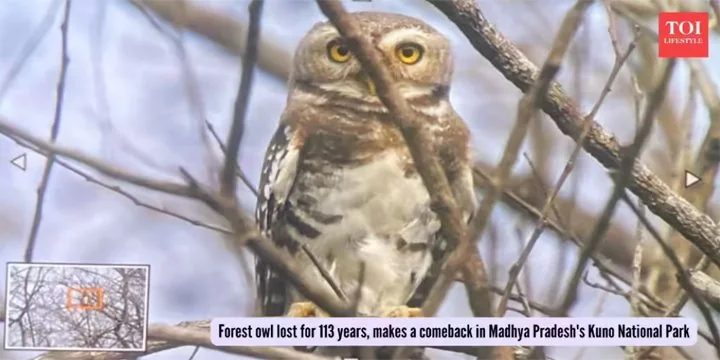
The Forest Owlet, a rare bird species endemic to central India, has been spotted in Kuno National Park in Madhya Pradesh after 113 years. The sighting is significant for biodiversity conservation and indicates improving ecosystem health in the region. DISCOVERY IN KUNO NATIONAL PARK The rare bird was first spotted by Labh Yadav, a local tourism operator, in the Parond Beat area of Kuno National Park.
Why in News?
- The Forest Owlet, a rare bird species endemic to central India, has been spotted in Kuno National Park in Madhya Pradesh after 113 years.
- The sighting is significant for biodiversity conservation and indicates improving ecosystem health in the region.
DISCOVERY IN KUNO NATIONAL PARK
- The rare bird was first spotted by Labh Yadav, a local tourism operator, in the Parond Beat area of Kuno National Park.
- After the sighting:
- Forest officials were informed
- The species was confirmed by Vivek Patel from the Wildlife Research and Conservation Society
- This marks the first recorded sighting of the Forest Owlet in Kuno National Park.
HISTORICAL BACKGROUND OF THE FOREST OWLET
- First discovered in 1872
- Last recorded sighting in 1884
- After that, the species was believed to be extinct
- However, in 1997, the bird was rediscovered in Nandurbar district of Maharashtra, surprising the scientific community.
DISTRIBUTION OF FOREST OWLET
- The species is endemic to central India.
- It has been observed in:
- Madhya Pradesh
- Maharashtra
- Gujarat
- Odisha
- Chhattisgarh
Important habitats include:
- Melghat Tiger Reserve (Maharashtra)
- Forest areas in Khandwa, Burhanpur and Betul districts of Madhya Pradesh
HABITAT OF FOREST OWLET
The species prefers:
- Tropical and Subtropical Moist Lowland Forests
- Dense Deciduous Forests
- Open Dry Deciduous Teak Forests
- Tropical Dry Forests
These habitats are mostly found in
central Indian forest ecosystems.
UNIQUE FEATURES OF FOREST OWLET
- The Forest Owlet belongs to the owl family Strigidae.
- Important characteristics:
- Unspotted crown
- Full throat collar
- Heavily banded wings and tail
- Thickly feathered legs
- Unlike most owls, the Forest Owlet is diurnal, meaning it is active during the daytime.
- It usually hunts between 6 AM and 10 AM.
DIET OF FOREST OWLET
- The bird mainly feeds on:
- Rodents
- Reptiles such as lizards and skinks
- Insects
- This makes it an important part of the forest ecosystem and food chain.
CONSERVATION STATUS
- The Forest Owlet is a highly threatened species.
- Current status:
- IUCN Red List: Endangered
- CITES: Appendix I (highest level of protection against international trade)
- Global population estimate: around 250–999 adult birds.
- The biggest threat is habitat loss and forest fragmentation.
IMPORTANCE OF THE DISCOVERY
- The sighting in Kuno National Park is important because:
- It shows improvement in biodiversity conservation
- It indicates a healthy forest ecosystem
- It may be linked to broader conservation efforts such as the Cheetah Reintroduction Project
- Kuno National Park is already known for hosting cheetahs and diverse wildlife.
CONCLUSION
The rediscovery of the
Forest Owlet in Kuno National Park after 113 years is a major milestone for
wildlife conservation in India. It highlights the importance of
protecting forest habitats and shows that
effective conservation efforts can help rare species survive and recover.
- Prelims: Key facts, institutions, locations and terminology in the article.
- Mains: Connect the topic with Environment, Economy, Polity & Governance.
- Revision: Use the article headings to prepare concise notes and answer-writing points.
Test your understanding
Questions from this article
Prelims practiceWith reference to FOREST OWLET REDISCOVERED IN KUNO NATIONAL PARK AFTER 113 YEARS, consider the following statements:
- The Forest Owlet, a rare bird species endemic to central India, has been spotted in Kuno National Park in Madhya Pradesh after 113 years.
- The sighting is significant for biodiversity conservation and indicates improving ecosystem health in the region.
- The rare bird was first spotted by Labh Yadav, a local tourism operator, in the Parond Beat area of Kuno National Park.
Which of the statements given above are correct?
- 1 and 2 only
- 2 and 3 only
- 1 and 3 only
- 1, 2 and 3
View answer
Answer: (d) 1, 2 and 3. All three statements are drawn from the article.
Mains practiceDiscuss the background, key issues and significance of FOREST OWLET REDISCOVERED IN KUNO NATIONAL PARK AFTER 113 YEARS for India.
Answer in 250 words.
View answer approach
- Why in News?
- DISCOVERY IN KUNO NATIONAL PARK
- HISTORICAL BACKGROUND OF THE FOREST OWLET
- DISTRIBUTION OF FOREST OWLET
- UNIQUE FEATURES OF FOREST OWLET
Frequently asked questionsFrequently asked questions
Why is Forest Owlet Rediscovered In Kuno National Park After 113 Years in the news?
The Forest Owlet, a rare bird species endemic to central India, has been spotted in Kuno National Park in Madhya Pradesh after 113 years. The sighting is significant for biodiversity conservation and indicates improving ecosystem health in the region.
What are the key facts about Forest Owlet Rediscovered In Kuno National Park After 113 Years?
DISCOVERY IN KUNO NATIONAL PARK The rare bird was first spotted by Labh Yadav, a local tourism operator, in the Parond Beat area of Kuno National Park. After the sighting: Forest officials were informed The species was confirmed by Vivek Patel from the Wildlife Research and Conservation Society This marks the first recorded sighting of the Forest Owlet in Kuno National Park. HISTORICAL BACKGROUND OF THE FOREST OWLET First discovered in 1872 Last recorded sighting in 1884 After that, the species was believed to be extinct However, in 1997, the bird was rediscovered in Nandurbar district of Maharashtra, surprising the scientific…
Why is Forest Owlet Rediscovered In Kuno National Park After 113 Years important for UPSC preparation?
The topic connects current developments with Environment, Economy, Polity & Governance and is relevant for both objective revision and analytical answer writing.