UPSC Current Affairs
EU’s carbon border tax
Context: Recently, there is a concern developing for India due to the European Union (EU)’s Carbon Border Adjustment Mechanism (CBAM). The EU’s CBAM policy that intends to tax carbonintensive products coming into the EU from 2026, is divided into two phases, with the first phase (transitional phase) starting in from October 1, 2023. There has been constant exchange of information between the EU and India on the implications of the CBAM.
VRAuthor Desk
3 min read
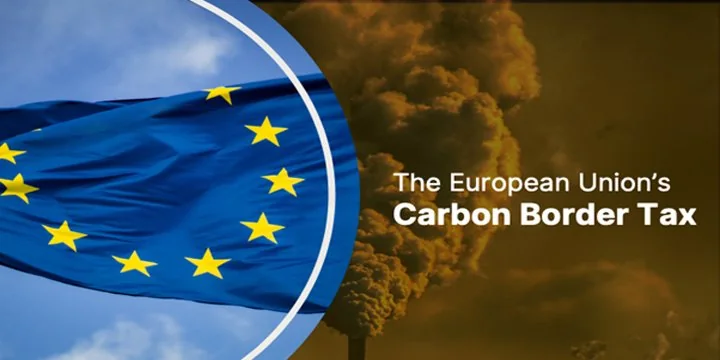
Context: Recently, there is a concern developing for India due to the European Union (EU)’s Carbon Border Adjustment Mechanism (CBAM). The EU’s CBAM policy that intends to tax carbonintensive products coming into the EU from 2026, is divided into two phases, with the first phase (transitional phase) starting in from October 1, 2023. There has been constant exchange of information between the EU and India on the implications of the CBAM.
Context:
- Recently, there is a concern developing for India due to the European Union (EU)’s Carbon Border Adjustment Mechanism (CBAM).
- The EU’s CBAM policy that intends to tax carbonintensive products coming into the EU from 2026, is divided into two phases, with the first phase (transitional phase) starting in from October 1, 2023.
- There has been constant exchange of information between the EU and India on the implications of the CBAM.
- The Commerce and Industry Minister informed recently that the proposed carbon tax on imports is an “illconceived” move which would become the “death knell” for India’s manufacturing sector.
What is CBAM?
- The EU’s Carbon Border Adjustment Mechanism (CBAM) is a tool to put afair price on the carbon emitted during the production of carbon intensive goods which are entering the EU.
- The scheme is also aimed to encourage cleaner industrial production in non-EU countries.
- The EU informed that it intends to achieve the target of a 55% reduction in greenhouse gas (GHG) emissions by 2030, compared to 1990 levels, under the European Green Deal.
- The CBAM is part of the Green Deal package planned to achieve this.
- The EU argues that the higher standard of environmental compliance in emissions perspective in its domestic industries will reduce their competitiveness.
- Thus, it decides to impose an import duty on carbonintensive industries from nonEU countries to meet both these objectives.
- The CBAM is intended to work like the EU’s Emission Trading System (ETS) that sets a cap on the amount of GHG emissions permitted.
- Under the EUETS, companies covered by the scheme have to ‘buy’ the allowances corresponding to their GHG emissions.
- Financial incentives are provided to them to cut emissions.
- But energyintensive industries receive free allowances to ensure their competitiveness in the field.
- This is also a way of preventing carbon leakage which means carbonintensive production by EUbased producers could move to nonEU countries with lax environmental regulations.
- The CBAM has been pitched to replace this allocation of EUETS allowances.
- The CBAM’s transitional phase will last until December 2025.
- In this stage, all EU manufacturers and importers of energyintensive industries will need to report the GHG emissions embedded in their imports without any financial obligations and commitments.
- From January 1, 2026, the CBAM will enter the definitive phase wherein, upon declaration of the emissions embedded in imports, the importers will be required to surrender annually the corresponding number of CBAM certificates.
Comparison with India:
- India has just started working on its own carbon trading mechanism.
- In December 2022, it amended the Energy Conservation Act, 2001, to allow the introduction of the Carbon Credit Trading System (CCTS).
- This is intended to combat climate change by incentivising actions for emission reductions leading to increased investments in clean energy by the private sector.
- The Ministry of Power is still working on the specifics to operationalise the CCTS, including carbon valuation.
- In India, the obligatory CCTS model is also coupled with the voluntary marketbased mechanism which is called the Green Credit Programme Rules which are notified by the Ministry of Environment in 2023.
- The scheme is aimed to encourage more environmentally proactive actions going beyond the carbon reduction mandate.
- Prelims: Key facts, institutions, locations and terminology in the article.
- Mains: Connect the topic with Environment, Economy, Polity & Governance.
- Revision: Use the article headings to prepare concise notes and answer-writing points.
Test your understanding
Questions from this article
Prelims practiceWith reference to EU’s carbon border tax, consider the following statements:
- Recently, there is a concern developing for India due to the European Union (EU)’s Carbon Border Adjustment Mechanism (CBAM).
- The EU’s CBAM policy that intends to tax carbonintensive products coming into the EU from 2026, is divided into two phases, with the first phase (transitional phase) starting in from October 1, 2023.
- There has been constant exchange of information between the EU and India on the implications of the CBAM.
Which of the statements given above are correct?
- 1 and 2 only
- 2 and 3 only
- 1 and 3 only
- 1, 2 and 3
View answer
Answer: (d) 1, 2 and 3. All three statements are drawn from the article.
Mains practiceDiscuss the background, key issues and significance of EU’s carbon border tax for India.
Answer in 250 words.
View answer approach
- Context:
- What is CBAM?
- Comparison with India:
Frequently asked questionsFrequently asked questions
Why is Eu’S Carbon Border Tax in the news?
Context: Recently, there is a concern developing for India due to the European Union (EU)’s Carbon Border Adjustment Mechanism (CBAM). The EU’s CBAM policy that intends to tax carbonintensive products coming into the EU from 2026, is divided into two phases, with the first phase (transitional phase) starting in from October 1, 2023.
What are the key facts about Eu’S Carbon Border Tax?
There has been constant exchange of information between the EU and India on the implications of the CBAM. The Commerce and Industry Minister informed recently that the proposed carbon tax on imports is an “illconceived” move which would become the “death knell” for India’s manufacturing sector. The EU’s Carbon Border Adjustment Mechanism (CBAM) is a tool to put afair price on the carbon emitted during the production of carbon intensive goods which are entering the EU.
Why is Eu’S Carbon Border Tax important for UPSC preparation?
The topic connects current developments with Environment, Economy, Polity & Governance and is relevant for both objective revision and analytical answer writing.