UPSC Current Affairs
Economics Nobel 2023: How Claudia Goldin shed light on the status of women in the workforce
Before Goldin’s book was published in 1990, data mainly from the 20th century had been published, and researchers believed that as the economy grew, so did women’s labour force participation. Goldin reached back to older data to reveal that before industrialisation, more women were likely to have been involved in economic activity related to agriculture and various cottage industries. With greater industrialisation, work was concentrated in factories, and women found it difficult to leave their homes and travel to work.
VRAuthor Desk
3 min read
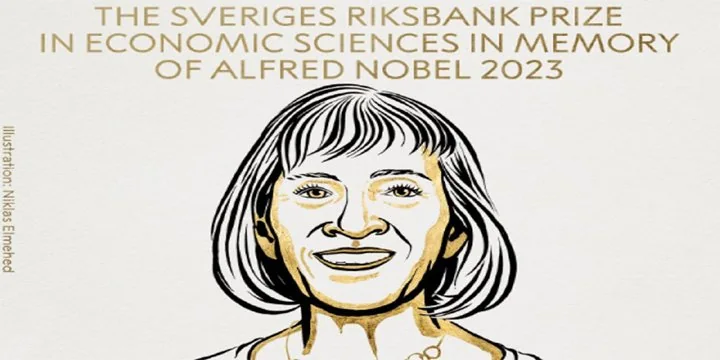
Before Goldin’s book was published in 1990, data mainly from the 20th century had been published, and researchers believed that as the economy grew, so did women’s labour force participation. Goldin reached back to older data to reveal that before industrialisation, more women were likely to have been involved in economic activity related to agriculture and various cottage industries. With greater industrialisation, work was concentrated in factories, and women found it difficult to leave their homes and travel to work.
- Before Goldin’s book was published in 1990, data mainly from the 20th century had been published, and researchers believed that as the economy grew, so did women’s labour force participation.
- Goldin reached back to older data to reveal that before industrialisation, more women were likely to have been involved in economic activity related to agriculture and various cottage industries. With greater industrialisation, work was concentrated in factories, and women found it difficult to leave their homes and travel to work.
- This trend reversed in the early 20th century, with the growth of the services sector. Two other factors played a crucial role in women’s access to higher education and employment — marriage and the contraceptive pill.
The limitations of marriage
- Goldin’s work found that by the beginning of the 20th century, while around 20 per cent of women were gainfully employed, the share of married women was only five per cent.
- Goldin noted that legislation known as “marriage bars” often prevented married women from continuing their employment as teachers or office workers. Despite an increasing demand for labour, married women were excluded from parts of the labour market.
- Goldin also demonstrated that there was another important factor in the slow reduction of the gap between men’s and women’s rates of employment, namely women’s expectations for their future careers.
- Women’s expectations were based on the experience of their mothers, and thus their educational and professional decisions were not taken with the expectation of having a long, uninterrupted, and fruitful career.
Contraceptive pills
- By the end of the 1960s, as easy-to-use contraceptive pills became more popular, women could exercise greater control over childbirth and actually plan careers and motherhood. Women also ventured beyond the services sector, studying subjects like law, economics, and medicine.
- Now, women were catching up in terms of education and fields of employment. However, one glaring gap still remained and continues to this day — the gender-based pay gap.
Pay gap and parenthood
- Till the time men and women worked in factories, where the pay depended on the day’s countable output, the pay gap was not too high. It became wider when monthly pay contracts came into the picture. One factor significantly impacted how men were paid versus women — childbirth.
- As women had to shoulder more of the parenting responsibilities once a child was born, they were also punished for this at the work front in terms of a slower rise on the payscale.
About the Economics Nobel
- A Nobel Prize in Economics was not part of Alfred Nobel’s 1895 will that established the other prizes. The prize is based on a donation received by the Nobel Foundation in 1968 from Sveriges Riksbank (Sweden’s central bank), on the bank’s 300th anniversary.
- It is formally called the Sveriges Riksbank Prize in Economic Sciences in Memory of Alfred Nobel.
Conclusion- Goldin is only the third woman to win this honour. In 2009, Elinor Ostrom got the award along with Oliver E Williamson, while in 2019, Esther Duflo shared it with Abhijit Banerjee and Michael Kremer.
Syllabus- GS-3; Economics
Source- Indian Express
- Prelims: Key facts, institutions, locations and terminology in the article.
- Mains: Connect the topic with Economy, Defence, Polity & Governance.
- Revision: Use the article headings to prepare concise notes and answer-writing points.
Test your understanding
Questions from this article
Prelims practiceWith reference to Economics Nobel 2023: How Claudia Goldin shed light on the status of women in the workforce, consider the following statements:
- Before Goldin’s book was published in 1990, data mainly from the 20th century had been published, and researchers believed that as the economy grew, so did women’s labour force participation.
- Goldin reached back to older data to reveal that before industrialisation, more women were likely to have been involved in economic activity related to agriculture and various cottage industries. With greater…
- This trend reversed in the early 20th century, with the growth of the services sector. Two other factors played a crucial role in women’s access to higher education and employment — marriage and the contraceptive pill.
Which of the statements given above are correct?
- 1 and 2 only
- 2 and 3 only
- 1 and 3 only
- 1, 2 and 3
View answer
Answer: (d) 1, 2 and 3. All three statements are drawn from the article.
Mains practiceDiscuss the background, key issues and significance of Economics Nobel 2023: How Claudia Goldin shed light on the status of women in the workforce for India.
Answer in 250 words.
View answer approach
- Background and context
- Key facts and institutional framework
- Significance and way forward
Frequently asked questionsFrequently asked questions
Why is Economics Nobel 2023: How Claudia Goldin Shed Light On The Status Of Women In The Workforce in the news?
Before Goldin’s book was published in 1990, data mainly from the 20th century had been published, and researchers believed that as the economy grew, so did women’s labour force participation. Goldin reached back to older data to reveal that before industrialisation, more women were likely to have been involved in economic activity related to agriculture and various cottage industries.
What are the key facts about Economics Nobel 2023: How Claudia Goldin Shed Light On The Status Of Women In The Workforce?
With greater industrialisation, work was concentrated in factories, and women found it difficult to leave their homes and travel to work. This trend reversed in the early 20th century, with the growth of the services sector. Two other factors played a crucial role in women’s access to higher education and employment — marriage and the contraceptive pill.
Why is Economics Nobel 2023: How Claudia Goldin Shed Light On The Status Of Women In The Workforce important for UPSC preparation?
The topic connects current developments with Economy, Defence, Polity & Governance and is relevant for both objective revision and analytical answer writing.