UPSC Current Affairs
Discovery of palaeolithic tools
Context: Recently, the floods in the Mulugu district of Telangana has led to a fresh discovery of quartzite tools which belong to Palaeolithic age. The tools and hand axes were found in the sand bed of a stream which dried up after the flood. The new discovery of the tools add to understanding about human habitations in Telangana and around central India.
VRAuthor Desk
2 min read
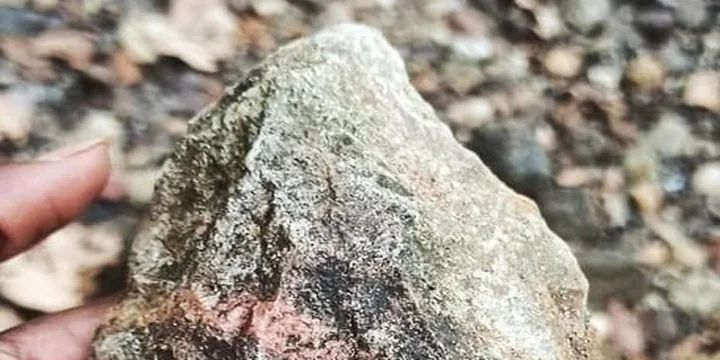
Context: Recently, the floods in the Mulugu district of Telangana has led to a fresh discovery of quartzite tools which belong to Palaeolithic age. The tools and hand axes were found in the sand bed of a stream which dried up after the flood. The new discovery of the tools add to understanding about human habitations in Telangana and around central India.
Context:
- Recently, the floods in the Mulugu district of Telangana has led to a fresh discovery of quartzite tools which belong to Palaeolithic age.
- The tools and hand axes were found in the sand bed of a stream which dried up after the flood.
- The new discovery of the tools add to understanding about human habitations in Telangana and around central India.
- The districts like Mulugu, Jayashankar Bhupalpally in the northeastern parts of Telangana were flooded in July, 2023 which led to largescale destruction.
- The hand axes were found in the streams between Gurrevula and Bhupatipuram areas in Mulugu district.
- The stone axe measured around 15.5cm in length, 11cm in width and 5.5cm in thickness.
- According to some palaeontologists the stone axe belongs to the Lower Palaeolithic period and is nearly about 30 lakh years ago.
- Palaeolithic Age is also came to be known as or Old Stone Age or Early Stone Age.
- It dates back to nearly 33 lakh years BC. It lasted for about 10,000 years.
- The period is identified based on the tools, chipping style, the material and the size of tools.
- Palaeolithic hunter gatherers mostly used heavy quartzite and large tools.
- Similar to them other hand axes have been discovered worldwide.
- The tools were mostly used for cutting wood and also killing animals for food.
- It is to be noted that In 1863, the East India Company’s Geological Survey team found a palaeolithic site at Attirampakkam near Madras with bifacial handaxes made of stone by early human beings. The tools are nearly 15 lakh years old.
- Palaeolithic culture has been famously labelled as Madras HandAxe Industry or Madrasian Culture.
About Palaeolithic Age:
- It is also called as the Old Stone Ageand is a period in human prehistory which is distinguished by the original development of stone tools, and that represents almost the entire period of human prehistoric technology.
- The Palaeolithic period mostly overlaps with the Pleistocene epoch of geologic time.
- Both of them ended 12,000 years ago although the Pleistocene started 2.6 million years ago.
- The population density around the period was very low, only about 0.4 inhabitants per square kilometre (1/sq mi).
- This was most likely to the fact that low body fat, infanticide, high levels of physical activity among women, late weaning of infants, and a nomadic lifestyle.
- Prelims: Key facts, institutions, locations and terminology in the article.
- Mains: Connect the topic with Polity & Governance, Science & Technology.
- Revision: Use the article headings to prepare concise notes and answer-writing points.
Test your understanding
Questions from this article
Prelims practiceWith reference to Discovery of palaeolithic tools, consider the following statements:
- Recently, the floods in the Mulugu district of Telangana has led to a fresh discovery of quartzite tools which belong to Palaeolithic age.
- The tools and hand axes were found in the sand bed of a stream which dried up after the flood.
- The new discovery of the tools add to understanding about human habitations in Telangana and around central India.
Which of the statements given above are correct?
- 1 and 2 only
- 2 and 3 only
- 1 and 3 only
- 1, 2 and 3
View answer
Answer: (d) 1, 2 and 3. All three statements are drawn from the article.
Mains practiceDiscuss the background, key issues and significance of Discovery of palaeolithic tools for India.
Answer in 250 words.
View answer approach
- Context:
- About Palaeolithic Age:
- Background and context
- Key facts and institutional framework
- Significance and way forward
Frequently asked questionsFrequently asked questions
Why is Discovery Of Palaeolithic Tools in the news?
Context: Recently, the floods in the Mulugu district of Telangana has led to a fresh discovery of quartzite tools which belong to Palaeolithic age. The tools and hand axes were found in the sand bed of a stream which dried up after the flood.
What are the key facts about Discovery Of Palaeolithic Tools?
The new discovery of the tools add to understanding about human habitations in Telangana and around central India. The districts like Mulugu, Jayashankar Bhupalpally in the northeastern parts of Telangana were flooded in July, 2023 which led to largescale destruction. The hand axes were found in the streams between Gurrevula and Bhupatipuram areas in Mulugu district.
Why is Discovery Of Palaeolithic Tools important for UPSC preparation?
The topic connects current developments with Polity & Governance, Science & Technology and is relevant for both objective revision and analytical answer writing.