UPSC Current Affairs
Cyclone Michaung to make landfall in Tamil Nadu: What is a cyclone — and its different types?
Cyclone Michaung is the fourth tropical cyclone of the year over the Bay of Bengal. The National Disaster Management Authority (NDMA) classifies cyclones broadly into two categories: extratropical cyclones and tropical cyclones. A cyclone is a large-scale system of air that rotates around the centre of a low-pressure area.
VRAuthor Desk
2 min read
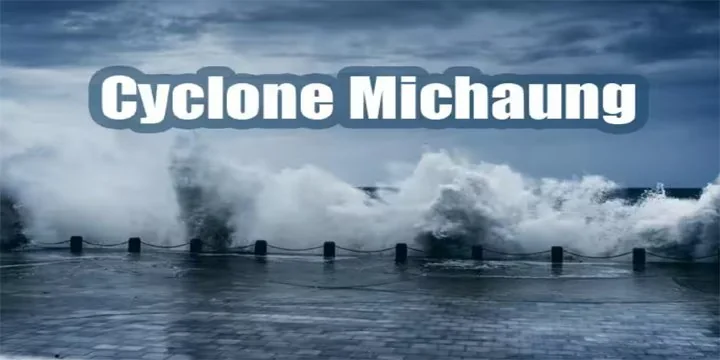
Cyclone Michaung is the fourth tropical cyclone of the year over the Bay of Bengal. The National Disaster Management Authority (NDMA) classifies cyclones broadly into two categories: extratropical cyclones and tropical cyclones. A cyclone is a large-scale system of air that rotates around the centre of a low-pressure area.
Cyclone Michaung is the fourth tropical cyclone of the year over the Bay of Bengal. The National Disaster Management Authority (NDMA) classifies cyclones broadly into two categories: extratropical cyclones and tropical cyclones.
What is a cyclone?
- A cyclone is a large-scale system of air that rotates around the centre of a low-pressure area. It is usually accompanied by violent storms and bad weather.
- As per NDMA, a cyclone is characterised by inward spiralling winds that rotate anticlockwise in the Northern Hemisphere and clockwise in the Southern Hemisphere.
What are extratropical cyclones?
- Also known as mid-latitude cyclones, extratropical cyclones occur outside the tropics (that is beyond the areas that fall under the Tropic of Cancer and the Tropic of Capricorn). They have “cold air at their core, and derive their energy from the release of potential energy when cold and warm air masses interact”.
- Such cyclones always have one or more fronts connected to them. A front is a weather system that is the boundary between two kinds of air masses, where one front is represented by warm air and the other by cold air. Such cyclones can occur over land and ocean.
What are tropical cyclones?
- Tropical cyclones are those which develop in the regions between the Tropics of Capricorn and Cancer. They are the most devastating storms on Earth. Such cyclones develop when “thunderstorm activity starts building close to the centre of circulation, and the strongest winds and rain are no longer in a band far from the centre,”
- The core of the storm turns warm, and the cyclone gets most of its energy from the “latent heat” released when water vapour that has evaporated from warm ocean waters condenses into liquid water, the agency added. Moreover, warm fronts or cold fronts aren’t associated with tropical cyclones.
- Tropical cyclones have different names depending on their location and strength. For instance, they are known as hurricanes in the Caribbean Sea, the Gulf of Mexico, the North Atlantic Ocean and the eastern and central North Pacific Ocean. In the western North Pacific, they are called typhoons.
Conclusion- Cyclones, particularly in Bay of Bengal can lead to significant loss of lives and property. Hence, The Administration should take necessary structural and non structural measures to mitigate the losses .
Syllabus- GS-1; Cyclones
Source- Indian Express
- Prelims: Key facts, institutions, locations and terminology in the article.
- Mains: Connect the topic with Polity & Governance.
- Revision: Use the article headings to prepare concise notes and answer-writing points.
Test your understanding
Questions from this article
Prelims practiceWith reference to Cyclone Michaung to make landfall in Tamil Nadu: What is a cyclone — and its different types?, consider the following statements:
- A cyclone is a large-scale system of air that rotates around the centre of a low-pressure area. It is usually accompanied by violent storms and bad weather.
- As per NDMA, a cyclone is characterised by inward spiralling winds that rotate anticlockwise in the Northern Hemisphere and clockwise in the Southern Hemisphere.
- Also known as mid-latitude cyclones, extratropical cyclones occur outside the tropics (that is beyond the areas that fall under the Tropic of Cancer and the Tropic of Capricorn). They have “cold air at their core, and…
Which of the statements given above are correct?
- 1 and 2 only
- 2 and 3 only
- 1 and 3 only
- 1, 2 and 3
View answer
Answer: (d) 1, 2 and 3. All three statements are drawn from the article.
Mains practiceDiscuss the background, key issues and significance of Cyclone Michaung to make landfall in Tamil Nadu: What is a cyclone — and its different types? for India.
Answer in 250 words.
View answer approach
- What is a cyclone?
- What are extratropical cyclones?
- What are tropical cyclones?
Frequently asked questionsFrequently asked questions
Why is Cyclone Michaung To Make Landfall In Tamil Nadu: What Is A Cyclone — And Its Different Types in the news?
Cyclone Michaung is the fourth tropical cyclone of the year over the Bay of Bengal. The National Disaster Management Authority (NDMA) classifies cyclones broadly into two categories: extratropical cyclones and tropical cyclones.
What are the key facts about Cyclone Michaung To Make Landfall In Tamil Nadu: What Is A Cyclone — And Its Different Types?
A cyclone is a large-scale system of air that rotates around the centre of a low-pressure area. It is usually accompanied by violent storms and bad weather. As per NDMA, a cyclone is characterised by inward spiralling winds that rotate anticlockwise in the Northern Hemisphere and clockwise in the Southern Hemisphere.
Why is Cyclone Michaung To Make Landfall In Tamil Nadu: What Is A Cyclone — And Its Different Types important for UPSC preparation?
The topic connects current developments with Polity & Governance and is relevant for both objective revision and analytical answer writing.