UPSC Current Affairs
Cyclone and its formation
What is cyclone : A cycloneis basically a large air mass that rotates around a strong center of low atmospheric pressure. It rotates in counter clockwise in the Northern Hemisphere and clockwise in the Southern Hemisphere. The process of cyclone formation and intensification is known as Types of cyclones : There are basically two types of cyclones.
VRAuthor Desk
2 min read
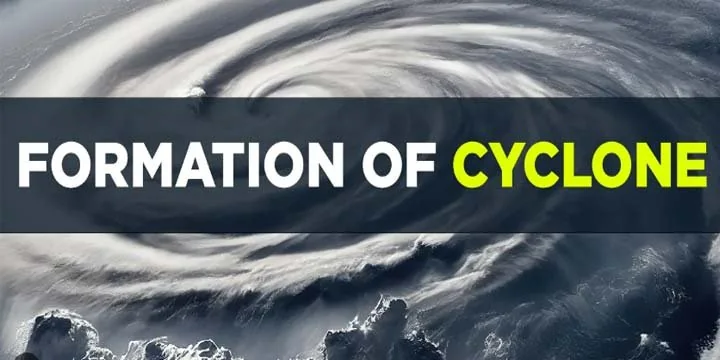
What is cyclone : A cycloneis basically a large air mass that rotates around a strong center of low atmospheric pressure. It rotates in counter clockwise in the Northern Hemisphere and clockwise in the Southern Hemisphere. The process of cyclone formation and intensification is known as Types of cyclones : There are basically two types of cyclones.
What is cyclone :
- A cycloneis basically a large air mass that rotates around a strong center of low atmospheric pressure.
- It rotates in counter clockwise in the Northern Hemisphere and clockwise in the Southern Hemisphere.
- The process of cyclone formation and intensification is known as
Types of cyclones :
- There are basically two types of cyclones.
- Tropical cyclones which occur in tropical areas around the world.
Tropical cyclones
- Temperate cyclones also known as extra tropical cyclones or wave cyclones occur due to fronts.
Temperate cyclones around the world
Tropical cyclones :
- Tropical Cyclones are one of the most devastating natural calamities around the world.
- These are violent storms which originate over the seas and oceans in tropical areas.
- After originating they move over to the coastal areas bringing about large scale destruction.
- The destruction is due to violent winds, very heavy rainfall.
- They mostly originate and intensify over warm tropical oceans which acts as heat engine.
- The conditions favourable for the formation and intensification of tropical storms are:
- Large sea surface with temperature higher than 27° C.
- Presence of the Coriolis force.
- Small variations in the vertical wind speed.
- A pre-existing weak low- pressure area
- Upper divergence above the sea level system.
Structure of the Tropical Cyclone :
- The main parts of a tropical cyclone are the rainbands, the eye, and the
- Air spirals in toward the center in a counter-clockwise pattern in the northern hemisphere (clockwise in the southern hemisphere), and out the top in the opposite direction.
Coastal areas vulnerable to cyclones in India :
Classification of Cyclones according to the wind speed :
Syllabus : Prelims + Mains; GS1 – Geography
- Prelims: Key facts, institutions, locations and terminology in the article.
- Mains: Connect the topic with Polity & Governance.
- Revision: Use the article headings to prepare concise notes and answer-writing points.
Test your understanding
Questions from this article
Prelims practiceWith reference to Cyclone and its formation, consider the following statements:
- A cycloneis basically a large air mass that rotates around a strong center of low atmospheric pressure.
- It rotates in counter clockwise in the Northern Hemisphere and clockwise in the Southern Hemisphere.
- The process of cyclone formation and intensification is known as
Which of the statements given above are correct?
- 1 and 2 only
- 2 and 3 only
- 1 and 3 only
- 1, 2 and 3
View answer
Answer: (d) 1, 2 and 3. All three statements are drawn from the article.
Mains practiceDiscuss the background, key issues and significance of Cyclone and its formation for India.
Answer in 250 words.
View answer approach
- What is cyclone :
- Types of cyclones :
- Tropical cyclones :
- Structure of the Tropical Cyclone :
- Coastal areas vulnerable to cyclones in India :
Frequently asked questionsFrequently asked questions
Why is Cyclone And Its Formation in the news?
What is cyclone : A cycloneis basically a large air mass that rotates around a strong center of low atmospheric pressure. It rotates in counter clockwise in the Northern Hemisphere and clockwise in the Southern Hemisphere.
What are the key facts about Cyclone And Its Formation?
The process of cyclone formation and intensification is known as Types of cyclones : There are basically two types of cyclones. Tropical cyclones which occur in tropical areas around the world. Tropical cyclones Temperate cyclones also known as extra tropical cyclones or wave cyclones occur due to fronts.
Why is Cyclone And Its Formation important for UPSC preparation?
The topic connects current developments with Polity & Governance and is relevant for both objective revision and analytical answer writing.