UPSC Current Affairs
Coral Bleaching In Lakshadweep
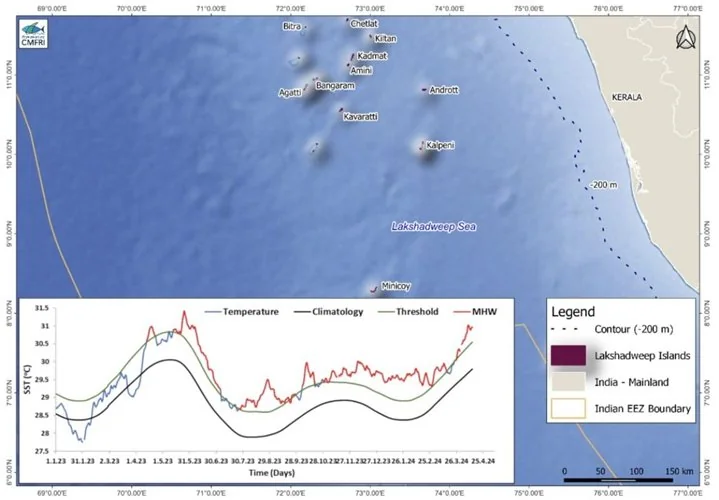
ICAR-Central Marine Fisheries Research Institute (CMFRI) has found that coral reefs in the Lakshadweep Sea have undergone severe bleaching. REASON: Prolonged marine heatwaves since October 2023. Corals are marine invertebrates or animals not possessing a spine.
VRAuthor Desk
2 min read

ICAR-Central Marine Fisheries Research Institute (CMFRI) has found that coral reefs in the Lakshadweep Sea have undergone severe bleaching. REASON: Prolonged marine heatwaves since October 2023. Corals are marine invertebrates or animals not possessing a spine.
ICAR-Central Marine Fisheries Research Institute (CMFRI) has found that
coral reefs in the Lakshadweep Sea have undergone severe bleaching.
REASON:
Prolonged marine heatwaves since October 2023.
WHAT ARE CORAL REEFS?
- Corals are marine invertebrates or animals not possessing a spine.
- Each coral is called a polyp and thousands of such polyps live together to form a colony, which grows when polyps multiply to make copies of themselves.
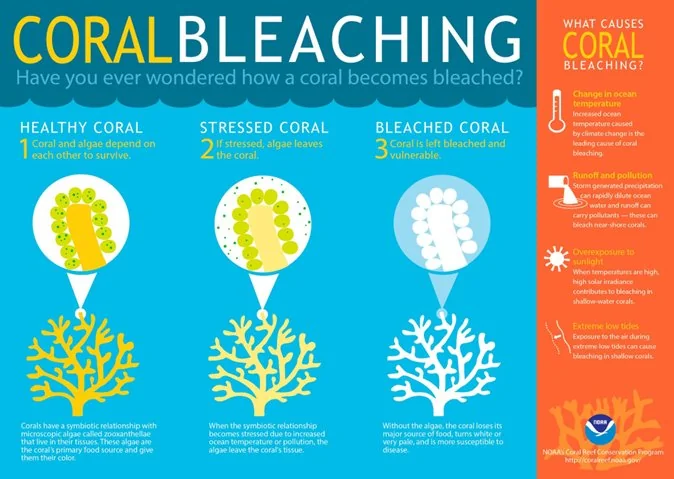
- Corals share a symbiotic relationship with single-celled algae called zooxanthellae.
- The algae provides the coral with food and nutrients, which they make through photosynthesis, using the sun’s light. The zooxanthellae also give corals their bright colour.
- In turn, the corals give the algae a home and key nutrients.
WHAT IS CORAL BLEACHING?
- Coral Bleaching happens when corals experience stress in their environment due to changes in temperature, pollution or high levels of ocean acidity.
- Under stressed conditions, the zooxanthellae or food-producing algae living inside coral polyps start producing reactive oxygen species, which are not beneficial to the corals.
- So, the corals expel the colour-giving zooxanthellae from their polyps, which exposes their pale white exoskeleton, giving the corals a bleached appearance.
- This also ends the symbiotic relationship that helps the corals to survive and grow.
CAUSES OF CORAL BLEACHING
- Change in Ocean Temperature: Increased Ocean temperature caused by climate change is the leading cause of coral bleaching.
- Runoff and Pollution: Storm generated precipitation can rapidly dilute ocean water and runoff can carry pollutants, which can bleach near shore corals.
- Overexposure to sunlight: When temperatures are high, high solar irradiance contributes to bleaching in shallow water corals.
- Extremely low tides: Exposure to the air during extremely low tides can cause bleaching in shallow corals.
THE TEMPERATURES IN LAKSHADWEEP SEA
Corals
experience thermal stress when
sea surface temperatures exceed 1 degree celsius above the maximum mean temperature. This
stress worsens if the
high temperatures persist over a period of time.
Scientists use
the Degree Heating Week (DHW) indicator to measure accumulated heat stress in an area over the
past 12 weeks,
by adding up any temperature that exceeds the bleaching threshold during that time period. This is calculated in celsius-weeks.
DHW values above 4 degree celsius-weeks cause significant coral bleaching — a threshold that Lakshadweep has now crossed, CMFRI found.
However,
Lakshadweep Sea has been consistently experiencing temperatures 1 degree celsius above the norm since October 27, 2023.
- Prelims: Key facts, institutions, locations and terminology in the article.
- Mains: Connect the topic with Environment, Polity & Governance.
- Revision: Use the article headings to prepare concise notes and answer-writing points.
Test your understanding
Questions from this article
Prelims practiceWith reference to Coral Bleaching In Lakshadweep, consider the following statements:
- Corals are marine invertebrates or animals not possessing a spine.
- Each coral is called a polyp and thousands of such polyps live together to form a colony, which grows when polyps multiply to make copies of themselves.
- Corals share a symbiotic relationship with single-celled algae called zooxanthellae.
Which of the statements given above are correct?
- 1 and 2 only
- 2 and 3 only
- 1 and 3 only
- 1, 2 and 3
View answer
Answer: (d) 1, 2 and 3. All three statements are drawn from the article.
Mains practiceDiscuss the background, key issues and significance of Coral Bleaching In Lakshadweep for India.
Answer in 250 words.
View answer approach
- REASON:
- WHAT ARE CORAL REEFS?
- WHAT IS CORAL BLEACHING?
- CAUSES OF CORAL BLEACHING
Frequently asked questionsFrequently asked questions
Why is Coral Bleaching In Lakshadweep in the news?
ICAR-Central Marine Fisheries Research Institute (CMFRI) has found that coral reefs in the Lakshadweep Sea have undergone severe bleaching. REASON: Prolonged marine heatwaves since October 2023.
What are the key facts about Coral Bleaching In Lakshadweep?
Corals are marine invertebrates or animals not possessing a spine. Each coral is called a polyp and thousands of such polyps live together to form a colony, which grows when polyps multiply to make copies of themselves. Corals share a symbiotic relationship with single-celled algae called zooxanthellae.
Why is Coral Bleaching In Lakshadweep important for UPSC preparation?
The topic connects current developments with Environment, Polity & Governance and is relevant for both objective revision and analytical answer writing.