UPSC Current Affairs
Components of SIM card, Functioning
Context: In 2021, there were more than 14 billion cellular devices in the world even though there were only seven billion people. The ubiquity of these devices but especially smartphones has come to define the contemporary era together with climate change, antimicrobial resistance, and war. ‘SIM’ stands for ‘subscriber identification module’.
VRAuthor Desk
3 min read
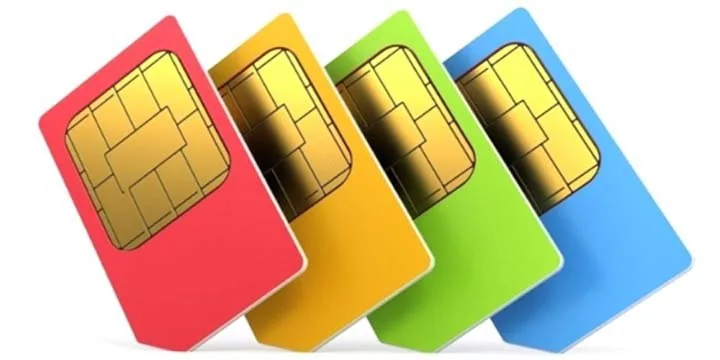
Context: In 2021, there were more than 14 billion cellular devices in the world even though there were only seven billion people. The ubiquity of these devices but especially smartphones has come to define the contemporary era together with climate change, antimicrobial resistance, and war. ‘SIM’ stands for ‘subscriber identification module’.
Context:
- In 2021, there were more than 14 billion cellular devices in the world even though there were only seven billion people.
- The ubiquity of these devices but especially smartphones has come to define the contemporary era together with climate change, antimicrobial resistance, and war.
What is a SIM card?
- ‘SIM’ stands for ‘subscriber identification module’.
- Specifically, it is an integrated circuit, or a microchip, that identifies the subscriber on a given network.
- The SIM card is a subscriber’s ID card in this city.
- In order for a mobile phone to connect to any cellular network that follows the Global System for Mobile Communications (GSM) standard, a SIM card is mandatory.
- This relationship is established using a unique authentication key a piece of data that a user needs to ‘unlock’ access to the network.
- Every SIM card stores this data and it is designed such that the user can’t access it through their phone.
- SIM cards also store information about its own ID number, the IMSI, the subscriber’s location area identity, a list of preferred networks, emergency numbers, and depending on the space available the subscriber’s contacts and SMS messages.
How does a SIM card work?
- SIM cards are designed according to the ISO/IEC 7816 international standard maintained by as its name indicates the International Organisation for Standardisation and the International Electrotechnical Commission.
- It applies to electronic identification cards, including smart cards. In this standard, the card itself consists of the integrated circuit, which is glued to a silicon substrate on the top side.
- On the other side of the substrate are metal contacts, which form the goldcoloured side of the SIM card.
- Wires connect the integrated circuit from its bottom side to the metal contacts on the top side, and the contacts interface with the phone’s data connectors.
- The metal contacts have a segmented appearance.
- Each segment is called a pin and has a specific purpose.
- On the network side, the SIM helps a phone establish its place within a cellular network.
How have SIM cards changed?
- SIM cards are a type of smart card, and the history of smart cards begin in the late 1960s.
- The size and architecture of this microchip evolved in leaps and bounds in the subsequent decades, following Moore’s law.
- The SIM card itself evolved according to the standards that defined the networks to which its users wished to connect.
What is an eSIM?
- Over the years, the SIM card has shrunk from the SIM to the mini SIM to the micro SIM to the nano SIM.
- The latest on this path is the eSIM, with specifications defined by the GSM Association.
- In the eSIM paradigm, the SIM software is loaded on to a UICC that is permanently installed in the mobile equipment in the factory itself, that it can’t be removed.
- An eSIM has two immediate advantages.
- First, it is considered to be environmentally friendlier than a physical SIM: its reprogrammability means no need for more plastic and metal for a new SIM.
- Second, if a malicious person gains access to your phone, they won’t be able to separately access the SIM application nor be able to duplicate it.
- There are also at least two disadvantages.
- First, in some countries, including the U.S., eSIMs can be programmed by subscribers themselves.
- But this process might be difficult for those with low digital literacy, such as the elderly.
- Second, an eSIM can in theory allow network operators to track subscribers’ data, including inside apps on the device, especially in the absence of data privacy laws.
Syllabus: Prelims
- Prelims: Key facts, institutions, locations and terminology in the article.
- Mains: Connect the topic with Environment, Polity & Governance, Science & Technology.
- Revision: Use the article headings to prepare concise notes and answer-writing points.
Test your understanding
Questions from this article
Prelims practiceWith reference to Components of SIM card, Functioning, consider the following statements:
- In 2021, there were more than 14 billion cellular devices in the world even though there were only seven billion people.
- The ubiquity of these devices but especially smartphones has come to define the contemporary era together with climate change, antimicrobial resistance, and war.
- ‘SIM’ stands for ‘subscriber identification module’.
Which of the statements given above are correct?
- 1 and 2 only
- 2 and 3 only
- 1 and 3 only
- 1, 2 and 3
View answer
Answer: (d) 1, 2 and 3. All three statements are drawn from the article.
Mains practiceDiscuss the background, key issues and significance of Components of SIM card, Functioning for India.
Answer in 250 words.
View answer approach
- Context:
- What is a SIM card?
- How does a SIM card work?
- How have SIM cards changed?
- What is an eSIM?
Frequently asked questionsFrequently asked questions
Why is Components Of Sim Card, Functioning in the news?
Context: In 2021, there were more than 14 billion cellular devices in the world even though there were only seven billion people. The ubiquity of these devices but especially smartphones has come to define the contemporary era together with climate change, antimicrobial resistance, and war.
What are the key facts about Components Of Sim Card, Functioning?
‘SIM’ stands for ‘subscriber identification module’. Specifically, it is an integrated circuit, or a microchip, that identifies the subscriber on a given network. The SIM card is a subscriber’s ID card in this city.
Why is Components Of Sim Card, Functioning important for UPSC preparation?
The topic connects current developments with Environment, Polity & Governance, Science & Technology and is relevant for both objective revision and analytical answer writing.