UPSC Current Affairs
China's Brahmaputra Project
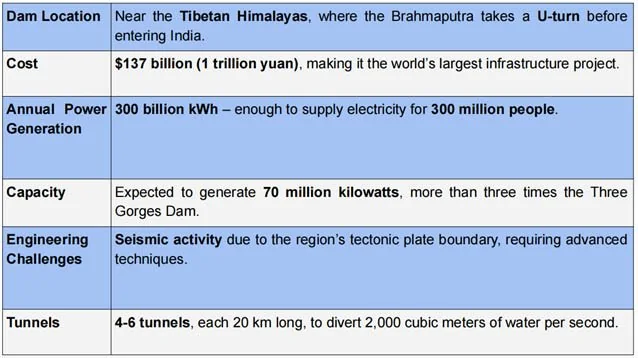
In December 2024, China approved the construction of the world’s largest hydropower project on the Brahmaputra River (known as Yarlung Zangbo in Tibet), located near the Indian border. The project, estimated to cost $137 billion, will be the largest infrastructure project ever conceived, surpassing even the scale of China’s Three Gorges Dam. This has raised significant concerns for India and Bangladesh, both of which depend on the Brahmaputra for water resources, agriculture, and hydropower.
VRAuthor Desk
3 min read
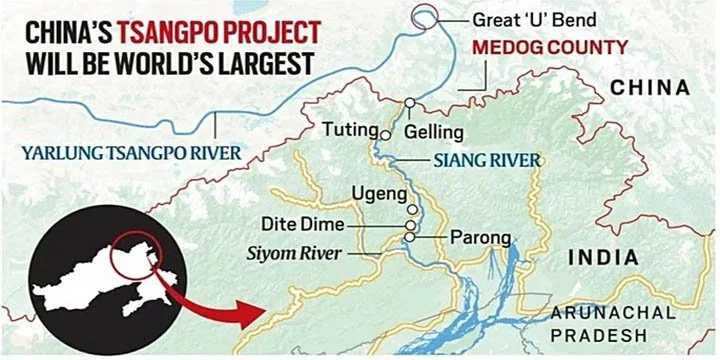
In December 2024, China approved the construction of the world’s largest hydropower project on the Brahmaputra River (known as Yarlung Zangbo in Tibet), located near the Indian border. The project, estimated to cost $137 billion, will be the largest infrastructure project ever conceived, surpassing even the scale of China’s Three Gorges Dam. This has raised significant concerns for India and Bangladesh, both of which depend on the Brahmaputra for water resources, agriculture, and hydropower.
- In December 2024, China approved the construction of the world’s largest hydropower project on the Brahmaputra River (known as Yarlung Zangbo in Tibet), located near the Indian border.
- The project, estimated to cost $137 billion, will be the largest infrastructure project ever conceived, surpassing even the scale of China’s Three Gorges Dam.
- This has raised significant concerns for India and Bangladesh, both of which depend on the Brahmaputra for water resources, agriculture, and hydropower.
STRATEGIC & ENVIRONMENTAL GOALS
- Energy Security & Carbon Goals:
- This hydropower project is central to China’s energy transition, helping reduce reliance on coal and contributing to carbon neutrality.
- By generating significant renewable energy, the project supports China's low-carbon strategy and its drive toward green energy.
- Economic Impact:
- Revenue: The dam is expected to generate 20 billion yuan ($3 billion) annually for Tibet Autonomous Region, contributing to its economic development.
- Job Creation: Thousands of new jobs will be created in engineering, construction, and support services, boosting local economies.
- Infrastructure Development:
- The dam will provide critical electricity, water conservancy, and transport infrastructure, strengthening Tibet's connectivity with surrounding regions.
- Ecological Impact:
- The project is designed to be environmentally friendly, focusing on ecological protection. However, concerns remain about the impact on local biodiversity and river ecosystems.
GEOPOLITICAL IMPLICATIONS
ENVIRONMENTAL CONSIDERATIONS
- Potential Risks:
- The Tibetan Plateau is seismically active, which raises concerns about the stability of the dam during earthquakes.
- The impact of the dam on local wildlife and ecosystems is another significant concern. Despite this, Chinese authorities have assured that the project will focus on environmental protection.
- Green Energy Strategy:
- This dam will be integral to China's green energy goals, alongside efforts to develop solar and wind energy in surrounding areas.
- The goal is to create a complementary energy mix based on hydropower, wind, and solar.
ENGINEERING CHALLENGES & SOLUTION
- Seismic Risks: The construction site lies in a seismically active area, requiring extensive earthquake-resistant engineering.
- The Chinese government has promised that extensive geological explorations and advanced engineering will mitigate such risks.
- Tunnel Construction: Drilling 4-6 tunnels through the Namcha Barwa Mountain to divert water is a huge engineering challenge.
- The tunnels will be 20 km long each, requiring cutting-edge techniques to ensure structural integrity.
IMPACT ON NATIONAL SECURITY
- National Security Concerns: China has stated that the project will also serve its national security interests, especially related to water control.
- The ability to manage water flow along the Brahmaputra gives China leverage over downstream countries like India and Bangladesh.
- Strategic Importance: The dam will allow China to ensure its water security, which is particularly critical as South Asia experiences increasing water scarcity and climate stress.
FUTURE DIPLOMATIC & REGIONAL COOPERATION
- India-China Dialogue:
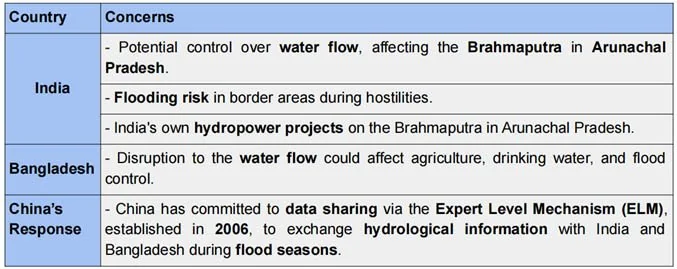
- The Expert Level Mechanism (ELM) has been in place since 2006, enabling China to provide hydrological data to India during the flood season. This has helped mitigate risks related to water management.
- However, concerns persist about data transparency and China’s control over the Brahmaputra’s flow.
- Regional Cooperation on Water Sharing:
- For sustainable management of the Brahmaputra, robust water-sharing agreements between China, India, and Bangladesh are critical.
- As China moves forward with the world's largest hydropower project, it may create opportunities for further regional cooperation on transboundary rivers.
- Prelims: Key facts, institutions, locations and terminology in the article.
- Mains: Connect the topic with Environment, Economy, International Relations.
- Revision: Use the article headings to prepare concise notes and answer-writing points.
Test your understanding
Questions from this article
Prelims practiceWith reference to China's Brahmaputra Project, consider the following statements:
- In December 2024, China approved the construction of the world’s largest hydropower project on the Brahmaputra River (known as Yarlung Zangbo in Tibet), located near the Indian border.
- The project, estimated to cost $137 billion, will be the largest infrastructure project ever conceived, surpassing even the scale of China’s Three Gorges Dam.
- This has raised significant concerns for India and Bangladesh, both of which depend on the Brahmaputra for water resources, agriculture, and hydropower.
Which of the statements given above are correct?
- 1 and 2 only
- 2 and 3 only
- 1 and 3 only
- 1, 2 and 3
View answer
Answer: (d) 1, 2 and 3. All three statements are drawn from the article.
Mains practiceDiscuss the background, key issues and significance of China's Brahmaputra Project for India.
Answer in 250 words.
View answer approach
- STRATEGIC & ENVIRONMENTAL GOALS
- GEOPOLITICAL IMPLICATIONS
- ENVIRONMENTAL CONSIDERATIONS
- ENGINEERING CHALLENGES & SOLUTION
- IMPACT ON NATIONAL SECURITY
Frequently asked questionsFrequently asked questions
Why is China'S Brahmaputra Project in the news?
In December 2024, China approved the construction of the world’s largest hydropower project on the Brahmaputra River (known as Yarlung Zangbo in Tibet), located near the Indian border. The project, estimated to cost $137 billion, will be the largest infrastructure project ever conceived, surpassing even the scale of China’s Three Gorges Dam.
What are the key facts about China'S Brahmaputra Project?
This has raised significant concerns for India and Bangladesh, both of which depend on the Brahmaputra for water resources, agriculture, and hydropower. STRATEGIC & ENVIRONMENTAL GOALS Energy Security & Carbon Goals: This hydropower project is central to China’s energy transition, helping reduce reliance on coal and contributing to carbon neutrality. By generating significant renewable energy, the project supports China's low-carbon strategy and its drive toward green energy.
Why is China'S Brahmaputra Project important for UPSC preparation?
The topic connects current developments with Environment, Economy, International Relations and is relevant for both objective revision and analytical answer writing.