UPSC Current Affairs
Bulgaria Becomes 21st Country to Adopt Euro
On July 8, 2025, EU finance ministers gave the final approval for Bulgaria to adopt the euro as its official currency, effective January 1, 2026. This decision makes Bulgaria the 21st member of the eurozone, nearly 19 years after it joined the European Union (EU) in 2007. ABOUT BULGARIA Bulgaria, officially the Republic of Bulgaria, is a country in Southeast Europe.
VRAuthor Desk
3 min read
On July 8, 2025, EU finance ministers gave the final approval for Bulgaria to adopt the euro as its official currency, effective January 1, 2026. This decision makes Bulgaria the 21st member of the eurozone, nearly 19 years after it joined the European Union (EU) in 2007. ABOUT BULGARIA Bulgaria, officially the Republic of Bulgaria, is a country in Southeast Europe.
Why in News?
- On July 8, 2025, EU finance ministers gave the final approval for Bulgaria to adopt the euro as its official currency, effective January 1, 2026.
- This decision makes Bulgaria the 21st member of the eurozone, nearly 19 years after it joined the European Union (EU) in 2007.
ABOUT BULGARIA
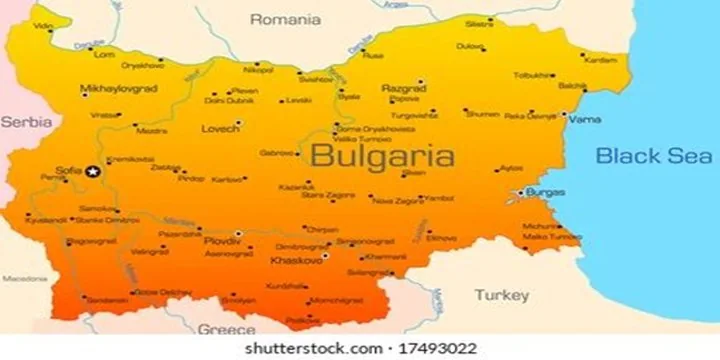
- Bulgaria, officially the Republic of Bulgaria, is a country in Southeast Europe.
- It is situated on the eastern portion of the Balkans directly south of the Danube river and west of the Black Sea.
- Bulgaria is bordered by Greece and Turkey to the south, Serbia and North Macedonia to the west, and Romania to the north
BACKGROUND: BULGARIA'S PATH TO EURO
- Current currency: Bulgarian Lev (BGN)
- EU membership: Since 2007
- New exchange rate fixed: 1 euro = 1.95583 Bulgarian lev
- Population: ~6.4 million
- Bulgaria is the EU’s poorest member, but has made significant strides in economic reforms, meeting the criteria required for euro adoption.
CRITERIA FOR EURO ADOPTION
To join the
eurozone, EU countries must meet the
Maastricht convergence criteria:
| Criterion |
Requirement |
| Inflation |
= 1.5 percentage points above average of three best-performing EU countries |
| Fiscal Deficit |
< 3% of GDP |
| Debt-to-GDP ratio |
< 60% or declining trend |
| Exchange Rate Stability |
At least 2 years in ERM-II without severe deviations |
| Interest Rates |
Long-term rates not more than 2% above the best-performing states |
The
and the
European Central Bank (ECB) confirmed that Bulgaria had
met all the necessary economic criteria.
SIGNIFICANCE OF BULGARIA JOINING EUROZONE
1. Economic Stability and Growth
- Euro adoption will enhance investor confidence and reduce transaction costs for Bulgarian businesses.
- It ensures greater monetary stability, protects against exchange rate volatility, and integrates Bulgaria deeper into the EU economy.
“The euro will strengthen Bulgaria’s economy and bring big benefits for Bulgarian people and businesses.” –
Ursula von der Leyen
2. Political and Strategic Importance
- Aligns Bulgaria further with the West, reinforcing its position within the European Union.
- Serves as a geopolitical buffer against Russian influence in the Balkans. “The political benefits are becoming increasingly significant... The protests against the euro seem to bear the mark of the Kremlin.” – Veselin Dimitrov, Sofia-based artist
3. Symbolic European Unity
- Bulgaria’s inclusion marks a continued expansion of the eurozone and sends a strong message of cohesion within the EU.
- The euro club has steadily expanded since its launch in 2002 with 12 members; Bulgaria becomes the 21st.
EXPANSION OF EUROZONE
| Year |
Country Joined Eurozone |
| 2007 |
Slovenia |
| 2008 |
Cyprus, Malta |
| 2009 |
Slovakia |
| 2011 |
Estonia |
| 2014 |
Latvia |
| 2015 |
Lithuania |
| 2023 |
Croatia |
| 2025 |
Bulgaria |
MIXED REACTIONS IN BULGARIA
Supporters Argue:
- It will boost economic growth, lower interest rates, and facilitate trade and investment.
- It will protect Bulgaria’s financial system and anchor its place in the EU.
Critics Express:
- Fear of rising prices and declining purchasing power.
- Public scepticism, especially among the elderly and rural populations.
- President Rumen Radev even suggested a referendum on euro adoption, but this was dismissed by the parliament.
Recent Protests:
- Demonstrations in Sofia called for keeping the lev.
- Protesters set up symbolic camps near government institutions.
Delay in Joining
- Bulgaria originally hoped to adopt the euro earlier, but:
- Inflation remained above permissible limits for years.
- The country went through a politically unstable period:
?
7 elections in 3 years (last in October 2024)
- Prelims: Key facts, institutions, locations and terminology in the article.
- Mains: Connect the topic with Environment, Economy, Polity & Governance.
- Revision: Use the article headings to prepare concise notes and answer-writing points.
Test your understanding
Questions from this article
Prelims practiceWith reference to Bulgaria Becomes 21st Country to Adopt Euro, consider the following statements:
- On July 8, 2025, EU finance ministers gave the final approval for Bulgaria to adopt the euro as its official currency, effective January 1, 2026.
- This decision makes Bulgaria the 21st member of the eurozone, nearly 19 years after it joined the European Union (EU) in 2007.
- Bulgaria, officially the Republic of Bulgaria, is a country in Southeast Europe.
Which of the statements given above are correct?
- 1 and 2 only
- 2 and 3 only
- 1 and 3 only
- 1, 2 and 3
View answer
Answer: (d) 1, 2 and 3. All three statements are drawn from the article.
Mains practiceDiscuss the background, key issues and significance of Bulgaria Becomes 21st Country to Adopt Euro for India.
Answer in 250 words.
View answer approach
- Why in News?
- ABOUT BULGARIA
- BACKGROUND: BULGARIA'S PATH TO EURO
- SIGNIFICANCE OF BULGARIA JOINING EUROZONE
- EXPANSION OF EUROZONE
Frequently asked questionsFrequently asked questions
Why is Bulgaria Becomes 21St Country To Adopt Euro in the news?
On July 8, 2025, EU finance ministers gave the final approval for Bulgaria to adopt the euro as its official currency, effective January 1, 2026. This decision makes Bulgaria the 21st member of the eurozone, nearly 19 years after it joined the European Union (EU) in 2007.
What are the key facts about Bulgaria Becomes 21St Country To Adopt Euro?
ABOUT BULGARIA Bulgaria, officially the Republic of Bulgaria, is a country in Southeast Europe. It is situated on the eastern portion of the Balkans directly south of the Danube river and west of the Black Sea. Bulgaria is bordered by Greece and Turkey to the south, Serbia and North Macedonia to the west, and Romania to the north BACKGROUND: BULGARIA'S PATH TO EURO Current currency: Bulgarian Lev (BGN) EU membership: Since 2007 New exchange rate fixed: 1 euro =…
Why is Bulgaria Becomes 21St Country To Adopt Euro important for UPSC preparation?
The topic connects current developments with Environment, Economy, Polity & Governance and is relevant for both objective revision and analytical answer writing.