UPSC Current Affairs
Autonomous driving: How India, an unlikely market, now packs a surprise for ADAS gear makers
Due to the growing interest from India, Mobileye has upgraded India to the status of a priority market in Asia, alongside China. The company’s CEO, Amnon Shashua, also noted an unexpected trend - the demand for Mobileye’s SuperVision package, which offers ‘hands-free’ autonomous capabilities for human-driven vehicles. The company clarified that the response to its premium gear was not limited to the Mahindra & Mahindra order, but was more broad-based from companies in India.
VRAuthor Desk
3 min read
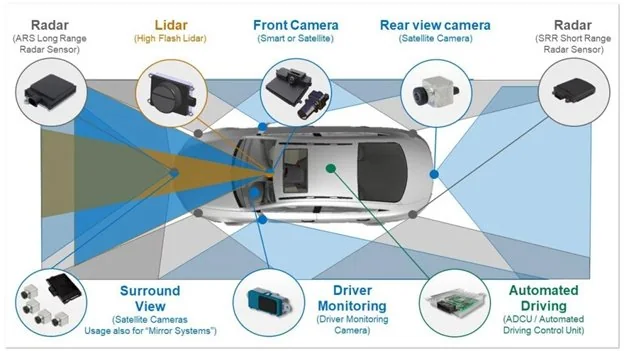
Due to the growing interest from India, Mobileye has upgraded India to the status of a priority market in Asia, alongside China. The company’s CEO, Amnon Shashua, also noted an unexpected trend - the demand for Mobileye’s SuperVision package, which offers ‘hands-free’ autonomous capabilities for human-driven vehicles. The company clarified that the response to its premium gear was not limited to the Mahindra & Mahindra order, but was more broad-based from companies in India.
Due to the growing interest from India, Mobileye has upgraded India to the status of a priority market in Asia, alongside China. The company’s CEO, Amnon Shashua, also noted an unexpected trend - the demand for Mobileye’s SuperVision package, which offers ‘hands-free’ autonomous capabilities for human-driven vehicles.
The company clarified that the response to its premium gear was not limited to the Mahindra & Mahindra order, but was more broad-based from companies in India. They are in the early stages of exploring SuperVision systems for India and see great potential for both safety and convenience improvements.
ADAS demand
- India, known for its dangerous roads and chaotic traffic, has seen a rise in demand for Advanced Driver Assistance Systems (ADAS).
- Car manufacturers are now offering ADAS as standard features on their mid-segment vehicles. For instance, Mahindra & Mahindra’s XUV7OO, Hyundai’s new Verna, and the new Kia Sonnet all come equipped with various ADAS features.
- The ADAS suite offered by most carmakers includes features like automatic emergency braking, forward collision warning, blind spot collision warning, lane-keeping assist, and adaptive cruise control. These features enhance the safety and convenience of driving.
- This trend of offering ADAS features in lower-priced cars is driven by increasing demand for safer vehicles, government push for road safety, and the availability of more affordable ADAS technology.
- Car manufacturers believe that the adoption of ADAS technology will improve overall road safety and reduce accidents and fatalities. However, most carmakers seem to have maxed out at ADAS level 2 for self-driving capabilities, at least for now.
Levels of autonomous driving
The evolution of autonomous driving is categorized into five levels, each describing the extent of automation and the interface between the car and the driver:
- Level 0, “No Automation”: The driver controls the car without any support from a driver assistance system. This is the case for most cars on the road currently.
- Level 1: Driver assistance systems like adaptive lane assist or parking assist are offered. These are already being provided in a number of top-end cars.
- Level 2: This level includes features like steering and lane-keeping assist and remote-controlled parking. Examples include Tesla’s ‘Autopilot’ or BMW’s ‘Personal CoPilot’. Hyundai’s new Verna, Honda’s new City, and Mahindra’s XUV7OO offer this level of automation.
- Level 3: This level requires carmakers to offer an even greater array of “automated driving” tools where the driver can partly take his eyes off the road.
- Level 4, “Fully Automated Driving”: The driver can take his hands off the steering wheel for most of the drive.
- Level 5, “Full Automation”: The car can drive without any human input whatsoever.
The challenges in moving up from Level 2 to Level 5 include cars jumping red lights, not recognizing pedestrians, and situational problems like identifying a cyclist who briefly disappears behind a parked vehicle.
Conclusion- The rise in demand for Advanced Driver Assistance Systems (ADAS) in India, a country known for its dangerous roads and chaotic traffic, signifies a significant shift in the automobile industry. Car manufacturers are now offering ADAS as standard features on their mid-segment vehicles, enhancing the safety and convenience of driving.
However, the journey towards fully autonomous driving is still a long one, with most carmakers currently maxing out at ADAS level 2. Despite these challenges, the adoption of ADAS technology is seen as a positive step towards improving overall road safety and reducing accidents and fatalities. As technology continues to evolve and become more affordable, it is expected that more advanced levels of autonomous driving will become accessible, potentially transforming the driving landscape in India.
- Prelims: Key facts, institutions, locations and terminology in the article.
- Mains: Connect the topic with Environment, Polity & Governance, Science & Technology.
- Revision: Use the article headings to prepare concise notes and answer-writing points.
Test your understanding
Questions from this article
Prelims practiceWith reference to Autonomous driving: How India, an unlikely market, now packs a surprise for ADAS gear makers, consider the following statements:
- India, known for its dangerous roads and chaotic traffic, has seen a rise in demand for Advanced Driver Assistance Systems (ADAS).
- Car manufacturers are now offering ADAS as standard features on their mid-segment vehicles. For instance, Mahindra & Mahindra’s XUV7OO, Hyundai’s new Verna, and the new Kia Sonnet all come equipped with various ADAS…
- The ADAS suite offered by most carmakers includes features like automatic emergency braking, forward collision warning, blind spot collision warning, lane-keeping assist, and adaptive cruise control. These features…
Which of the statements given above are correct?
- 1 and 2 only
- 2 and 3 only
- 1 and 3 only
- 1, 2 and 3
View answer
Answer: (d) 1, 2 and 3. All three statements are drawn from the article.
Mains practiceDiscuss the background, key issues and significance of Autonomous driving: How India, an unlikely market, now packs a surprise for ADAS gear makers for India.
Answer in 250 words.
View answer approach
- Background and context
- Key facts and institutional framework
- Significance and way forward
Frequently asked questionsFrequently asked questions
Why is Autonomous Driving: How India, An Unlikely Market, Now Packs A Surprise For Adas Gear Makers in the news?
Due to the growing interest from India, Mobileye has upgraded India to the status of a priority market in Asia, alongside China. The company’s CEO, Amnon Shashua, also noted an unexpected trend - the demand for Mobileye’s SuperVision package, which offers ‘hands-free’ autonomous capabilities for human-driven vehicles.
What are the key facts about Autonomous Driving: How India, An Unlikely Market, Now Packs A Surprise For Adas Gear Makers?
The company clarified that the response to its premium gear was not limited to the Mahindra & Mahindra order, but was more broad-based from companies in India. They are in the early stages of exploring SuperVision systems for India and see great potential for both safety and convenience improvements. ADAS demand India, known for its dangerous roads and chaotic traffic, has seen a rise in demand for Advanced Driver Assistance Systems (ADAS).
Why is Autonomous Driving: How India, An Unlikely Market, Now Packs A Surprise For Adas Gear Makers important for UPSC preparation?
The topic connects current developments with Environment, Polity & Governance, Science & Technology and is relevant for both objective revision and analytical answer writing.