UPSC Current Affairs
VEMBANAD LAKE
Vembanad Lake, Kerala’s largest wetland and a Ramsar site, is under severe ecological stress due to: Unregulated tourism, particularly overcapacity of houseboats. Pollution, illegal encroachments, and land reclamation. Recent reports (CWRDM, NIO) and local testimonies warn of the lake’s shrinking size, loss of biodiversity, and threats to local livelihoods.
VRAuthor Desk
3 min read
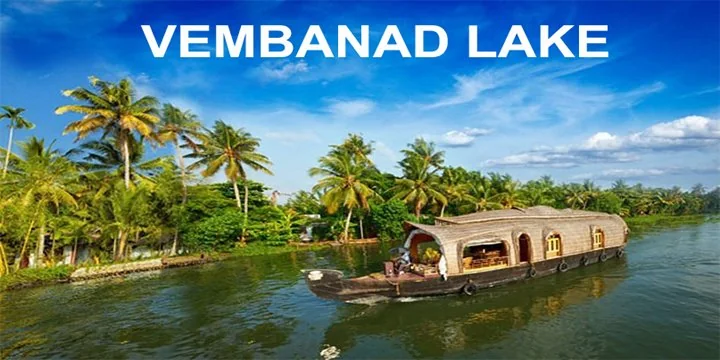
Vembanad Lake, Kerala’s largest wetland and a Ramsar site, is under severe ecological stress due to: Unregulated tourism, particularly overcapacity of houseboats. Pollution, illegal encroachments, and land reclamation. Recent reports (CWRDM, NIO) and local testimonies warn of the lake’s shrinking size, loss of biodiversity, and threats to local livelihoods.
- Vembanad Lake, Kerala’s largest wetland and a Ramsar site, is under severe ecological stress due to:
- Unregulated tourism, particularly overcapacity of houseboats.
- Pollution, illegal encroachments, and land reclamation.
- Recent reports (CWRDM, NIO) and local testimonies warn of the lake’s shrinking size, loss of biodiversity, and threats to local livelihoods.
- Scientists and activists say Vembanad may be "scripting its own obituary" unless urgent measures are taken.
- Location: Kerala (Alappuzha, Kottayam, Ernakulam districts).
- Significance:
- Longest lake in India.
- Largest wetland in Kerala.
- Designated Ramsar Site (since 2002).
- Connected Rivers: Pamba, Meenachil, Achankovil, and Manimala.
- Biodiversity hotspot: Home to mangroves, migratory birds, and endemic aquatic species.
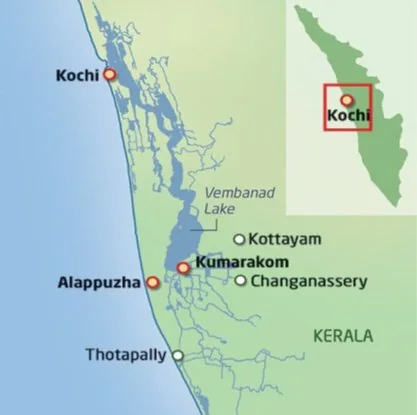
ECOLOGICAL & SOCIO ECONOMIC IMPORTANCE
- Flood Control: Acts as a buffer against monsoon floods.
- Agriculture: Supports paddy cultivation, especially in Kuttanad (Rice Bowl of Kerala).
- Fisheries: Livelihood for thousands of families.
- Tourism: Major revenue generator – houseboats, shikaras, and eco-tourism.
THREATS & ENVIRONMENTAL STRESSORS
1. Tourism Pressure
- Unregulated expansion of luxury houseboats:
- Safe capacity: 461 | Actual: 954
- Plus: 241 shikaras, 404 motorboats, 1,625 country boats.
- Consequences:
- Untreated sewage discharge ? Water pollution.
- Diesel engine use ? Oil leaks, air & water pollution.
- Churning wakes ? Sediment disturbance, erosion of lake banks.
2. Encroachment & Urbanization
- Shrinking size:
- From 130.68 sq km (1967) to 3.29 sq km (2011).
- Receding at ~0.3 sq km/year.
- Causes:
- Illegal land reclamation.
- Gulf-funded resorts, apartments.
- Blocked natural channels.
- Example: Maradu Demolition (2019) – 26,000+ violations revealed.
3. Livelihood Crisis
- Fisherfolk losing access to fish-rich zones.
- Fish migration disturbed by pollution, noise, and congestion.
- Traditional practices (like stake net fishing) disrupted.
4. Water Quality Degradation
- Coliform levels (Punnamada): Reached 8,000+ ? indicates fecal contamination.
- STP (Kuttanad): Remains idle despite rising sewage load.
STUDIES & REPORTS
- CWRDM Report (Centre for Water Resources Development and Management):
- Highlights overcapacity of boats.
- Recommends waste management & zoning.
- National Institute of Oceanography:
- Warns about irreversible ecological damage due to congestion.
RECOMMENDED SOLUTIONS
Institutional Recommendations:
- Ban non-local boats (from outside Alappuzha & Kottayam).
- Mandatory waste treatment facilities at all hubs.
- Zoning: Restrict access to ecologically sensitive zones.
Legal Measures:
- Declare Vembanad a Fish Sanctuary – proposed by KSSP (Kerala Sasthra Sahitya Parishad).
Policy Options:
- Cap on houseboats; enforce carrying capacity.
- Incentivize eco-tourism and solar-powered boats.
- Strengthen monitoring via satellite mapping, local participation.
CHALLENGES TO IMPLEMENTATION
- Economic vs Environmental trade-off:
- Tourism is vital for Kerala’s economy.
- Political resistance to regulation.
- Lack of enforcement despite court orders (e.g., Nediyathuruthu villas).
- Public awareness among tourists and locals remains low.
CONCLUSION
Vembanad Lake’s degradation is a
classic case of environmental overreach driven by unchecked tourism, urbanisation, and weak governance. Timely interventions, community participation, and sustainable tourism models are essential to prevent Kerala’s ecological jewel from turning into a cautionary tale.
- Prelims: Key facts, institutions, locations and terminology in the article.
- Mains: Connect the topic with Environment, Economy, Polity & Governance.
- Revision: Use the article headings to prepare concise notes and answer-writing points.
Test your understanding
Questions from this article
Prelims practiceWith reference to VEMBANAD LAKE, consider the following statements:
- Vembanad Lake, Kerala’s largest wetland and a Ramsar site, is under severe ecological stress due to: Unregulated tourism, particularly overcapacity of houseboats. Pollution, illegal encroachments, and land reclamation.
- Unregulated tourism, particularly overcapacity of houseboats.
- Pollution, illegal encroachments, and land reclamation.
Which of the statements given above are correct?
- 1 and 2 only
- 2 and 3 only
- 1 and 3 only
- 1, 2 and 3
View answer
Answer: (d) 1, 2 and 3. All three statements are drawn from the article.
Mains practiceDiscuss the background, key issues and significance of VEMBANAD LAKE for India.
Answer in 250 words.
View answer approach
- ECOLOGICAL & SOCIO ECONOMIC IMPORTANCE
- THREATS & ENVIRONMENTAL STRESSORS
- STUDIES & REPORTS
- RECOMMENDED SOLUTIONS
- Institutional Recommendations:
Frequently asked questionsFrequently asked questions
Why is Vembanad Lake in the news?
Vembanad Lake, Kerala’s largest wetland and a Ramsar site, is under severe ecological stress due to: Unregulated tourism, particularly overcapacity of houseboats. Pollution, illegal encroachments, and land reclamation.
What are the key facts about Vembanad Lake?
Recent reports (CWRDM, NIO) and local testimonies warn of the lake’s shrinking size, loss of biodiversity, and threats to local livelihoods. Scientists and activists say Vembanad may be "scripting its own obituary" unless urgent measures are taken. Location: Kerala (Alappuzha, Kottayam, Ernakulam districts).
Why is Vembanad Lake important for UPSC preparation?
The topic connects current developments with Environment, Economy, Polity & Governance and is relevant for both objective revision and analytical answer writing.