UPSC Current Affairs
US SUPREME COURT ON TRUMP TARIFFS
Supreme Court gave a 6–3 judgment and struck down President Donald Trump’s emergency tariffs. These tariffs were imposed under the International Emergency Economic Powers Act (IEEPA), 1977. The Court said the President cannot use emergency powers to impose broad trade tariffs without approval from Congress.
VRAuthor Desk
3 min read
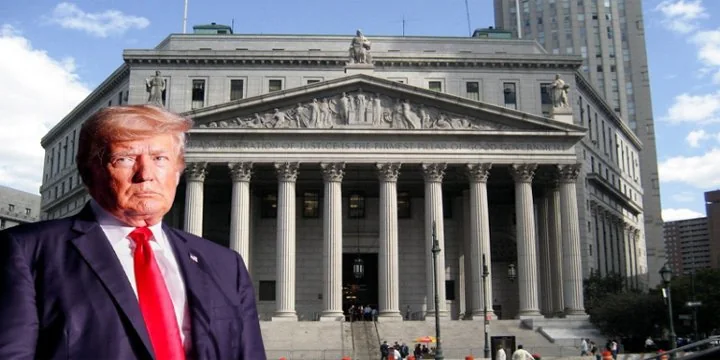
Supreme Court gave a 6–3 judgment and struck down President Donald Trump’s emergency tariffs. These tariffs were imposed under the International Emergency Economic Powers Act (IEEPA), 1977. The Court said the President cannot use emergency powers to impose broad trade tariffs without approval from Congress.
What Happened?
- The S. Supreme Court gave a 6–3 judgment and struck down President Donald Trump’s emergency tariffs.
- These tariffs were imposed under the International Emergency Economic Powers Act (IEEPA), 1977.
- The Court said the President cannot use emergency powers to impose broad trade tariffs without approval from Congress.
- However, after this setback, Trump imposed a 15% global import surcharge for 150 days under Section 122 of the Trade Act, 1974.
This has major implications for:
- S. Constitutional System
- Global Trade
- India–U.S. Trade Relations
MAIN CONSTITUTIONAL ISSUE
Who has the power to impose tariffs?
- The S. Constitution gives power to levy taxes and tariffs to Congress.
- Trump used IEEPA (emergency law) without Congressional approval.
- The Court ruled this was executive overreach.
This case highlights
Separation of Powers:
- Congress makes tax and trade laws.
- The President cannot replace Congress in trade matters.
The judgment strengthened
Judicial Review and limited
Executive Authority.
ABOUT IEEPA
- Passed under President Jimmy Carter.
- Mainly used to:
- Freeze foreign assets
- Impose sanctions
- It does not clearly mention tariffs.
Trump became the
first President to use IEEPA to impose wide trade tariffs.
TRUMP’S TARIFF STRATEGY
Tariffs were used as:
- A Revenue-Generating Tool
- A Pressure Mechanism
- A way to Renegotiate Trade Deals
Countries targeted:
- China
- Canada
- Mexico
- India
- Brazil
“Liberation Day” Tariffs (April 2025)
- Announced Reciprocal Tariffs.
- Justified under National Emergency due to trade deficit.
- Linked to Fentanyl Trafficking and Migration
ECONOMIC IMPACT
- Around $175 billion collected under IEEPA tariffs.
- Record customs duty collection in 2025.
- Possible refund liability after Court ruling.
- Increased market uncertainty and volatility.
If the verdict was fully implemented, average tariff could fall from
15% to around 8%.
LEGAL CHALLENGES
Tariffs were challenged by:
- Small Importing Businesses
- 12 U.S. States
- Other affected groups
Court clearly stated:
Emergency powers cannot substitute legislative trade authority.
NEW DEVELOPMENT: 15% GLOBAL TARIFF SURCHARGE
- After the IEEPA setback, the administration invoked Section 122 – Trade Act, 1974.
Key Features of Section 122:
- Allows temporary surcharge up to 15%
- Valid for 150 days
- Used to address Balance of Payments issues
Trump imposed a
15% ad valorem surcharge on global imports (earlier 10%). It applies to
all countries including India.
COMPARISON OF TARIFF RATES
- Under IEEPA: Around 22%
- After Court Verdict (without surcharge): Around 8%
- New Surcharge: 15%
India benefits compared to earlier high tariffs. But India loses opportunity for
much lower 8% tariff.
GOODS EXEMPTED FROM 15% SURCHARGE
Exempted sectors:
- Strategic and Technology Goods
- Critical Minerals and Metals
- Energy Products
- Aerospace Products
- Electronics
- Pharmaceuticals
- Vehicles and Auto Components
- Certain Agricultural Products
This shows U.S.
Supply Chain Dependence.
IMPACT ON INDIA
Positive
- Tariff reduced from 18–22% to 15%.
- Relief in sectors like:
- Aircraft Parts
- Auto Components
Negative
- Expected tariff reduction to 8% did not happen.
- Pressure on:
- Engineering Goods
- Textiles
- Chemicals
India’s
Commerce Ministry is assessing impact.
IMPACT ON INDIA USA TRADE DEAL
- India and the U.S. are negotiating an Interim Trade Agreement.
- New tariff situation changes dynamics:
- S. signalled India will continue paying tariffs.
- S. may demand greater market access.
- Tariffs used as negotiation leverage.
Key issues:
- Market Access
- Rules of Origin
- Supply Chain Diversification
OTHER TARIFF TOOLS AVAILABLE
Section 301 – Trade Act, 1974
- Used against Unfair Trade Practices
- Investigation-based
- Earlier used against India (Digital Services Tax, 2020)
Section 232 – Trade Expansion Act, 1962
- Tariffs on National Security Grounds
- Sector-specific (Steel, Aluminium, Automobiles) India still faces
Section 232 tariffs on:
- Steel
- Aluminium
- Automobiles
- Copper Products
KEY CHALLENGES
- Frequent policy changes cause Unpredictability.
- Temporary tariffs affect Long-Term Contracts.
- Rise of Economic Nationalism.
- Tension between Executive and Judiciary.
- Instability in Global Supply Chains.
WAY FORWARD
For India
- Speed up India–U.S. Trade Agreement.
- Diversify exports (EU, ASEAN, Africa).
- Strengthen Domestic Manufacturing.
- Follow WTO-Consistent Trade Diplomacy.
For Global Trade
- Promote Rule-Based Trade System.
- Reduce Unilateral Tariff Actions.
- Strengthen WTO Reforms.
- Prelims: Key facts, institutions, locations and terminology in the article.
- Mains: Connect the topic with Economy, International Relations, Polity & Governance.
- Revision: Use the article headings to prepare concise notes and answer-writing points.
Test your understanding
Questions from this article
Prelims practiceWith reference to US SUPREME COURT ON TRUMP TARIFFS, consider the following statements:
- The S. Supreme Court gave a 6–3 judgment and struck down President Donald Trump’s emergency tariffs.
- These tariffs were imposed under the International Emergency Economic Powers Act (IEEPA), 1977.
- The Court said the President cannot use emergency powers to impose broad trade tariffs without approval from Congress.
Which of the statements given above are correct?
- 1 and 2 only
- 2 and 3 only
- 1 and 3 only
- 1, 2 and 3
View answer
Answer: (d) 1, 2 and 3. All three statements are drawn from the article.
Mains practiceDiscuss the background, key issues and significance of US SUPREME COURT ON TRUMP TARIFFS for India.
Answer in 250 words.
View answer approach
- What Happened?
- MAIN CONSTITUTIONAL ISSUE
- Who has the power to impose tariffs?
- ABOUT IEEPA
- ECONOMIC IMPACT
Frequently asked questionsFrequently asked questions
Why is Us Supreme Court On Trump Tariffs in the news?
Supreme Court gave a 6–3 judgment and struck down President Donald Trump’s emergency tariffs. These tariffs were imposed under the International Emergency Economic Powers Act (IEEPA), 1977.
What are the key facts about Us Supreme Court On Trump Tariffs?
The Court said the President cannot use emergency powers to impose broad trade tariffs without approval from Congress. However, after this setback, Trump imposed a 15% global import surcharge for 150 days under Section 122 of the Trade Act, 1974. This has major implications for: S.
Why is Us Supreme Court On Trump Tariffs important for UPSC preparation?
The topic connects current developments with Economy, International Relations, Polity & Governance and is relevant for both objective revision and analytical answer writing.