UPSC Current Affairs
US IRAN 14 DAY CEASEFIRE
On (7 April), just two hours before a final US deadline to "destroy" Iranian infrastructure, President Donald Trump announced a 14-day ceasefire mediated by Pakistan. This pause follows over a month of "unprecedented" airstrikes and the blockade of the world’s most critical oil route. The United States had warned that it would destroy Iran’s energy and economic infrastructure if Iran did not agree to its demands.
VRAuthor Desk
5 min read
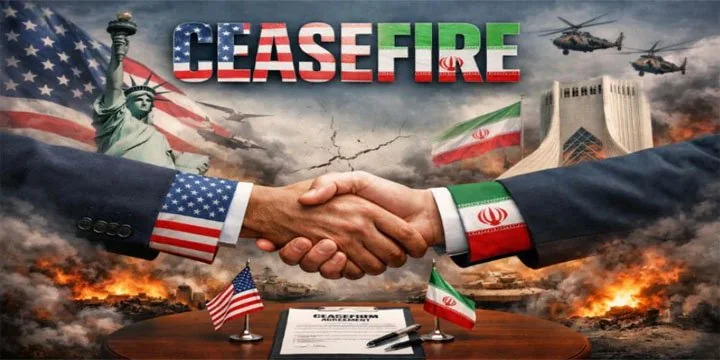
On (7 April), just two hours before a final US deadline to "destroy" Iranian infrastructure, President Donald Trump announced a 14-day ceasefire mediated by Pakistan. This pause follows over a month of "unprecedented" airstrikes and the blockade of the world’s most critical oil route. The United States had warned that it would destroy Iran’s energy and economic infrastructure if Iran did not agree to its demands.
Why in News?
- On (7 April), just two hours before a final US deadline to "destroy" Iranian infrastructure, President Donald Trump announced a 14-day ceasefire mediated by Pakistan.
- This pause follows over a month of "unprecedented" airstrikes and the blockade of the world’s most critical oil route.
- The United States had warned that it would destroy Iran’s energy and economic infrastructure if Iran did not agree to its demands.
- This ceasefire came after more than 39–40 days of continuous conflict, which included heavy airstrikes, missile attacks, and drone warfare.
- During the conflict, Iran disrupted the Strait of Hormuz, which is one of the most important global oil routes.
Therefore, the ceasefire is important because it prevented a
major regional war and possible global economic crisis.
BACKGROUND
Beginning of War
- The conflict started on 28 February 2026.
- The United States and Israel launched coordinated strikes on Iran.
- These strikes targeted:
- Nuclear facilities
- Ballistic missile systems
- Industrial infrastructure (steel plants, power plants)
IRAN’S RESPONSE
- Iran responded with missiles and drones.
- It targeted:
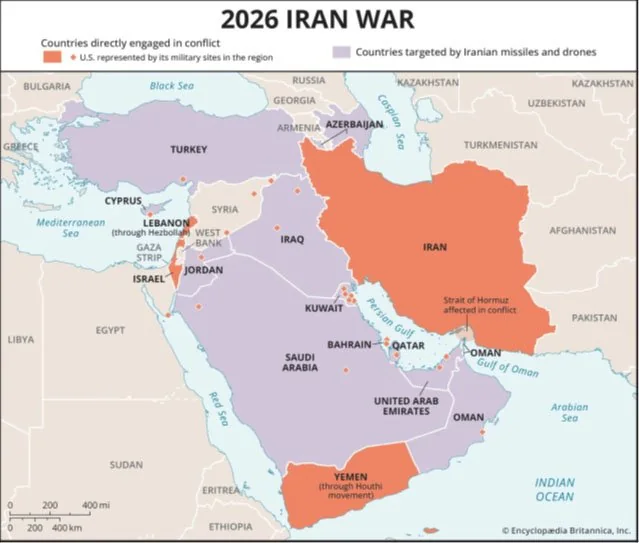
- US military bases in the Gulf region
- Oil installations in Saudi Arabia, UAE, and Qatar
- Economic infrastructure such as ports and airports
EXPANSION OF CONFLICT
- The conflict spread to:
- Lebanon (through Hezbollah)
- Gulf countries hosting US bases
- This made the war a regional conflict, not just a US–Iran issue.
KEY TERMS: WHAT WAS AGREED?
Immediate Actions under Ceasefire
??
Ceasefire Duration
- Both sides agreed to a 14-day pause in fighting.
- During this period:
- The United States will stop bombing Iran
- Iran will halt military responses
This period is meant to create
space for diplomacy.
??
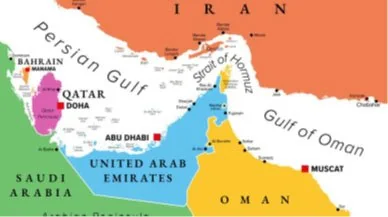
Reopening of Strait of Hormuz
- Iran agreed to ensure:
- Complete, immediate, and safe reopening of the Strait of Hormuz
- Importance:
- Around 20% of global oil supply passes through this route
- Disruption earlier caused rise in global oil prices
This was the
main demand of the United States.
??
Negotiation Venue
- Both countries agreed to begin direct talks in:
- Islamabad, Pakistan
- Date: 10 April 2026
These talks are seen as
Phase 2 of diplomacy
Iran’s 10-Point Proposal (Foundation of Talks)
- The United States described Iran’s proposal as a “workable basis” for negotiation.
Detailed Demands
- Non-Aggression Commitment
- The United States must guarantee that it will not attack Iran or its allies in future
- Removal of Sanctions
- Iran demands removal of:
- Primary sanctions (direct US restrictions)
- Secondary sanctions (restrictions on other countries trading with Iran)
- Recognition of Nuclear Rights
- Iran wants acceptance of its right to uranium enrichment.
- Withdrawal of US Troops
- All US combat forces must leave the Middle East region
- Compensation for War Damage
-
- Iran demands financial compensation for:
- Infrastructure damage
- Economic losses
- Release of Frozen Assets
- Billions of dollars of Iranian funds held abroad must be unfrozen
- End of UN and IAEA Restrictions
- Removal of:
- UN Security Council resolutions
- IAEA monitoring restrictions
- Binding Legal Agreement
- Final deal must be legally binding under the United Nations system
These demands are called
maximalist demands because they are
very broad and difficult to fully accept
THE LEBANON LOOPHOLE
??
Different Interpretations
- Pakistan’s Position:
- Ceasefire applies to all fronts including Lebanon
- US and Israel’s Position:
- Ceasefire applies only to Iran
- Lebanon conflict is separate
- Donald Trump called it a “separate skirmish”
??
Ground Situation
- Attacks on Iran have stopped
- However, Israel continues airstrikes in Lebanon, especially:
??
Why it is Dangerous
- Iran supports groups like Hezbollah
- If attacks continue:
- Hezbollah may retaliate
- Iran may re-enter conflict
This can
break the ceasefire completely
WHY DID BOTH SIDES AGREE?
United States Motivation
- Economic Pressure
- Rising oil prices
- Disruption of global supply chains
- Strategic Calculation
- US believes it has weakened Iran’s:
- Nuclear infrastructure
- Missile systems
- Political Benefit
- The leadership can claim that it:
- Prevented a large-scale war
- Controlled escalation
Iran’s Motivation
- Economic Survival
- Heavy damage to:
- Power plants
- Industrial facilities
- Bridges and transport systems
- Strong Bargaining Position
- Iran controlled the Strait of Hormuz
- It showed it could impact global oil supply
- Regime Security
- Ceasefire prevents:
- Full US invasion
- Massive destruction
GLOBAL IMPACT OF THE CONFLICT
- Human Cost
- More than 3000 deaths across regions
- Economic Impact
- Increase in global oil prices
- Disruption in international trade routes
- Infrastructure Damage
- Oil refineries
- Airports
- Ports
- Desalination plants
IMPACT ON INDIA
- Energy Security
- India imports about 60% of its oil from Gulf countries
- Disruption in Hormuz created serious economic risk
- Indian Diaspora
- Around 1 crore Indians live in the Gulf region
- They contribute about 40% of India’s remittances
- Evacuation and Loss
- Around 7 lakh Indians returned to India
- 8 Indian citizens lost their lives
- Trade Impact
- Very limited movement of ships during conflict
- After Ceasefire
- Oil supply is expected to stabilize
- Trade routes may reopen
India supported the ceasefire and emphasized
freedom of navigation
WHAT HAPPENS NEXT?
- 10 April 2026
- US and Iran will begin direct negotiations in Islamabad
Main Issue: Nuclear Program
- The United States wants:
- Iran to stop uranium enrichment
- Iran wants:
- Recognition of its nuclear rights
This is the
core dispute
??
Regional Risk
- Continued conflict in Lebanon
- Possibility of:
- Proxy attacks
- Retaliation by Iran’s allies
Situation remains
unstable
CONCLUSION
- The ceasefire is a temporary and fragile arrangement
- Major issues are still unresolved:
- Iran’s nuclear program
- Regional conflicts like Lebanon
- The success of this ceasefire depends on:
- Outcome of negotiations in Islamabad
- Prelims: Key facts, institutions, locations and terminology in the article.
- Mains: Connect the topic with Economy, International Relations, Defence.
- Revision: Use the article headings to prepare concise notes and answer-writing points.
Test your understanding
Questions from this article
Prelims practiceWith reference to US IRAN 14 DAY CEASEFIRE, consider the following statements:
- On (7 April), just two hours before a final US deadline to "destroy" Iranian infrastructure, President Donald Trump announced a 14-day ceasefire mediated by Pakistan.
- This pause follows over a month of "unprecedented" airstrikes and the blockade of the world’s most critical oil route.
- The United States had warned that it would destroy Iran’s energy and economic infrastructure if Iran did not agree to its demands.
Which of the statements given above are correct?
- 1 and 2 only
- 2 and 3 only
- 1 and 3 only
- 1, 2 and 3
View answer
Answer: (d) 1, 2 and 3. All three statements are drawn from the article.
Mains practiceDiscuss the background, key issues and significance of US IRAN 14 DAY CEASEFIRE for India.
Answer in 250 words.
View answer approach
- Why in News?
- BACKGROUND
- IRAN’S RESPONSE
- EXPANSION OF CONFLICT
- KEY TERMS: WHAT WAS AGREED?
Frequently asked questionsFrequently asked questions
Why is Us Iran 14 Day Ceasefire in the news?
On (7 April), just two hours before a final US deadline to "destroy" Iranian infrastructure, President Donald Trump announced a 14-day ceasefire mediated by Pakistan. This pause follows over a month of "unprecedented" airstrikes and the blockade of the world’s most critical oil route.
What are the key facts about Us Iran 14 Day Ceasefire?
The United States had warned that it would destroy Iran’s energy and economic infrastructure if Iran did not agree to its demands. This ceasefire came after more than 39–40 days of continuous conflict, which included heavy airstrikes, missile attacks, and drone warfare. During the conflict, Iran disrupted the Strait of Hormuz, which is one of the most important global oil routes.
Why is Us Iran 14 Day Ceasefire important for UPSC preparation?
The topic connects current developments with Economy, International Relations, Defence and is relevant for both objective revision and analytical answer writing.