UPSC Current Affairs
UK ARMY’S PARACHUTE MISSION TO TRISTAN DA CUNHA AMID HANTAVIRUS OUTBREAK
Why in News The British Army conducted a rare parachute-based humanitarian medical missionto the remote island of Tristan da Cunha. The mission was launched to assist a British resident suspected of contracting hantavirus after leaving the cruise ship MV Hondius. The operation became globally significant because it marked the first-ever emergency deployment of UK military medical personnel through parachute insertion.
VRAuthor Desk
4 min read
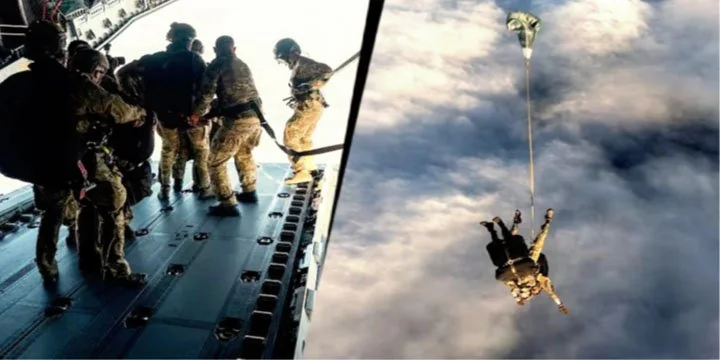
Why in News The British Army conducted a rare parachute-based humanitarian medical missionto the remote island of Tristan da Cunha. The mission was launched to assist a British resident suspected of contracting hantavirus after leaving the cruise ship MV Hondius. The operation became globally significant because it marked the first-ever emergency deployment of UK military medical personnel through parachute insertion.
Why in News
- The British Army conducted a rare parachute-based humanitarian medical missionto the remote island of Tristan da Cunha.
- The mission was launched to assist a British resident suspected of contracting hantavirus after leaving the cruise ship MV Hondius.
- The operation became globally significant because it marked the first-ever emergency deployment of UK military medical personnel through parachute insertion.
- The event also highlighted concerns regarding the ongoing hantavirus outbreak linked to the cruise ship.
BACKGROUND OF THE INCIDENT
- A resident of Tristan da Cunha disembarked from the cruise ship MV Hondius on 14 April 2026.
- According to the World Health Organization, the individual later developed symptoms such as:
- These symptoms raised suspicion of hantavirus infection.
- Due to the island’s geographic isolation and limited healthcare facilities, emergency medical support became necessary.
DETAILS OF THE MILITARY OPERATION
- The mission was conducted by the 16 Air Assault Brigade.
- The operation involved:
- Six paratroopers
- Two intensive-care medical specialists
- The team travelled from RAF Brize Norton aboard an Airbus A400M Atlas aircraft.
- The medical personnel parachuted onto the island through tandem jumps because the island lacks an airport.
- The aircraft also delivered:
- Critical oxygen supplies
- 3.3 tonnes of medical equipment and medicines
WHY THE MISSION WAS EXTRAORDINARY?
- The Ministry of Defence described the mission as an unprecedented humanitarian deployment.
- It was the first time UK military doctors and nurses were deployed into a medical emergency through a parachute insertion operation.
- The mission was carried out under:
- Strong winds
- Difficult weather conditions
- Severe geographic isolation
ABOUT TRISTAN DA CUNHA
- Tristan da Cunha is regarded as the world’s most remote inhabited islandsettlement.
- Key facts:
- Population: Around 221 residents
- Located in the South Atlantic Ocean
- It is a British Overseas Territory
- The island has no airport
- Access is possible only by sea
- Its nearest inhabited neighbour is Saint Helena, located over 2,400 km away.
HANTAVIRUS OUTBREAK ON MV HONDIUS
- The outbreak originated aboard the expedition cruise vessel MV Hondius.
- Current outbreak figures include:
- 3 deaths
- 6 confirmed infections
- 2 suspected cases
- The ship later reached Tenerife, where passengers began disembarkation and repatriation.
WHAT IS HANTAVIRUS?
- Hantaviruses are zoonotic viruses, meaning they spread from animals to humans.
- They belong to the Hantaviridae family under the order Bunyavirales.
- Hantaviruses are a group of viruses mainly carried by rodents.
- Each hantavirus strain is generally linked to a specific rodent species.
- Rodents usually carry the virus without becoming ill.
- Humans usually become infected through contact with:
- Rodent urine
- Droppings
- Saliva
- Infection can cause:
- Severe respiratory illness
- Kidney complications
- Death in serious cases
- In the Americas, hantaviruses can cause Hantavirus Cardiopulmonary Syndrome (HCPS), which affects the lungs and heart.
- HCPS may have a fatality rate of up to 50%.
- In Europe and Asia, hantaviruses mainly cause Hemorrhagic Fever with Renal Syndrome (HFRS), which affects kidneys and blood vessels.
- The Andes virus found in South America is the only known hantavirus capable of limited human-to-human transmission.
TYPES OF HANTAVIRUS DISEASES
Hantavirus Cardiopulmonary Syndrome (HCPS)
- Found mainly in:
- North America
- Central America
- South America
- It affects:
- Symptoms may rapidly progress to:
- Cough
- Breathlessness
- Fluid accumulation in lungs
- Shock
Haemorrhagic Fever with Renal Syndrome (HFRS)
- Found mainly in:
- It primarily affects:
- Severe cases may lead to:
- Bleeding disorders
- Kidney failure
- Low blood pressure
TRANSMISSION OF HANTAVIRUS
- Infection mainly spreads through:
- Contact with contaminated rodent waste
- Inhalation of virus particles in enclosed spaces
- Rodent bites (rare)
- High-risk activities include:
- Cleaning poorly ventilated rooms
- Farming
- Forestry work
- Staying in rodent-infested areas
- Human-to-human transmission has been documented only for the Andes virus.
SYMPTOMS
- Symptoms usually appear between 1 and 8 weeks after exposure.
- Common symptoms include:
- Fever
- Headache
- Muscle pain
- Abdominal pain
- Nausea
- Vomiting
- Severe disease may lead to:
- Respiratory failure
- Shock
- Kidney complications
DIAGNOSIS
- Early diagnosis is difficult because symptoms resemble diseases such as:
- Influenza
- COVID-19
- Dengue
- Viral pneumonia
- Leptospirosis
- Diagnosis depends on:
- Patient history
- Rodent exposure history
- Travel history
- Laboratory confirmation includes:
- IgM and IgG antibody testing
- RT-PCR testing
TREATMENT
- There is currently:
- No specific antiviral treatment
- No licensed vaccine
- Treatment mainly involves:
- Intensive supportive care
- Oxygen support
- Management of respiratory and kidney complications
- Early medical intervention significantly improves survival chances.
WHO’s RESPONSE
- The World Health Organization supports countries through:
- Disease surveillance
- Laboratory strengthening
- Risk communication
- Outbreak response
- Infection-control guidance
- WHO also promotes a One Health approach, linking:
- Human health
- Animal health
- Environmental management
- Prelims: Key facts, institutions, locations and terminology in the article.
- Mains: Connect the topic with Environment, Defence, Polity & Governance.
- Revision: Use the article headings to prepare concise notes and answer-writing points.
Test your understanding
Questions from this article
Prelims practiceWith reference to UK ARMY’S PARACHUTE MISSION TO TRISTAN DA CUNHA AMID HANTAVIRUS OUTBREAK, consider the following statements:
- The British Army conducted a rare parachute-based humanitarian medical missionto the remote island of Tristan da Cunha.
- The mission was launched to assist a British resident suspected of contracting hantavirus after leaving the cruise ship MV Hondius.
- The operation became globally significant because it marked the first-ever emergency deployment of UK military medical personnel through parachute insertion.
Which of the statements given above are correct?
- 1 and 2 only
- 2 and 3 only
- 1 and 3 only
- 1, 2 and 3
View answer
Answer: (d) 1, 2 and 3. All three statements are drawn from the article.
Mains practiceDiscuss the background, key issues and significance of UK ARMY’S PARACHUTE MISSION TO TRISTAN DA CUNHA AMID HANTAVIRUS OUTBREAK for India.
Answer in 250 words.
View answer approach
- BACKGROUND OF THE INCIDENT
- DETAILS OF THE MILITARY OPERATION
- WHY THE MISSION WAS EXTRAORDINARY?
- ABOUT TRISTAN DA CUNHA
- HANTAVIRUS OUTBREAK ON MV HONDIUS
Frequently asked questionsFrequently asked questions
Why is Uk Army’S Parachute Mission To Tristan Da Cunha Amid Hantavirus Outbreak in the news?
Why in News The British Army conducted a rare parachute-based humanitarian medical missionto the remote island of Tristan da Cunha. The mission was launched to assist a British resident suspected of contracting hantavirus after leaving the cruise ship MV Hondius.
What are the key facts about Uk Army’S Parachute Mission To Tristan Da Cunha Amid Hantavirus Outbreak?
The operation became globally significant because it marked the first-ever emergency deployment of UK military medical personnel through parachute insertion. The event also highlighted concerns regarding the ongoing hantavirus outbreak linked to the cruise ship. BACKGROUND OF THE INCIDENT A resident of Tristan da Cunha disembarked from the cruise ship MV Hondius on 14 April 2026.
Why is Uk Army’S Parachute Mission To Tristan Da Cunha Amid Hantavirus Outbreak important for UPSC preparation?
The topic connects current developments with Environment, Defence, Polity & Governance and is relevant for both objective revision and analytical answer writing.