UPSC Current Affairs
THUCYDIDES TRAP
During a high-level summit in Beijing (May 2026), Chinese President Xi Jinping warned U.S. President Donald Trump about something called the: “Thucydides Trap” This term is used in international politics to explain why big powers sometimes go to war when global power shifts. The term comes from ancient history and modern political science.
VRAuthor Desk
2 min read
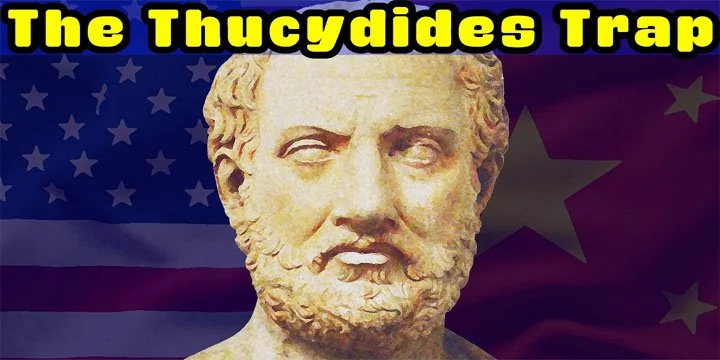
During a high-level summit in Beijing (May 2026), Chinese President Xi Jinping warned U.S. President Donald Trump about something called the: “Thucydides Trap” This term is used in international politics to explain why big powers sometimes go to war when global power shifts. The term comes from ancient history and modern political science.
Why is this in the news?
- During a high-level summit in Beijing (May 2026), Chinese President Xi Jinping warned U.S. President Donald Trump about something called the:
- “Thucydides Trap”
- This term is used in international politics to explain why big powers sometimes go to war when global power shifts.
WHAT IS THUCYDIDES TRAP?
- The term comes from ancient history and modern political science.
Simple meaning:
When a
rising power challenges an
already dominant power, tension increases and war becomes more likely.
Historical Origin
The idea comes from the ancient Greek historian:
He wrote about the war between:
- Athens (rising power)
- Sparta (dominant power)
He observed that:
Sparta became afraid of Athens’ rise ? this fear led to war.
MODERN EXPLANATION
The term was popularized by:
His idea:
- When a new power grows fast,
- the old superpower feels threatened,
- and both may move toward conflict unless carefully managed.
How it relates to today
In modern geopolitics:
- United States = established global power
- China = rising global power
So Xi used this idea to:
- warn about possible tension,
- and suggest avoiding war through cooperation.
WHAT EXACTLY DID XI SAY?
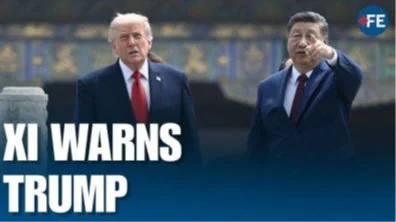 Xi asked a key question:
Can China and the U.S. avoid the Thucydides Trap and build a new model of relations?
He also said:
- both countries should work together,
- and avoid conflict,
- especially over sensitive issues like Taiwan.
WHAT WAS TRUMP’S RESPONSE?
Trump:
- blamed previous U.S. leadership (Joe Biden),
- said the U.S. had declined earlier but is now improving,
- and highlighted trade deals with China.
He did
not directly respond to the theory, but emphasized stronger economic ties.
WHY IS THIS CONCEPT IMPORTANT?
The “Thucydides Trap” is widely discussed because:
1. History shows a pattern
- Many past power shifts led to wars.
2. It explains US–China tensions
- Trade, technology, and military competition are increasing.
3. It is a warning, not a prediction
- Experts say war is not inevitable, but risks increase without diplomacy.
KEY ISSUES LINKED TO THIS WARNING
- Taiwan dispute (most sensitive issue)
- Trade and tariffs
- Military presence in Asia-Pacific
- Technology competition (AI, chips, etc.)
- Prelims: Key facts, institutions, locations and terminology in the article.
- Mains: Connect the topic with Economy, Defence, Polity & Governance.
- Revision: Use the article headings to prepare concise notes and answer-writing points.
Test your understanding
Questions from this article
Prelims practiceWith reference to THUCYDIDES TRAP, consider the following statements:
- During a high-level summit in Beijing (May 2026), Chinese President Xi Jinping warned U.S. President Donald Trump about something called the:
- This term is used in international politics to explain why big powers sometimes go to war when global power shifts.
- The term comes from ancient history and modern political science.
Which of the statements given above are correct?
- 1 and 2 only
- 2 and 3 only
- 1 and 3 only
- 1, 2 and 3
View answer
Answer: (d) 1, 2 and 3. All three statements are drawn from the article.
Mains practiceDiscuss the background, key issues and significance of THUCYDIDES TRAP for India.
Answer in 250 words.
View answer approach
- Why is this in the news?
- WHAT IS THUCYDIDES TRAP?
- So Xi used this idea to:
- WHAT EXACTLY DID XI SAY?
- KEY ISSUES LINKED TO THIS WARNING
Frequently asked questionsFrequently asked questions
Why is Thucydides Trap in the news?
During a high-level summit in Beijing (May 2026), Chinese President Xi Jinping warned U.S. President Donald Trump about something called the: “Thucydides Trap” This term is used in international politics to explain why big powers sometimes go to war when global power shifts.
What are the key facts about Thucydides Trap?
The term comes from ancient history and modern political science. Simple meaning: When a rising power challenges an already dominant power, tension increases and war becomes more likely. Historical Origin The idea comes from the ancient Greek historian: Thucydides He wrote about the war between: Athens (rising power) Sparta (dominant power) He observed that: Sparta became afraid of Athens’ rise ?
Why is Thucydides Trap important for UPSC preparation?
The topic connects current developments with Economy, Defence, Polity & Governance and is relevant for both objective revision and analytical answer writing.