UPSC Current Affairs
THE ZANGEZUR CORRIDOR
Context: The South Caucasus (also called Transcaucasia) is a vital region bridging Eastern Europe and West Asia, home to modern Armenia, Georgia, and Azerbaijan. Recently, diplomatic moves like Armenia's Security Council Secretary visiting India and India's "Operation Sindoor" show rising tensions here. At the heart of these tensions is the proposed Zangezur Corridor, a project important to Turkey and Azerbaijan, which has big consequences for India's strategic and trade interests.
VRAuthor Desk
4 min read
Context: The South Caucasus (also called Transcaucasia) is a vital region bridging Eastern Europe and West Asia, home to modern Armenia, Georgia, and Azerbaijan. Recently, diplomatic moves like Armenia's Security Council Secretary visiting India and India's "Operation Sindoor" show rising tensions here. At the heart of these tensions is the proposed Zangezur Corridor, a project important to Turkey and Azerbaijan, which has big consequences for India's strategic and trade interests.
Context:
- The South Caucasus (also called Transcaucasia) is a vital region bridging Eastern Europe and West Asia, home to modern Armenia, Georgia, and Azerbaijan.
- Recently, diplomatic moves like Armenia's Security Council Secretary visiting India and India's "Operation Sindoor" show rising tensions here.
- At the heart of these tensions is the proposed Zangezur Corridor, a project important to Turkey and Azerbaijan, which has big consequences for India's strategic and trade interests.
WHAT IS ZANGEZUR CORRIDOR?
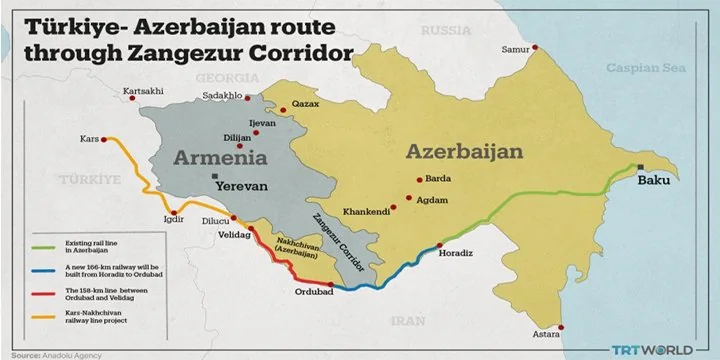
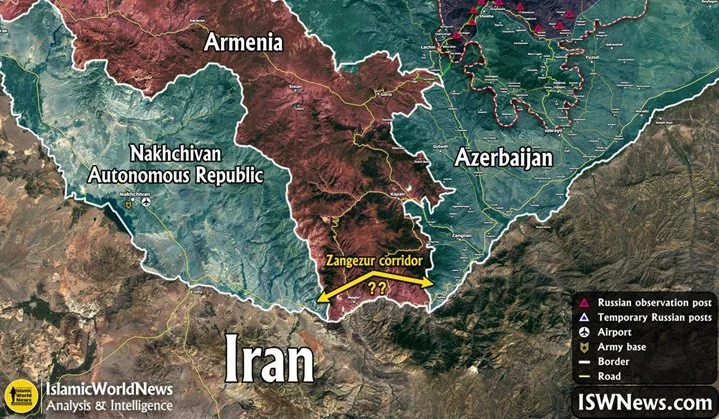
- It's a proposed land route meant to connect Azerbaijan to its separate part called Nakhichevan (which borders Turkey).
- This route would run through Armenian territory.
- Azerbaijan's Goal: To get direct land access to Turkey and Europe.
THE DISAGREEMENT
- The 2020 peace agreement between Armenia and Azerbaijan did give Azerbaijan access to Nakhichevan.
- Armenia's View: This means opening a road, but with Armenian customs and border controls.
- Azerbaijan's View: Wants it to be a "corridor" without any Armenian customs or border control. This proposed route would cut through Armenia's southernmost province of Syunik, which shares a border with Iran.
Azerbaijan's Push: After winning the Karabakh war, Azerbaijan has been strongly pushing for this corridor, even threatening to take it by force if needed.
THE REGIONAL POWERPLAY: TURKEY-AZERBAIJAN V/S ARMENIA-IRAN-INDIA
A. The Turkey-Azerbaijan Axis:
- Strong Partnership: Recent events, including India's "Operation Sindoor," have revealed a strong partnership between Islamabad (Pakistan), Baku (Azerbaijan), and Ankara (Turkey).
- Azerbaijan's Military Might: Azerbaijan won the Karabakh war (2020) largely with Turkish weapons and military advice.
- It continues to boost its military, with a budget 3 times Armenia's, buying weapons from Turkey, Pakistan, and Israel.
- Turkey's Strategic Ambition (via Zangezur):
- Turkish President Erdogan calls the Zangezur Corridor a "strategic issue" vital for Turkey-Azerbaijan ties.
- It would give Turkey direct land access to Azerbaijan, Iran, the Caspian Sea, and Central Asian countries, linking to the Middle Corridor (an important East-West trade route).
- This would greatly boost Turkey's regional power and influence.
- Opposition to IMEC: Importantly, Turkey opposes the India-Middle East-Europe Economic Corridor (IMEC), viewing itself as the primary energy and transport hub in the region.
INDIA’S COUNTER STRATEGY: PARTNERING WITH IRAN & ARMENIA
- Necessity of Partnership: To counter the Turkey-Azerbaijan-Pakistan axis, New Delhi needs a strong partnership with Tehran (Iran) and Yerevan (Armenia). This trilateral cooperation is seen as vital.
- India-Armenia Defence Ties: India and Armenia have a defence partnership since 2020.
- Azerbaijan has openly expressed displeasure about India supplying weapons to Armenia.
- Crucially, some of these Indian weapons are believed to have been sent to Armenia through Iran.
- Existing Cooperation: This flow of weapons through Iran confirms that practical trilateral cooperation (India-Iran-Armenia) is already happening, further strengthened by a new system for trilateral discussions.
IRAN’S FIRM OPPOSITION TO ZANGEZUR CORRIDOR
- Strong Stance: Iran is strongly against the Zangezur Corridor.
- Reason 1: Loss of Access: If built as Azerbaijan wants, it would cut off Iran's direct land access to Armenia, and thus to Europe. This is a critical trade and geopolitical link for Iran.
- Reason 2: Border Security Concerns: Iran worries that it could encourage Azerbaijani claims on Iran's own region of Azerbaijan (called irredentist claims), potentially destabilizing its border.
- Clear Statement: Iran's Defence Minister recently declared that the shared border between Iran and Armenia is a historical route, and Iran "will not allow any encroachment on this border."
WHAT IS AT STAKE FOR INDIA?
- Crucial Trade Routes: The India-Iran-Armenia partnership is essential for keeping vital trade and transport routes open, particularly India's investment in the Chabahar Port (Iran).
- India's Preferred Route to Europe: The Chabahar Port combined with the route through Armenia offers India the shortest multimodal route to the Black Sea and Europe.
- Bypassing Conflict Zones: This route allows India to avoid the Suez Canal, which is often affected by conflicts and disruptions.
- Direct Threat: The Zangezur Corridor, if implemented as Azerbaijan wishes, could severely disrupt this vital Indian trade route.
- Countering Regional Influence: Turkey and Azerbaijan are actively expanding their presence, including in South Asia. India needs to counter this by strengthening its own influence and presence in the South Caucasus.
- Policy Imperative: Upholding Territorial Integrity: To achieve its goals in the region, India must support the territorial integrity of countries in the South Caucasus, especially Armenia's stand against a corridor that bypasses its sovereignty. This means supporting Armenia's right to control its borders and customs.
- Prelims: Key facts, institutions, locations and terminology in the article.
- Mains: Connect the topic with Economy, International Relations, Defence.
- Revision: Use the article headings to prepare concise notes and answer-writing points.
Test your understanding
Questions from this article
Prelims practiceWith reference to THE ZANGEZUR CORRIDOR, consider the following statements:
- The South Caucasus (also called Transcaucasia) is a vital region bridging Eastern Europe and West Asia, home to modern Armenia, Georgia, and Azerbaijan.
- Recently, diplomatic moves like Armenia's Security Council Secretary visiting India and India's "Operation Sindoor" show rising tensions here.
- At the heart of these tensions is the proposed Zangezur Corridor, a project important to Turkey and Azerbaijan, which has big consequences for India's strategic and trade interests.
Which of the statements given above are correct?
- 1 and 2 only
- 2 and 3 only
- 1 and 3 only
- 1, 2 and 3
View answer
Answer: (d) 1, 2 and 3. All three statements are drawn from the article.
Mains practiceDiscuss the background, key issues and significance of THE ZANGEZUR CORRIDOR for India.
Answer in 250 words.
View answer approach
- Context:
- WHAT IS ZANGEZUR CORRIDOR?
- THE DISAGREEMENT
- THE REGIONAL POWERPLAY: TURKEY-AZERBAIJAN V/S ARMENIA-IRAN-INDIA
- A. The Turkey-Azerbaijan Axis:
Frequently asked questionsFrequently asked questions
Why is The Zangezur Corridor in the news?
Context: The South Caucasus (also called Transcaucasia) is a vital region bridging Eastern Europe and West Asia, home to modern Armenia, Georgia, and Azerbaijan. Recently, diplomatic moves like Armenia's Security Council Secretary visiting India and India's "Operation Sindoor" show rising tensions here.
What are the key facts about The Zangezur Corridor?
At the heart of these tensions is the proposed Zangezur Corridor, a project important to Turkey and Azerbaijan, which has big consequences for India's strategic and trade interests. It's a proposed land route meant to connect Azerbaijan to its separate part called Nakhichevan (which borders Turkey). This route would run through Armenian territory.
Why is The Zangezur Corridor important for UPSC preparation?
The topic connects current developments with Economy, International Relations, Defence and is relevant for both objective revision and analytical answer writing.