UPSC Current Affairs
THE STORY OF HEENG (ASAFOETIDA) CULTIVATION IN INDIA: A TRIUMPH OF INDIGENOUS EFFORT
Context: India, the world's largest consumer of Heeng (Ferula assa-foetida), has historically been import-dependent. Recent successful indigenous cultivation, especially the 1st flowering and seed set in India (May 2025), marks a significant progress towards self-reliance. ABOUT HEENG Importance in India: Essential ingredient in diverse Indian cuisines.
VRAuthor Desk
3 min read
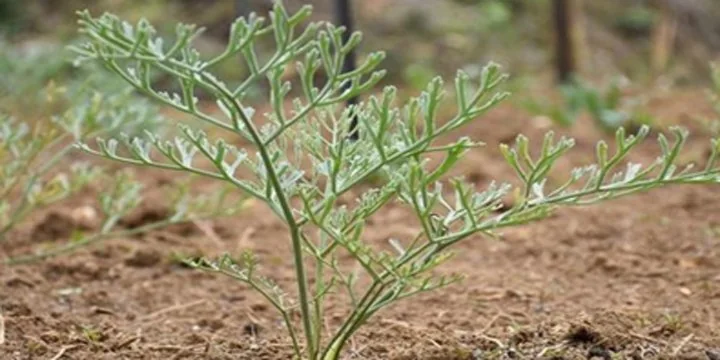
Context: India, the world's largest consumer of Heeng (Ferula assa-foetida), has historically been import-dependent. Recent successful indigenous cultivation, especially the 1st flowering and seed set in India (May 2025), marks a significant progress towards self-reliance. ABOUT HEENG Importance in India: Essential ingredient in diverse Indian cuisines.
Context:
- India, the world's largest consumer of Heeng (Ferula assa-foetida), has historically been import-dependent.
- Recent successful indigenous cultivation, especially the 1st flowering and seed set in India (May 2025), marks a significant progress towards self-reliance.
ABOUT HEENG
- Importance in India:
- Essential ingredient in diverse Indian cuisines.
- Mentioned in ancient Indian texts like Mahabharata and Ayurveda.
- Ayurveda recommends it for refreshing senses; Charaka Sanhita mentions its benefits for abdominal pain, digestion, and taste enhancement.
- Botanical Source:
- Derived from an oleo-gum resin extracted from the thick, fleshy taproot and rhizome of the perennial Ferula assa-foetida
- The resin constitutes 40-64% of the dried gum.
- Takes approximately 5 years to mature and begin flowering.
- Resin obtained by making incisions in the taproot, allowing milky latex to exude and harden.
- Ideal Growing Conditions:
- Climate: Cold, arid/semi-arid environments.
- Soil: Sandy, well-drained, low moisture.
- Rainfall: Ideally = 200 mm annually (tolerates up to 300 mm in cultivated areas). Excessive rainfall or high soil moisture hinders growth.
- Temperature: Flourishes at 10-20°C; tolerates up to 40°C and winter lows down to –4°C.
- Survival Mechanism: Becomes dormant in extremely dry and cold weather.
- Suitable Indian Regions: High-altitude, semi-arid areas like Lahaul-Spiti and Uttarkashi (Himachal Pradesh & Uttarakhand).
INDIA’S JOURNEY TOWARDS INDIGENOUS CULTIVATION
- The Challenge:
- Despite being the world's largest consumer, India was entirely dependent on imports from Afghanistan, Iran, Uzbekistan, etc.
- National Initiative:
- Government launched a national effort to promote indigenous cultivation.
- Lead Institution: CSIR-Institute of Himalayan Bioresource Technology (IHBT), Palampur, Himachal Pradesh.
- Seed Procurement (2018-2020):
- Rigorous multi-layered international search for viable seeds.
- IHBT scientists communicated with agencies and over 20 suppliers in Iran, Afghanistan, Uzbekistan, Tajikistan, South Africa.
- Seeds finally procured from Iran, and later from Afghanistan.
- Legal & Phytosanitary Compliance:
- ICAR-National Bureau of Plant Genetic Resources (NBPGR), New Delhi: Designated nodal agency for plant germplasm import and quarantine.
- Issued import permits and conducted mandated quarantine inspections.
- Cleared seeds handed over to IHBT for research.
- Initial Research & Challenges:
- First import: Six seed accessions from Iran (October 2018).
- Biological Challenges: High dormancy and low germination rate of seeds.
- IHBT's Work: Developed germination protocols, identified altitude-specific cultivation locations, formulated agronomic practices for Indian conditions.
- Controlled Trials: Conducted at IHBT Palampur and its Centre for High Altitude Biology in Ribling (Lahaul & Spiti).
GROUND LEVEL IMPLEMENTATION & EXPANSION
- First Planting (October 15, 2020):
- First heeng seedling planted in a farmer’s field at Kwaring village, Lahaul Valley, Himachal Pradesh.
- Officially marked the start of indigenous heeng cultivation in India.
- Expansion to Mid-Hills (November 8, 2020):
- Planted at Janjheli, Mandi district, Himachal Pradesh.
- First extension of cultivation into mid-hill regions, exploring potential beyond high-altitude cold deserts.
- Institutional Support:
- Heeng Germplasm Resource Centre established at IHBT Palampur (March 5, 2022).
- Serves as national hub for conservation, research, training, seed production, and plant propagation.
- Technological Support:
- Dedicated tissue culture unit (funded by Himachal Pradesh govt.) developed by CSIR-IHBT for large-scale propagation.
- Researchers used ecological niche modelling (GPS-tagged data, environmental parameters) to map favorable cultivation zones.
IMPLICATIONS & FUTURE OUTLOOK
- Reduced Import Dependence: Paves the way for India to significantly cut down on its hing imports.
- Farmer Income Enhancement: Offers a new high-value cash crop for farmers, especially in challenging high-altitude and semi-arid regions.
- Self-Reliant Supply Chain: Contributes to building an 'Atma Nirbhar Bharat' (self-reliant India) for this culturally important spice.
- Collaborative Success: A testament to the synergistic efforts of scientific institutions (CSIR-IHBT, ICAR-NBPGR), state governments (Himachal Pradesh), and progressive farmers.
- Research & Development: Opens avenues for further research into plant adaptability, genetic improvement, and sustainable cultivation practices.
- Prelims: Key facts, institutions, locations and terminology in the article.
- Mains: Connect the topic with Environment, Economy, International Relations.
- Revision: Use the article headings to prepare concise notes and answer-writing points.
Test your understanding
Questions from this article
Prelims practiceWith reference to THE STORY OF HEENG (ASAFOETIDA) CULTIVATION IN INDIA: A TRIUMPH OF INDIGENOUS EFFORT, consider the following statements:
- India, the world's largest consumer of Heeng (Ferula assa-foetida), has historically been import-dependent.
- Recent successful indigenous cultivation, especially the 1st flowering and seed set in India (May 2025), marks a significant progress towards self-reliance.
- Importance in India: Essential ingredient in diverse Indian cuisines. Mentioned in ancient Indian texts like Mahabharata and Ayurveda. Ayurveda recommends it for refreshing senses; Charaka Sanhita mentions its benefits…
Which of the statements given above are correct?
- 1 and 2 only
- 2 and 3 only
- 1 and 3 only
- 1, 2 and 3
View answer
Answer: (d) 1, 2 and 3. All three statements are drawn from the article.
Mains practiceDiscuss the background, key issues and significance of THE STORY OF HEENG (ASAFOETIDA) CULTIVATION IN INDIA: A TRIUMPH OF INDIGENOUS EFFORT for India.
Answer in 250 words.
View answer approach
- Context:
- ABOUT HEENG
- INDIA’S JOURNEY TOWARDS INDIGENOUS CULTIVATION
- GROUND LEVEL IMPLEMENTATION & EXPANSION
- IMPLICATIONS & FUTURE OUTLOOK
Frequently asked questionsFrequently asked questions
Why is The Story Of Heeng (Asafoetida) Cultivation In India: A Triumph Of Indigenous Effort in the news?
Context: India, the world's largest consumer of Heeng (Ferula assa-foetida), has historically been import-dependent. Recent successful indigenous cultivation, especially the 1st flowering and seed set in India (May 2025), marks a significant progress towards self-reliance.
What are the key facts about The Story Of Heeng (Asafoetida) Cultivation In India: A Triumph Of Indigenous Effort?
ABOUT HEENG Importance in India: Essential ingredient in diverse Indian cuisines. Mentioned in ancient Indian texts like Mahabharata and Ayurveda. Ayurveda recommends it for refreshing senses; Charaka Sanhita mentions its benefits for abdominal pain, digestion, and taste enhancement.
Why is The Story Of Heeng (Asafoetida) Cultivation In India: A Triumph Of Indigenous Effort important for UPSC preparation?
The topic connects current developments with Environment, Economy, International Relations and is relevant for both objective revision and analytical answer writing.