UPSC Current Affairs
SAMAGRA SHISHU BAL SWASTHYA KARYAKRAM
Union Health Minister Jagat Prakash Nadda launched the Samagra Shishu Bal Swasthya Karyakram (SSBSK) during the 16th Conference of Central Council of Health and Family Welfare (CCHFW). The programme aims to provide a seamless continuum of home and community-based care for every child from birth to 36 months of age. ABOUT SSBSK Vision Based on the concept of (Comprehensive Care During the First Three Years).
VRAuthor Desk
4 min read
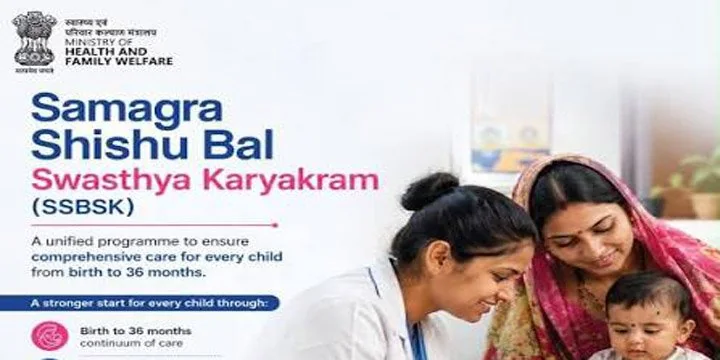
Union Health Minister Jagat Prakash Nadda launched the Samagra Shishu Bal Swasthya Karyakram (SSBSK) during the 16th Conference of Central Council of Health and Family Welfare (CCHFW). The programme aims to provide a seamless continuum of home and community-based care for every child from birth to 36 months of age. ABOUT SSBSK Vision Based on the concept of (Comprehensive Care During the First Three Years).
Why in News?
- Union Health Minister Jagat Prakash Nadda launched the Samagra Shishu Bal Swasthya Karyakram (SSBSK) during the 16th Conference of Central Council of Health and Family Welfare (CCHFW).
- The programme aims to provide a seamless continuum of home and community-based care for every child from birth to 36 months of age.
ABOUT SSBSK
Vision
- Based on the concept of (Comprehensive Care During the First Three Years).
- Focuses on ensuring holistic child development during the most critical phase of life.
Objective
- Strengthen newborn and child healthcare services.
- Improve child survival, nutrition, growth, and development.
- Provide integrated care from birth to three years of age.
Coverage
- Children from birth to 36 months.
- Special focus on vulnerable and high-risk children.
KEY FEATURES OF SSBSK
Integration of Existing Programmes
SSBSK integrates:
- Home-Based Newborn Care (HBNC).
- Home-Based Care for Young Child (HBYC).
Significance
- Creates a unified framework for child healthcare.
- Ensures continuity of care during the first three years of life.
Risk-Stratified Approach
Identification of 'At-Risk' Children
Children are categorized as "At-Risk" if they have:
- Low birth weight.
- Premature birth.
- Delayed initiation of breastfeeding.
- Discharge from newborn care units.
- Malnutrition
- Recurrent illness.
- Developmental delays.
Enhanced Home Visits
For At-Risk Newborns
- Up to 9 home visits during the first 42 days of life.
For At-Risk Children
- Up to 8 home visits up to the age of 36 months.
Purpose
- Early detection of complications.
- Timely intervention and referral.
- Continuous monitoring of growth and development.
Community-Based Care Framework
Key Functionaries Involved
- Accredited Social Health Activists (ASHAs).
- Auxiliary Nurse Midwives (ANMs).
- Community Health Officers (CHOs).
- Anganwadi Workers (AWWs).
Joint Home Visits
For At-Risk Newborns
For At-Risk Children
- Third month.
- Sixth month.
Benefits
- Coordinated care delivery.
- Better counselling and follow-up.
- Improved referral mechanisms.
Well-Baby Sessions
Village Health, Sanitation and Nutrition Day (VHSND)
- Well-Baby Sessions will be conducted regularly.
Objectives
- Growth monitoring.
- Developmental assessment.
- Early identification of health concerns.
Monthly Shishu Shivir Venue
- Conducted at Ayushman Arogya Mandirs.
Functions
- Screening of children.
- Developmental assessments.
- Community-based management of health conditions.
Maternal Mental Health Component
Importance
- Recognizes the close link between maternal and child well-being.
Role of ASHAs
- Conduct postpartum mental health screening.
- Facilitate referral for counselling and treatment when required.
Significance
- Supports both maternal health and healthy child development.
Nurturing Care for Early Childhood Development (ECD)
Key Components
- Responsive caregiving.
- Early learning opportunities.
- Age-appropriate play.
- Child safety.
- Family participation.
Objective
- Promote cognitive, emotional, social, and physical development.
Digital Health Integration
Decision Support Systems (DSS)
- Assist healthcare workers in service delivery and follow-up.
Child-Wise Digital Tracking
- Monitor individual children throughout the care continuum.
Referral and Alert Systems
- Enable timely interventions for vulnerable children.
Integration with National Digital Health
Platforms: SSBSK will be linked with:
JANANI Portal
- Maternal and newborn care tracking.
U-WIN Portal
- Vaccination and immunisation management.
MPCDSR Portal
- Monitoring maternal and child mortality.
RBSK 2.0 Portal
- Child health screening and intervention.
POSHAN Tracker
- Nutrition monitoring and service delivery.
Digital Identity
- Utilizes ABHA ID.& Baal-ABHA ID.
Focus on Urban Vulnerable Populations
Target Groups
- Slum dwellers.
- Migrant populations.
- Underserved urban communities.
Objective
- Ensure equitable access to child healthcare services.
Addressing Digital Era Challenges
Emerging Concerns
- Excessive screen exposure.
- Reduced physical interaction among children.
Potential Risks
- Delayed brain development.
- Emotional and behavioural issues.
- Reduced social skills.
SSBSK Response
- Encourages:
- Physical activity.
- Interactive play.
- Mental stimulation.
- Family engagement.
SIGNIFICANCE OF SSBSK
Improved Child Survival
- Strengthens care during the critical neonatal period.
Early Childhood Development
- Supports healthy cognitive and physical growth.
Integrated Healthcare Delivery
- Brings together health, nutrition, and developmental services.
Technology-Enabled Monitoring
- Enhances efficiency and accountability through digital platforms.
Support for Vulnerable Children
- Provides targeted interventions for high-risk groups.
CHALLENGES
Implementation Capacity
- Requires effective coordination among frontline workers.
Digital Infrastructure Gaps
- Rural and remote areas may face connectivity challenges.
Human Resource Constraints
- Additional responsibilities for ASHAs and health workers.
Monitoring and Follow-Up
- Ensuring timely and quality service delivery across the country.
WAY FORWARD
Strengthen Frontline Workforce
- Provide training and capacity-building support.
Enhance Digital Infrastructure
- Improve connectivity and interoperability of health platforms.
Promote Community Participation
- Increase awareness among families regarding child development.
Focus on Early Intervention
- Strengthen screening and referral systems for at-risk children.
Ensure Universal Coverage
- Expand access to quality child healthcare services across rural and urban India.
- Prelims: Key facts, institutions, locations and terminology in the article.
- Mains: Connect the topic with Economy, Polity & Governance, Health.
- Revision: Use the article headings to prepare concise notes and answer-writing points.
Test your understanding
Questions from this article
Prelims practiceWith reference to SAMAGRA SHISHU BAL SWASTHYA KARYAKRAM, consider the following statements:
- Union Health Minister Jagat Prakash Nadda launched the Samagra Shishu Bal Swasthya Karyakram (SSBSK) during the 16th Conference of Central Council of Health and Family Welfare (CCHFW).
- The programme aims to provide a seamless continuum of home and community-based care for every child from birth to 36 months of age.
- Based on the concept of (Comprehensive Care During the First Three Years).
Which of the statements given above are correct?
- 1 and 2 only
- 2 and 3 only
- 1 and 3 only
- 1, 2 and 3
View answer
Answer: (d) 1, 2 and 3. All three statements are drawn from the article.
Mains practiceDiscuss the background, key issues and significance of SAMAGRA SHISHU BAL SWASTHYA KARYAKRAM for India.
Answer in 250 words.
View answer approach
- Why in News?
- ABOUT SSBSK
- KEY FEATURES OF SSBSK
- SIGNIFICANCE OF SSBSK
- CHALLENGES
Frequently asked questionsFrequently asked questions
Why is Samagra Shishu Bal Swasthya Karyakram in the news?
Union Health Minister Jagat Prakash Nadda launched the Samagra Shishu Bal Swasthya Karyakram (SSBSK) during the 16th Conference of Central Council of Health and Family Welfare (CCHFW). The programme aims to provide a seamless continuum of home and community-based care for every child from birth to 36 months of age.
What are the key facts about Samagra Shishu Bal Swasthya Karyakram?
ABOUT SSBSK Vision Based on the concept of (Comprehensive Care During the First Three Years). Focuses on ensuring holistic child development during the most critical phase of life. Objective Strengthen newborn and child healthcare services.
Why is Samagra Shishu Bal Swasthya Karyakram important for UPSC preparation?
The topic connects current developments with Economy, Polity & Governance, Health and is relevant for both objective revision and analytical answer writing.