UPSC Current Affairs
RASHTRIYA BAL SWASTHYA KARYAKRAM 2.0 GUIDELINES
The Ministry of Health and Family Welfare released the Rashtriya Bal Swasthya Karyakram (RBSK) 2.0 Guidelines. The guidelines were released during the National Summit on Good Practices and Innovations in Public Healthcare Service Delivery. The revised framework aims to strengthen child healthcare services across India.
VRAuthor Desk
3 min read
The Ministry of Health and Family Welfare released the Rashtriya Bal Swasthya Karyakram (RBSK) 2.0 Guidelines. The guidelines were released during the National Summit on Good Practices and Innovations in Public Healthcare Service Delivery. The revised framework aims to strengthen child healthcare services across India.
Why in News?
- The Ministry of Health and Family Welfare released the Rashtriya Bal Swasthya Karyakram (RBSK) 2.0 Guidelines.
- The guidelines were released during the National Summit on Good Practices and Innovations in Public Healthcare Service Delivery.
- The revised framework aims to strengthen child healthcare services across India.
WHAT IS RBSK?
- Rashtriya Bal Swasthya Karyakram (RBSK) is a flagship child health screening programme of the Government of India.
- It focuses on:
- Early identification
- Early diagnosis
- Early treatment of health conditions in children
- The programme covers children from:
MAIN OBJECTIVES OF RBSK 2.0
- To strengthen and expand child health services in India.
- To address both traditional and emerging child health challenges.
- To ensure:
- Early detection of diseases
- Timely treatment
- Holistic growth and development of children
THE 4Ds APPROACH UNDER RBSK
The programme continues its focus on the established
4Ds approach:
- Defects at Birth : Identification of congenital abnormalities present at birth.
- Diseases : Detection of childhood diseases requiring medical attention.
- Deficiencies : Identification of nutritional deficiencies and related health problems.
- Developmental Delays : Detection of physical, cognitive and developmental delays in children.
NEW AREAS ADDED UNDER RBSK 2.0
The revised guidelines broaden the programme scope by including:
- Non-communicable diseases (NCDs)
- Mental health conditions
- Behavioural concerns
- Developmental disorders
- Risk factors for:
LIFECYCLE BASED APPROACH
- RBSK 2.0 strengthens the lifecycle-based approach.
- The programme now provides a continuous healthcare framework for children from:
Focus Areas
- Preventive care
- Promotive care
- Curative care
The aim is not only survival of children, but also their:
- Healthy growth
- Mental well-being
- Overall development
EXPANDED SCREENING SERVICES
- Screening services will continue through:
- Mobile Health Teams
- Anganwadi Centres
- Schools
Purpose
- Universal outreach
- Early identification of health problems
- Timely intervention
STRENGTHENED REFERRAL SYSTEM
The guidelines focus on improving referral linkages and continuity of care.
Key Features
- Clear referral pathways from:
- Community-level screening
- To hospital-based diagnosis and treatment
- A referral tracking system will ensure:
- Follow-up of identified children
- Reduced treatment dropouts
- Timely healthcare intervention
DIGITALISATION UNDER RBSK 2.0
A major focus of the revised guidelines is digital health systems.
Digital Features Introduced
- Digital health cards
- Real-time data systems
- Integrated digital platforms for:
- Tracking
- Monitoring
- Service delivery
Expected Benefits
- Better programme efficiency
- Improved accountability
- Evidence-based decision making
- Improved monitoring at all levels
MULTISECTORAL CONVERGENCE
The guidelines promote coordination among different sectors, including:
- Health sector
- Education sector
- Women and Child Development system
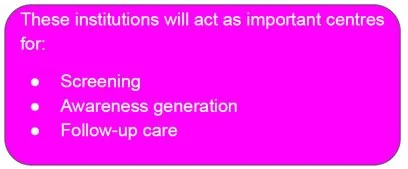
Role of Institutions
- Schools
- Anganwadi Centres
- Community platforms
IMPORTANCE OF RBSK 2.0
- Helps identify diseases and developmental issues at an early stage.
- Timely intervention can reduce long-term health complications.
- Early treatment helps reduce serious illnesses in future.
- Covers physical, mental and behavioural health of children.
- Community-level outreach ensures wider healthcare access.
- Supports India’s push towards technology-driven healthcare systems.
CONCLUSION
- RBSK 2.0 marks a major upgrade in India’s child healthcare programme.
- The revised guidelines aim to provide:
- Comprehensive screening
- Better referral systems
- Continuous follow-up care
- Digital health support
- The initiative reflects the government’s commitment towards accessible, equitable andquality healthcare for every child in the country.
- Prelims: Key facts, institutions, locations and terminology in the article.
- Mains: Connect the topic with Economy, Polity & Governance, Health.
- Revision: Use the article headings to prepare concise notes and answer-writing points.
Test your understanding
Questions from this article
Prelims practiceWith reference to RASHTRIYA BAL SWASTHYA KARYAKRAM 2.0 GUIDELINES, consider the following statements:
- The Ministry of Health and Family Welfare released the Rashtriya Bal Swasthya Karyakram (RBSK) 2.0 Guidelines.
- The guidelines were released during the National Summit on Good Practices and Innovations in Public Healthcare Service Delivery.
- The revised framework aims to strengthen child healthcare services across India.
Which of the statements given above are correct?
- 1 and 2 only
- 2 and 3 only
- 1 and 3 only
- 1, 2 and 3
View answer
Answer: (d) 1, 2 and 3. All three statements are drawn from the article.
Mains practiceDiscuss the background, key issues and significance of RASHTRIYA BAL SWASTHYA KARYAKRAM 2.0 GUIDELINES for India.
Answer in 250 words.
View answer approach
- Why in News?
- WHAT IS RBSK?
- MAIN OBJECTIVES OF RBSK 2.0
- 4Ds approach:
- NEW AREAS ADDED UNDER RBSK 2.0
Frequently asked questionsFrequently asked questions
Why is Rashtriya Bal Swasthya Karyakram 2.0 Guidelines in the news?
The Ministry of Health and Family Welfare released the Rashtriya Bal Swasthya Karyakram (RBSK) 2.0 Guidelines. The guidelines were released during the National Summit on Good Practices and Innovations in Public Healthcare Service Delivery.
What are the key facts about Rashtriya Bal Swasthya Karyakram 2.0 Guidelines?
The revised framework aims to strengthen child healthcare services across India. Rashtriya Bal Swasthya Karyakram (RBSK) is a flagship child health screening programme of the Government of India. It focuses on: Early identification Early diagnosis Early treatment of health conditions in children The programme covers children from: Birth to 18 years of age MAIN OBJECTIVES OF RBSK 2.0 To strengthen and expand child health services in India.
Why is Rashtriya Bal Swasthya Karyakram 2.0 Guidelines important for UPSC preparation?
The topic connects current developments with Economy, Polity & Governance, Health and is relevant for both objective revision and analytical answer writing.