UPSC Current Affairs
OPERATION SINDHU
In June 2025, India initiated 'Operation Sindhu' to evacuate its nationals from Iran due to the escalating conflict between Iran and Israel. KEY DETAILS Launch: initial phases: June 17-18, 2025 Objective: Ensure safety and facilitate evacuation of Indian nationals from conflict areas in Iran. Context: Worsening security due to ongoing Israel-Iran conflict, including missile and drone attacks.
VRAuthor Desk
3 min read
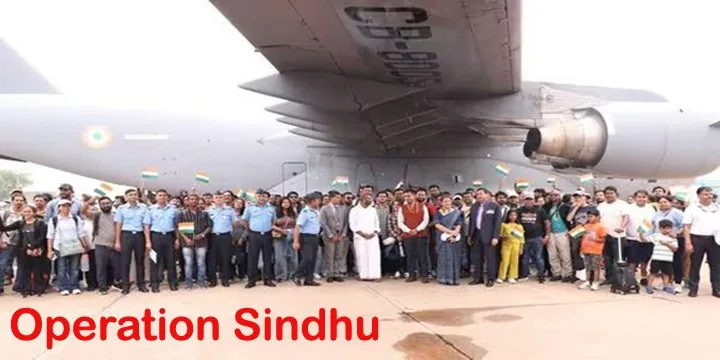
In June 2025, India initiated 'Operation Sindhu' to evacuate its nationals from Iran due to the escalating conflict between Iran and Israel. KEY DETAILS Launch: initial phases: June 17-18, 2025 Objective: Ensure safety and facilitate evacuation of Indian nationals from conflict areas in Iran. Context: Worsening security due to ongoing Israel-Iran conflict, including missile and drone attacks.
Why in News?
- In June 2025, India initiated 'Operation Sindhu' to evacuate its nationals from Iran due to the escalating conflict between Iran and Israel.
KEY DETAILS
- Launch: initial phases: June 17-18, 2025
- Objective: Ensure safety and facilitate evacuation of Indian nationals from conflict areas in Iran.
- Context: Worsening security due to ongoing Israel-Iran conflict, including missile and drone attacks.
- Nodal Ministry: Ministry of External Affairs (MEA).
- Indian Presence: Over 4,000 Indian nationals, approximately half of whom are students, reside in Iran.
EXECUTION & COORDINATION
- First Batch (June 17-19, 2025): 110 Indian students from northern Iran were evacuated by road to Armenia, then flown to New Delhi. Indian Missions in Iran and Armenia supervised the transfer.
- Ongoing Efforts: The Indian Embassy in Iran continues to assist nationals in moving to safer zones and arranging further evacuations.
- Iranian Cooperation: Iran notably eased airspace restrictions for Indian evacuation flights, making a humanitarian exception.
- Support Channels: Indian nationals are advised to contact the Indian Embassy in Tehran's emergency helpline or the MEA's 24x7 Control Room in New Delhi.
- Future Phases: The government is planning additional evacuation phases for other vulnerable groups.
- Broader Evacuation: India also requested its nationals to leave Israel concurrently, indicating a wider evacuation effort across the conflict zone.
DIPLOMATIC CHALLENGES & REGIONAL DYNAMICS
- Complex Geopolitics: India navigates sensitive regional relationships due to the conflict.
- Transit Nations: Armenia, Turkmenistan, and Iraq are key neighbors with amicable ties, providing potential evacuation routes.
- Difficult Relations: India faces challenges with other bordering countries like Turkey, Azerbaijan, and Pakistan; lacks formal diplomatic ties with Afghanistan.
- Alternative Routes: The Persian Gulf route (via ships or Saudi Arabia/Kuwait) is also being considered.
- Diplomatic Leveraging: India is actively using its diplomatic relationships to facilitate safe evacuations.
INDIA’S HUMANITARIAN EVACUATION POLICY & PRECEDENTS
- Highest Priority to Citizens' Safety: The Government of India consistently accords the "highest priority to the safety and security of Indian nationals abroad."
- "No Indian Left Behind" Policy: Operation Sindhu reinforces India's global policy of "No Indian Left Behind" during crises, a cornerstone of its citizen-first diplomacy.
- Track Record of Evacuation Missions: India has a strong track record of successful humanitarian evacuation missions, including:
- Operation Ganga (2022): Evacuation from Ukraine during the Russia-Ukraine conflict.
- Operation Kaveri (2023): Evacuation from Sudan during civil unrest.
- Operation Devi Shakti (2021): Evacuation from Afghanistan after the Taliban takeover.
- Operation Raahat (2015): Evacuation from Yemen.
- Operation Sukoon (2006): Evacuation from Lebanon.
- Rapid Response Capability: These operations showcase India's robust crisis response system, logistical strength, and ability to protect its citizens in geopolitical flashpoints.
- Strengthening Diplomatic Image: Such missions significantly strengthen India's diplomatic image and soft power globally.
- Prelims: Key facts, institutions, locations and terminology in the article.
- Mains: Connect the topic with International Relations, Defence, Polity & Governance.
- Revision: Use the article headings to prepare concise notes and answer-writing points.
Test your understanding
Questions from this article
Prelims practiceWith reference to OPERATION SINDHU, consider the following statements:
- In June 2025, India initiated 'Operation Sindhu' to evacuate its nationals from Iran due to the escalating conflict between Iran and Israel.
- Launch: initial phases: June 17-18, 2025
- Objective: Ensure safety and facilitate evacuation of Indian nationals from conflict areas in Iran.
Which of the statements given above are correct?
- 1 and 2 only
- 2 and 3 only
- 1 and 3 only
- 1, 2 and 3
View answer
Answer: (d) 1, 2 and 3. All three statements are drawn from the article.
Mains practiceDiscuss the background, key issues and significance of OPERATION SINDHU for India.
Answer in 250 words.
View answer approach
- Why in News?
- KEY DETAILS
- EXECUTION & COORDINATION
- DIPLOMATIC CHALLENGES & REGIONAL DYNAMICS
- INDIA’S HUMANITARIAN EVACUATION POLICY & PRECEDENTS
Frequently asked questionsFrequently asked questions
Why is Operation Sindhu in the news?
In June 2025, India initiated 'Operation Sindhu' to evacuate its nationals from Iran due to the escalating conflict between Iran and Israel. KEY DETAILS Launch: initial phases: June 17-18, 2025 Objective: Ensure safety and facilitate evacuation of Indian nationals from conflict areas in Iran.
What are the key facts about Operation Sindhu?
Context: Worsening security due to ongoing Israel-Iran conflict, including missile and drone attacks. Nodal Ministry: Ministry of External Affairs (MEA). Indian Presence: Over 4,000 Indian nationals, approximately half of whom are students, reside in Iran.
Why is Operation Sindhu important for UPSC preparation?
The topic connects current developments with International Relations, Defence, Polity & Governance and is relevant for both objective revision and analytical answer writing.