UPSC Current Affairs
Monsoon Session of The Parliament
Session Overview Start Date: 21 July 2025 Duration: Till 21 August 2025 (21 sittings) Break: 12–18 August (Raksha Bandhan & Independence Day) Bills Scheduled: 15 total (8 new bills + 7 pending bills) Focus Areas: Finance, commerce, income tax, sports… Finance & Commerce Manipur Goods and Services Tax (Amendment) Bill, 2025 Amendments to align the Manipur GST Act, 2017, with central GST law. Taxation Laws (Amendment) Bill, 2025 Proposed changes to existing tax laws to improve clarity and compliance.
VRAuthor Desk
5 min read
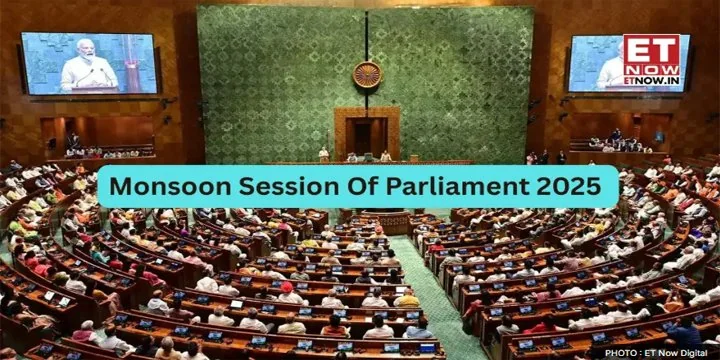
Session Overview Start Date: 21 July 2025 Duration: Till 21 August 2025 (21 sittings) Break: 12–18 August (Raksha Bandhan & Independence Day) Bills Scheduled: 15 total (8 new bills + 7 pending bills) Focus Areas: Finance, commerce, income tax, sports… Finance & Commerce Manipur Goods and Services Tax (Amendment) Bill, 2025 Amendments to align the Manipur GST Act, 2017, with central GST law. Taxation Laws (Amendment) Bill, 2025 Proposed changes to existing tax laws to improve clarity and compliance.
Session Overview
- Start Date: 21 July 2025
- Duration: Till 21 August 2025 (21 sittings)
- Break: 12–18 August (Raksha Bandhan & Independence Day)
- Bills Scheduled: 15 total (8 new bills + 7 pending bills)
- Focus Areas: Finance, commerce, income tax, sports, education, mining, shipping
- New Initiative: Introduction of a digital attendance system for MPs to ensure transparency and curb misuse of allowances
- Context: First session after Operation Sindoor launched in May 2025, a counter-terrorism operation following terror attacks in Pahalgam, Jammu and Kashmir
- Political Climate: Expected to witness heated debates between ruling BJP and opposition Congress-led INDIA bloc
NEW BILLS INTRODUCED
A. Finance & Commerce
- Manipur Goods and Services Tax (Amendment) Bill, 2025
- Amendments to align the Manipur GST Act, 2017, with central GST law.
- Taxation Laws (Amendment) Bill, 2025
- Proposed changes to existing tax laws to improve clarity and compliance.
- Jan Vishwas (Amendment of Provisions) Bill, 2025
- Aims to enhance ease of doing business by reducing compliance requirements and easing regulatory burdens.
B. Education
- Indian Institutes of Management (Amendment) Bill, 2025
- To add IIM Guwahati officially to the schedule of the Indian Institutes of Management Act, 2017, thus granting it formal recognition as an IIM.
C. Culture
- Geoheritage Sites and Geo-relics (Preservation and Maintenance) Bill, 2025
- Seeks to protect, preserve, and promote sites of geological significance for scientific research, education, and tourism.
D. Mines
- Mines and Minerals (Development and Regulation) Amendment Bill, 2025
- Focus on recovery of critical minerals.
- Provisions for expansion of mining leases.
- Strengthening of the National Mineral Exploration Trust to promote exploration activities.
E. Sports
- National Sports Governance Bill, 2025
- To promote sports and welfare of sportspersons.
- Set governance standards for sports federations.
- Establish mechanisms for resolving disputes and grievances in sports bodies.
- National Anti-Doping (Amendment) Bill, 2025
- Updates the 2022 Anti-Doping Act to align with World Anti-Doping Agency (WADA) Code and international standards.
- Ensures independence of the National Anti-Doping Appeal Panel.
PENDING BILLS UP FOR DISCUSSION
A. Finance
- Income Tax Bill, 2025
- Intended to replace the Income Tax Act, 1961.
- Seeks to simplify language, remove redundant provisions while retaining existing tax rates and offence provisions.
- Introduced in Budget Session (Feb 2025) and referred to a Select Committee chaired by BJP MP Baijayant Panda.
- Select Committee report expected during this session.
B. Home Affairs
- Scheduled Tribes Representation in Goa Bill, 2024
- Proposes reservation of seats for Scheduled Tribes in Goa Legislative Assembly by readjusting assembly constituencies.
- Introduced on 5 August 2024; pending in Lok Sabha.
C. Shipping and Maritime
- Indian Ports Bill, 2025
- Replaces the Indian Ports Act, 1908.
- Creates new regulatory bodies such as Maritime State Development Council and State Maritime Boards.
- Merchant Shipping Bill, 2024
- Updates ship registration rules, maritime training, and seafarer welfare regulations.
- Pending in Lok Sabha.
- Coastal Shipping Bill, 2024
- Regulates domestic coastal shipping activities.
- Passed Lok Sabha; pending Rajya Sabha.
- Carriage of Goods by Sea Bill, 2024
- Modernizes the Sea Transport of Goods Act, 1925.
- Passed Lok Sabha; pending Rajya Sabha.
- Bills of Lading Bill, 2024
- Replaces Indian Bills of Lading Act, 1856.
- Updates legal framework for shipping documents used as proof of goods on board.
- Passed Lok Sabha on 10 March 2025; pending Rajya Sabha.
KEY INITIATIVES & DEVELOPMENT
- Digital Attendance System for MPs:
- MPs must register presence using digital devices at designated seats.
- Aims to increase transparency and accountability in parliamentary attendance and prevent misuse of attendance-linked allowances.
- Operation Sindoor:
- Launched in May 2025 after terror attacks in Pahalgam, J&K.
- Expected to feature prominently in parliamentary discussions related to national security.
- International Relations Debate:
- Possible discussions on US President Donald Trump’s claim that he “helped prevent a nuclear conflict” between India and Pakistan.
POLITICAL SCENARIO & EXPECTED DEBATES
- The Monsoon Session is likely to witness intense political debates between the ruling BJP and the opposition Congress-led INDIA bloc.
- Opposition is expected to raise questions on Operation Sindoor and government policies.
- Security issues, foreign policy, and governance reforms will dominate discussions.
CONSTITUTIONAL PROVISIONS FOR SESSIONS
- Article 85(1): Summoning of Parliament
- The President summons each House of Parliament (Lok Sabha and Rajya Sabha) to meet at a time and place deemed appropriate.
- Mandatory Condition: No more than six months should elapse between the last sitting of one session and the first sitting of the next session.
- Article 85(2): Powers of the President
- The President can prorogue (suspend) either House or both Houses of Parliament.
- The President has the authority to dissolve the Lok Sabha (House of the People).
TYPES OF SESSIONS
- Parliament usually meets three times a year; however, the Constitution does not fix the number of sessions or sitting days.
A. Budget Session
- Timing: February to March (longest session).
- Purpose:
- Begins with the President’s address.
- Presentation and discussion of the Union Budget in Lok Sabha.
- Parliamentary Committees review budget proposals during recess.
- Activities: Detailed examination, amendments, and approval of the government’s fiscal policy.
- Also includes other legislative business and debates.
B. Monsoon Session
- Timing: July to August (coincides with monsoon season).
- Purpose:
- Introduce and pass important legislation.
- MPs debate bills and discuss national issues.
- Government seeks support for its policies, including response to opposition concerns.
C. Winter Session
- Timing: November to December.
- Purpose:
- Review government policies and initiatives.
- Introduction and discussion of new bills.
- Examine government performance via questions, motions, and debates.
D. Special Session
- Not constitutionally defined but convened for urgent or landmark issues.
- Called outside regular sessions by the government.
- Examples:
- 1962: India-China War.
- 1971: India-Pakistan conflict discussions.
- Mentioned in Article 352 during Proclamation of Emergency as a “special sitting.”
SCHEDULING & COMPONENTS OF SESSIONS
- Scheduled by: Cabinet Committee on Parliamentary Affairs (CCPA).
- Role of President: Summons MPs, provides official summons with tentative business and number of sittings.
- Components: Each session consists of multiple meetings with morning and afternoon sittings.
- Prelims: Key facts, institutions, locations and terminology in the article.
- Mains: Connect the topic with Environment, Economy, International Relations.
- Revision: Use the article headings to prepare concise notes and answer-writing points.
Test your understanding
Questions from this article
Prelims practiceWith reference to Monsoon Session of The Parliament, consider the following statements:
- Duration: Till 21 August 2025 (21 sittings)
- Break: 12–18 August (Raksha Bandhan & Independence Day)
- Bills Scheduled: 15 total (8 new bills + 7 pending bills)
Which of the statements given above are correct?
- 1 and 2 only
- 2 and 3 only
- 1 and 3 only
- 1, 2 and 3
View answer
Answer: (d) 1, 2 and 3. All three statements are drawn from the article.
Mains practiceDiscuss the background, key issues and significance of Monsoon Session of The Parliament for India.
Answer in 250 words.
View answer approach
- NEW BILLS INTRODUCED
- PENDING BILLS UP FOR DISCUSSION
- KEY INITIATIVES & DEVELOPMENT
- POLITICAL SCENARIO & EXPECTED DEBATES
- CONSTITUTIONAL PROVISIONS FOR SESSIONS
Frequently asked questionsFrequently asked questions
Why is Monsoon Session Of The Parliament in the news?
Session Overview Start Date: 21 July 2025 Duration: Till 21 August 2025 (21 sittings) Break: 12–18 August (Raksha Bandhan & Independence Day) Bills Scheduled: 15 total (8 new bills + 7 pending bills) Focus Areas: Finance, commerce, income tax, sports… Finance & Commerce Manipur Goods and Services Tax (Amendment) Bill, 2025 Amendments to align the Manipur GST Act, 2017, with central GST law.
What are the key facts about Monsoon Session Of The Parliament?
Taxation Laws (Amendment) Bill, 2025 Proposed changes to existing tax laws to improve clarity and compliance. Jan Vishwas (Amendment of Provisions) Bill, 2025 Aims to enhance ease of doing business by reducing compliance requirements and easing regulatory burdens. Education Indian Institutes of Management (Amendment) Bill, 2025 To add IIM Guwahati officially to the schedule of the Indian Institutes of Management Act, 2017, thus granting it formal recognition as an IIM.
Why is Monsoon Session Of The Parliament important for UPSC preparation?
The topic connects current developments with Environment, Economy, International Relations and is relevant for both objective revision and analytical answer writing.