UPSC Current Affairs
Launch Of New Aadhar Governance Portal
Introduction of the Aadhaar Governance Portal: The Ministry of Electronics and Information Technology (MeitY) has launched a new Aadhaar Governance Portal (http://swik.meity.gov.in) to streamline the process of approval for Aadhaar authentication requests. OBJECTIVES The portal aims to simplify governance processes and enhance citizen-centric services by making Aadhaar authentication more efficient. It is part of ongoing efforts to improve service delivery and ease of living for citizens.
VRAuthor Desk
4 min read
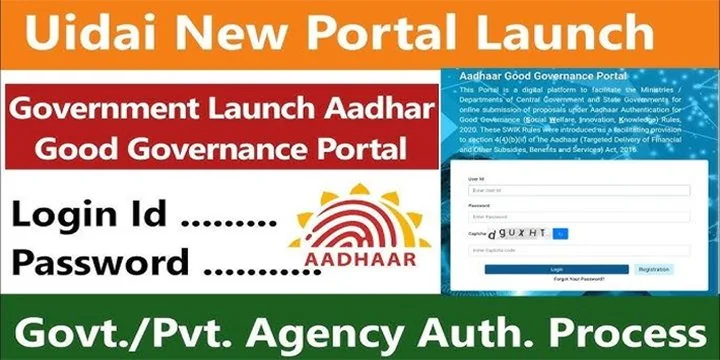
Introduction of the Aadhaar Governance Portal: The Ministry of Electronics and Information Technology (MeitY) has launched a new Aadhaar Governance Portal (http://swik.meity.gov.in) to streamline the process of approval for Aadhaar authentication requests. OBJECTIVES The portal aims to simplify governance processes and enhance citizen-centric services by making Aadhaar authentication more efficient. It is part of ongoing efforts to improve service delivery and ease of living for citizens.
Introduction of the Aadhaar Governance Portal:
The
Ministry of Electronics and Information Technology (MeitY) has launched a new
Aadhaar Governance Portal (http://swik.meity.gov.in)
to streamline the process of approval for Aadhaar authentication requests.
OBJECTIVES
- The portal aims to simplify governance processes and enhance citizen-centric services by making Aadhaar authentication more efficient.
- It is part of ongoing efforts to improve service delivery and ease of living for citizens.
Legal Framework:
- The portal follows the recent amendments to the Aadhaar Authentication for Good Governance (Social Welfare, Innovation, Knowledge) Rules, 2025, under the Aadhaar Act of 2016.
- These amendments are intended to support good governance and enhance the delivery of welfare services and benefits.
- Benefits of the Portal:
- The platform will expedite the inclusion of new use cases in governance, improving access to essential services for citizens.
- It is designed to simplify the process for both government and private entities seeking Aadhaar authentication approval.
- Impact on Service Delivery:
- The portal is expected to make services in various sectors, such as healthcare, education, e-commerce, and hospitality, more accessible and efficient.
- It will also facilitate Aadhaar-based services like staff attendance, customer onboarding, and e-KYC verification.
- Features of the Portal:
- The portal offers a step-by-step guide to help entities apply for Aadhaar authentication approval and onboard smoothly.
- Face authentication may also be integrated into customer-facing apps, enabling easy, anytime authentication.
WHAT IS AADHAR?
- Aadhaar is a 12-digit random number issued by the Unique Identification Authority of India (UIDAI).
- It is provided to residents of India after undergoing a verification process set by the UIDAI.
- Eligibility and Enrollment:
- Any resident of India, irrespective of age or gender, can voluntarily enrol for Aadhaar.
- The enrollment process is free and requires minimal demographic and biometric information.
- An individual needs to enrol only once.
- The uniqueness of the Aadhaar is ensured through demographic and biometric de-duplication, meaning only one Aadhaar number will be generated per person
- Biometric Information Required:
- Ten fingerprints, Two iris scans, and a facial photograph.
- Aadhaar Features:
- Aadhaar is verifiable online in a cost-effective
- The number is unique and robust enough to eliminate duplicates and fake identities.
- It serves as a basis for rolling out several government welfare schemes and programs, thus promoting transparency and good governance.
- Aadhaar is a proof of identity but does not confer rights such as citizenship or domicile.
- Aadhaar and Governance:
- Aadhaar acts as a strategic policy tool for social and financial inclusion, public sector delivery reforms, and fiscal management.
- It enhances convenience and supports people-centric governance.
- The system facilitates financial inclusion for underprivileged sections and promotes distributive justice and equality.
- Global Recognition:
- The Aadhaar program is the largest biometric-based identification system
- It plays a vital role in the Digital India initiative, providing every resident with a unique identity.
- Impact on Service Delivery:
- Aadhaar serves as a permanent financial address, enabling the direct delivery of subsidies, benefits, and services to residents using just the Aadhaar number.
- It plays a significant role in promoting efficiency in governance and ensuring effective service delivery.
ABOUT UIDAI
- UIDAI (Unique Identification Authority of India) is a statutory authority established under the Aadhaar Act, 2016.
- It was created on 12th July 2016 by the Government of India, under the Ministry of Electronics and Information Technology (MeitY).
- The Aadhaar Act, 2016 was later amended by the Aadhaar and Other Laws (Amendment) Act, 2019, effective from 25th July 2019.
Objectives of UIDAI:
- UIDAI’s primary objective is to issue Unique Identification Numbers (UIDs), known as Aadhaar, to all residents of India.
- The Aadhaar number must be:
- Robust enough to eliminate duplicate and fake identities.
- Verifiable and authenticable in an easy, cost-effective way.
Aadhaar Numbers Issued:
- As of 29th September 2023, UIDAI has issued 08 crore Aadhaar numbers to residents across India.
Responsibilities of UIDAI:
- Aadhaar enrolment and authentication: Managing all stages of the Aadhaar lifecycle, including issuing Aadhaar numbers and performing authentication.
- Policy and system development: Developing policies, procedures, and systems to manage Aadhaar issuance.
- Security: Ensuring the security of identity information and authentication records of individuals.
Historical Background:
- March 3, 2006: The project ‘Unique Identification for BPL Families’ was approved by the Department of Information Technology.
- July 3, 2006: A Processes Committee was formed to design the process for creating the Unique Identification database.
- November 26, 2006: The Strategic Vision Document for Unique Identification of residents was prepared.
- December 4, 2006: The Empowered Group of Ministers (EGoM) was set up to collate data for the National Population Register and the Unique Identification Number project.
Evolution of UIDAI:
- Before becoming a statutory authority, UIDAI functioned as an attached office of the Planning Commission (now NITI Aayog) from 28th January 2009.
- The first Aadhaar number was issued on 29th September 2010 to a resident in Nandurbar, Maharashtra.
- On 12th September 2015, the Government revised the Allocation of Business Rules to place UIDAI under the Department of Electronics & Information Technology (DeitY).
- Prelims: Key facts, institutions, locations and terminology in the article.
- Mains: Connect the topic with Polity & Governance, Health, Science & Technology.
- Revision: Use the article headings to prepare concise notes and answer-writing points.
Test your understanding
Questions from this article
Prelims practiceWith reference to Launch Of New Aadhar Governance Portal, consider the following statements:
- The portal aims to simplify governance processes and enhance citizen-centric services by making Aadhaar authentication more efficient.
- It is part of ongoing efforts to improve service delivery and ease of living for citizens.
- The portal follows the recent amendments to the Aadhaar Authentication for Good Governance (Social Welfare, Innovation, Knowledge) Rules, 2025, under the Aadhaar Act of 2016.
Which of the statements given above are correct?
- 1 and 2 only
- 2 and 3 only
- 1 and 3 only
- 1, 2 and 3
View answer
Answer: (d) 1, 2 and 3. All three statements are drawn from the article.
Mains practiceDiscuss the background, key issues and significance of Launch Of New Aadhar Governance Portal for India.
Answer in 250 words.
View answer approach
- OBJECTIVES
- Legal Framework:
- WHAT IS AADHAR?
- ABOUT UIDAI
- Objectives of UIDAI:
Frequently asked questionsFrequently asked questions
Why is Launch Of New Aadhar Governance Portal in the news?
Introduction of the Aadhaar Governance Portal: The Ministry of Electronics and Information Technology (MeitY) has launched a new Aadhaar Governance Portal (http://swik.meity.gov.in) to streamline the process of approval for Aadhaar authentication requests. OBJECTIVES The portal aims to simplify governance processes and enhance citizen-centric services by making Aadhaar authentication more efficient.
What are the key facts about Launch Of New Aadhar Governance Portal?
It is part of ongoing efforts to improve service delivery and ease of living for citizens. Legal Framework: The portal follows the recent amendments to the Aadhaar Authentication for Good Governance (Social Welfare, Innovation, Knowledge) Rules, 2025, under the Aadhaar Act of 2016. These amendments are intended to support good governance and enhance the delivery of welfare services and benefits.
Why is Launch Of New Aadhar Governance Portal important for UPSC preparation?
The topic connects current developments with Polity & Governance, Health, Science & Technology and is relevant for both objective revision and analytical answer writing.