UPSC Current Affairs
IRAN’S CONDITIONS TO END THE WAR
March 12, 2026, Iranian President Masoud Pezeshkian has outlined three key conditions to end the ongoing conflict with the United States and Israel. THREE CONDITIONS Recognition of Iran's Legitimate Rights: This involves honoring Iran's sovereignty, security, and regional standing. Payment of Reparations: Iran demands compensation for infrastructure destruction and casualties caused by U.S.-Israeli airstrikes.
VRAuthor Desk
2 min read
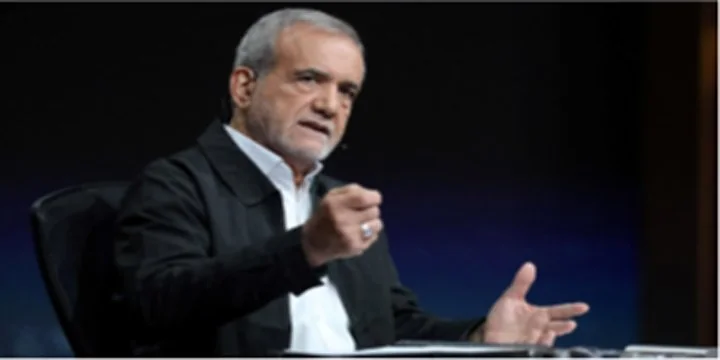
March 12, 2026, Iranian President Masoud Pezeshkian has outlined three key conditions to end the ongoing conflict with the United States and Israel. THREE CONDITIONS Recognition of Iran's Legitimate Rights: This involves honoring Iran's sovereignty, security, and regional standing. Payment of Reparations: Iran demands compensation for infrastructure destruction and casualties caused by U.S.-Israeli airstrikes.
March 12, 2026, Iranian
President Masoud Pezeshkian has outlined three key conditions to end the ongoing conflict with the United States and Israel.
THREE CONDITIONS
- Recognition of Iran's Legitimate Rights: This involves honoring Iran's sovereignty, security, and regional standing.
- Payment of Reparations: Iran demands compensation for infrastructure destruction and casualties caused by U.S.-Israeli airstrikes.
- Firm International Guarantees: Iran requires assurances to prevent future attacks, aiming to halt further military escalation.
RECOGNITION OF IRAN’S LEGITIMATE RIGHTS
"Recognition of Iran's legitimate rights" is a central, recurring diplomatic demand by Tehran, focusing on the acknowledged
right to enrich uranium for peaceful nuclear energy under the NPT, the
lifting of international sanctions, and
acceptance of its influence in the region.
This position is frequently asserted in negotiations with Western powers.
KEY ASPECTS OF THIS DEMAND
- Nuclear Program: Iran insists on the recognition of its rights to develop peaceful nuclear technology.
- Sanctions Relief: A core demand is the lifting of economic sanctions that have hindered oil exports and restricted access to global markets.
- Regional Influence: The Iranian government often seeks validation of its security role in the Middle East, sometimes viewed in contrast to its non-recognition of Israel.
- Diplomatic Relations: Iran's foreign policy challenges the legitimacy of the state of Israel and emphasizes independence from Western influence.
PAYMENT OF REPARATIONS
As of
March 2026, there are
no established, officially recognized reparations payments for damages in an
"Iran-Israel war."
WHAT IS REPARATION?
War reparations, defined as
compensation paid by a defeated nation, have not occurred in this context.
While Iran has pursued
legal cases for pre-1979 debts, no direct conflict-related reparations have been paid.
HISTORY OF FINANCIAL CONFLICT BETWEEN ISRAEL & IRAN
- Historical Debt: Since the 1979 Islamic Revolution, Iran has sued for the return of funds held by Israel for oil shipments, including a reported $250 million in an Israeli bank account.
- Reparations Concept: Reparations usually involve payments in currency, resources, or assets following a conflict.
- Ongoing Conflict: The conflict between Iran and Israel has largely been fought through proxy forces and indirect actions, rather than conventional war leading to formal reparations.
- Prelims: Key facts, institutions, locations and terminology in the article.
- Mains: Connect the topic with Economy, International Relations, Defence.
- Revision: Use the article headings to prepare concise notes and answer-writing points.
Test your understanding
Questions from this article
Prelims practiceWith reference to IRAN’S CONDITIONS TO END THE WAR, consider the following statements:
- Recognition of Iran's Legitimate Rights: This involves honoring Iran's sovereignty, security, and regional standing.
- Payment of Reparations: Iran demands compensation for infrastructure destruction and casualties caused by U.S.-Israeli airstrikes.
- Firm International Guarantees: Iran requires assurances to prevent future attacks, aiming to halt further military escalation.
Which of the statements given above are correct?
- 1 and 2 only
- 2 and 3 only
- 1 and 3 only
- 1, 2 and 3
View answer
Answer: (d) 1, 2 and 3. All three statements are drawn from the article.
Mains practiceDiscuss the background, key issues and significance of IRAN’S CONDITIONS TO END THE WAR for India.
Answer in 250 words.
View answer approach
- THREE CONDITIONS
- RECOGNITION OF IRAN’S LEGITIMATE RIGHTS
- KEY ASPECTS OF THIS DEMAND
- HISTORY OF FINANCIAL CONFLICT BETWEEN ISRAEL & IRAN
Frequently asked questionsFrequently asked questions
Why is Iran’S Conditions To End The War in the news?
March 12, 2026, Iranian President Masoud Pezeshkian has outlined three key conditions to end the ongoing conflict with the United States and Israel. THREE CONDITIONS Recognition of Iran's Legitimate Rights: This involves honoring Iran's sovereignty, security, and regional standing.
What are the key facts about Iran’S Conditions To End The War?
Payment of Reparations: Iran demands compensation for infrastructure destruction and casualties caused by U.S.-Israeli airstrikes. Firm International Guarantees: Iran requires assurances to prevent future attacks, aiming to halt further military escalation. RECOGNITION OF IRAN’S LEGITIMATE RIGHTS "Recognition of Iran's legitimate rights" is a central, recurring diplomatic demand by Tehran, focusing on the acknowledged right to enrich uranium for peaceful nuclear energy under the NPT, the lifting of international…
Why is Iran’S Conditions To End The War important for UPSC preparation?
The topic connects current developments with Economy, International Relations, Defence and is relevant for both objective revision and analytical answer writing.