UPSC Current Affairs
INDIA’S DUTY FREE TARIFF PREFERENCE SCHEME
Why in News According to the latest WTO Report (October 2025) titled “Market Access for Products and Services of Export Interest to Least Developed Countries,” India has surpassed China and the European Union (EU) in providing the widest duty-free market… The WTO has credited India’s DFTP Scheme (2008) for boosting exports from some of the world’s poorest economies—particularly in Asia and Africa—and strengthening South-South trade cooperation. ABOUT DUTY FREE TARIFF PREFERENCE SCHEME GLOBAL & TRADE CONTEXT India is now the 5th-largest destination for LDC exports (6.8% share, $21.5 billion in 2024).
VRAuthor Desk
2 min read
Why in News According to the latest WTO Report (October 2025) titled “Market Access for Products and Services of Export Interest to Least Developed Countries,” India has surpassed China and the European Union (EU) in providing the widest duty-free market… The WTO has credited India’s DFTP Scheme (2008) for boosting exports from some of the world’s poorest economies—particularly in Asia and Africa—and strengthening South-South trade cooperation. ABOUT DUTY FREE TARIFF PREFERENCE SCHEME GLOBAL & TRADE CONTEXT India is now the 5th-largest destination for LDC exports (6.8% share, $21.5 billion in 2024).
Why in News
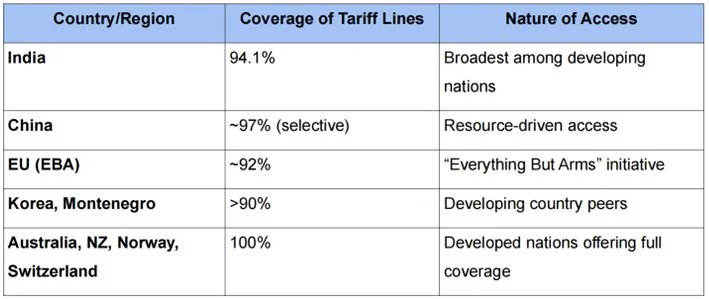
- According to the latest WTO Report (October 2025) titled “Market Access for Products and Services of Export Interest to Least Developed Countries,” India has surpassed China and the European Union (EU) in providing the widest duty-free market access to Least Developed Countries (LDCs).
- The WTO has credited India’s DFTP Scheme (2008) for boosting exports from some of the world’s poorest economies—particularly in Asia and Africa—and strengthening South-South trade cooperation.
ABOUT DUTY FREE TARIFF PREFERENCE SCHEME
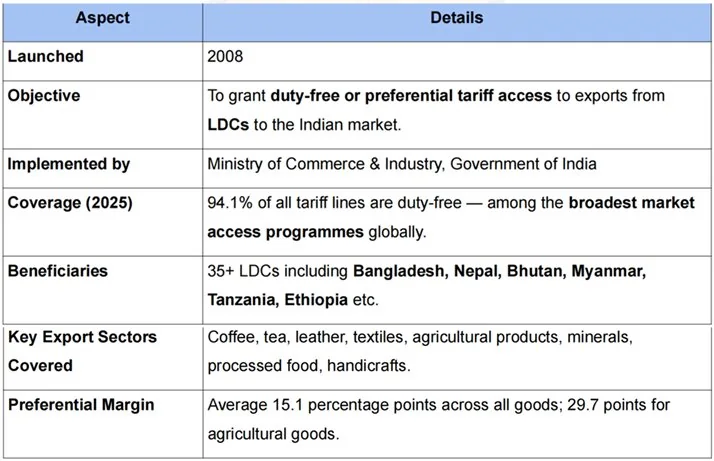
GLOBAL & TRADE CONTEXT
- India is now the 5th-largest destination for LDC exports (6.8% share, $21.5 billion in 2024). Ahead are: China (25%), EU (17%), UAE (12%), and USA (9%).
- LDC exports to India mainly include minerals, agricultural commodities, and textiles.
- Global LDC exports reached $277 billion (2024), growing at 7% annually, with India’s DFTP playing a key enabling role.
KEY FEATURES
- Duty-Free Market Access:
- 1% of tariff lines covered (approx. 98% of trade value).
- Tariff concessions across sectors like agriculture, textiles, leather, and handicrafts.
- Eligibility:
- Available to all UN-recognized LDCs (48 nations globally).
- India currently extends benefits to 35+ countries.
- Non-Discriminatory Access:
- Offered without political quid pro quo — purely developmental and trade-facilitating.
- Trade Facilitation + Development Focus:
- Supports diversification of LDC exports and economic growth.
- Aligns with India’s “Neighbourhood First” and “Act East”
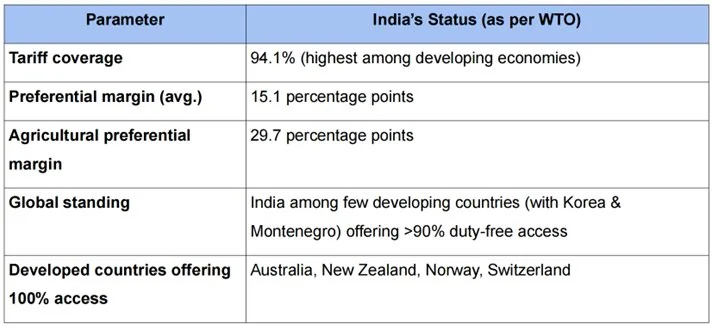
WTO FINDINGS & RECOGNITION
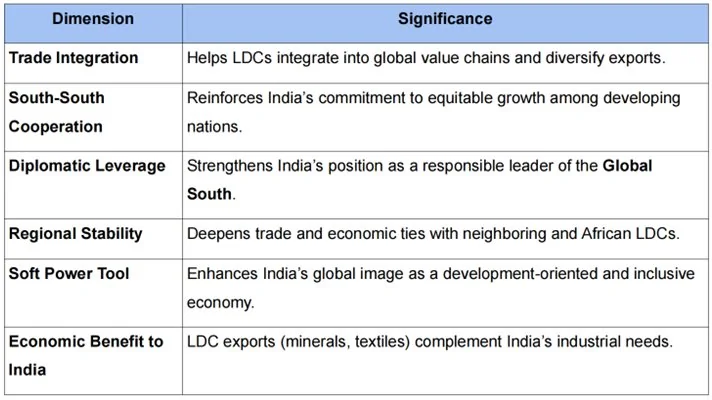
COMPARISON WITH GLOBAL ECONOMIES
STRATEGIC & ECONOMIC IMPLICATIONS
- Enhances regional influence and credibility in multilateral trade forums.
- Serves as a counterbalance to China’s model of engagement with LDCs.
- Strengthens India’s voice in WTO reform and Global South cooperation.
- Encourages inclusive trade, fostering trust and stability in South Asia and Africa.
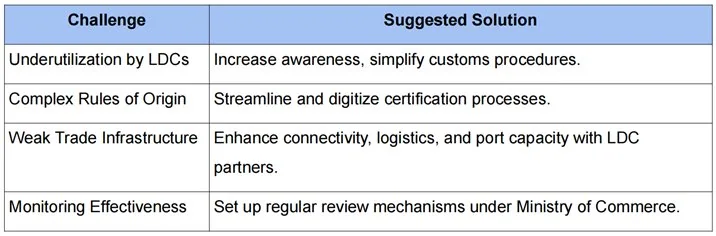
CHALLENGES & WAY FORWARD
- Prelims: Key facts, institutions, locations and terminology in the article.
- Mains: Connect the topic with Economy, Polity & Governance.
- Revision: Use the article headings to prepare concise notes and answer-writing points.
Test your understanding
Questions from this article
Prelims practiceWith reference to INDIA’S DUTY FREE TARIFF PREFERENCE SCHEME, consider the following statements:
- According to the latest WTO Report (October 2025) titled “Market Access for Products and Services of Export Interest to Least Developed Countries,” India has surpassed China and the European Union (EU) in providing the…
- The WTO has credited India’s DFTP Scheme (2008) for boosting exports from some of the world’s poorest economies—particularly in Asia and Africa—and strengthening South-South trade cooperation.
- India is now the 5th-largest destination for LDC exports (6.8% share, $21.5 billion in 2024). Ahead are: China (25%), EU (17%), UAE (12%), and USA (9%).
Which of the statements given above are correct?
- 1 and 2 only
- 2 and 3 only
- 1 and 3 only
- 1, 2 and 3
View answer
Answer: (d) 1, 2 and 3. All three statements are drawn from the article.
Mains practiceDiscuss the background, key issues and significance of INDIA’S DUTY FREE TARIFF PREFERENCE SCHEME for India.
Answer in 250 words.
View answer approach
- ABOUT DUTY FREE TARIFF PREFERENCE SCHEME
- GLOBAL & TRADE CONTEXT
- KEY FEATURES
- WTO FINDINGS & RECOGNITION
- COMPARISON WITH GLOBAL ECONOMIES
Frequently asked questionsFrequently asked questions
Why is India’S Duty Free Tariff Preference Scheme in the news?
Why in News According to the latest WTO Report (October 2025) titled “Market Access for Products and Services of Export Interest to Least Developed Countries,” India has surpassed China and the European Union (EU) in providing the widest duty-free market… The WTO has credited India’s DFTP Scheme (2008) for boosting exports from some of the world’s poorest economies—particularly in Asia and Africa—and strengthening South-South trade cooperation.
What are the key facts about India’S Duty Free Tariff Preference Scheme?
ABOUT DUTY FREE TARIFF PREFERENCE SCHEME GLOBAL & TRADE CONTEXT India is now the 5th-largest destination for LDC exports (6.8% share, $21.5 billion in 2024). Ahead are: China (25%), EU (17%), UAE (12%), and USA (9%). LDC exports to India mainly include minerals, agricultural commodities, and textiles.
Why is India’S Duty Free Tariff Preference Scheme important for UPSC preparation?
The topic connects current developments with Economy, Polity & Governance and is relevant for both objective revision and analytical answer writing.