UPSC Current Affairs
INDIA REJECTS PAKISTAN’S CLAIMS OVER CHENAB RIVER FLOODING
India rejected Pakistan's allegations that it deliberately created a flood-like situation in Pakistan's Punjab province by increasing the flow of the Chenab River. The Ministry of External Affairs (MEA) stated that India will continue to share high-flood data with Pakistan on humanitarian grounds. KEY HIGHLIGHTS India's Response The MEA described Pakistan's allegations as: Baseless.
VRAuthor Desk
2 min read
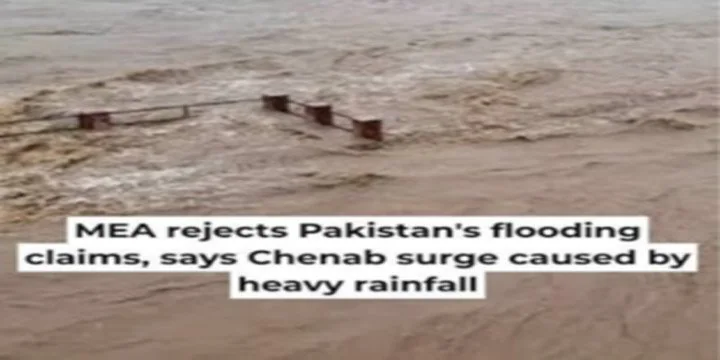
India rejected Pakistan's allegations that it deliberately created a flood-like situation in Pakistan's Punjab province by increasing the flow of the Chenab River. The Ministry of External Affairs (MEA) stated that India will continue to share high-flood data with Pakistan on humanitarian grounds. KEY HIGHLIGHTS India's Response The MEA described Pakistan's allegations as: Baseless.
Why in News?
- India rejected Pakistan's allegations that it deliberately created a flood-like situation in Pakistan's Punjab province by increasing the flow of the Chenab River.
- The Ministry of External Affairs (MEA) stated that India will continue to share high-flood data with Pakistan on humanitarian grounds.
KEY HIGHLIGHTS
India's Response
- The MEA described Pakistan's allegations as:
- Baseless.
- Without factual basis.
- Contrary to facts.
- According to India, the increase in the Chenab's flow resulted from a natural hydrological response caused by heavy monsoon rainfall in the upper catchment areas near Jammu.
Flood Data Sharing
- India stated that it will continue to share high-flood data with Pakistan:
- On humanitarian grounds.
- Through diplomatic channels.
- Whenever the situation requires.
Flood Situation
- The Chenab River remained in a high-flood state during the previous week due to continued monsoon rainfall over Jammu and Punjab.
- India stated that the river discharge did not reach extraordinary levels requiring the issuance of special flood warnings.
- The observed river flows were consistent with prevailing monsoon conditions.
INDUS WATER TREATY & DATA SHARING
Current Status
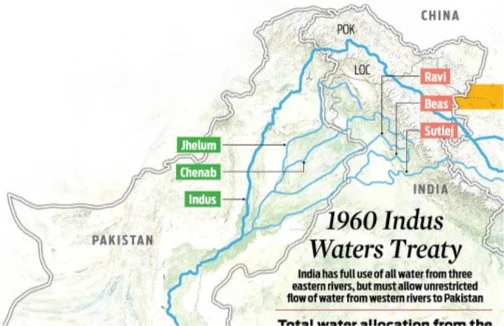
- India stated that the non-operational status of the Indus Waters Treaty (IWT) has not affected water-related cooperation between the two countries.
Flood Data Shared
- Despite the Indus Waters Treaty being placed in abeyance following the April 2025 Pahalgam terror attack, India shared flood-related data with Pakistan on 23 occasions in 2025.
- India stated that similar information would continue to be shared whenever necessary.
INDIA’S POSITION
- The rise in river flow was attributed solely to heavy monsoon rainfall.
- India stated that attempts to portray a weather-driven flood event as the result of an upstream intervention are:
- Factually incorrect.
- Technically untenable.
- Contradicted by Pakistan's own flood advisories.
SIGNIFICANCE
- Highlights India's position that humanitarian cooperation on flood information will continue despite the current status of the Indus Waters Treaty.
- Reaffirms India's rejection of allegations regarding deliberate release of water into Pakistan.
- Emphasises that the increase in the Chenab River's flow was due to natural monsoon conditions rather than any upstream intervention by India.
- Prelims: Key facts, institutions, locations and terminology in the article.
- Mains: Connect the topic with Environment, Polity & Governance.
- Revision: Use the article headings to prepare concise notes and answer-writing points.
Test your understanding
Questions from this article
Prelims practiceWith reference to INDIA REJECTS PAKISTAN’S CLAIMS OVER CHENAB RIVER FLOODING, consider the following statements:
- India rejected Pakistan's allegations that it deliberately created a flood-like situation in Pakistan's Punjab province by increasing the flow of the Chenab River.
- The Ministry of External Affairs (MEA) stated that India will continue to share high-flood data with Pakistan on humanitarian grounds.
- The MEA described Pakistan's allegations as: Baseless. Without factual basis. Contrary to facts.
Which of the statements given above are correct?
- 1 and 2 only
- 2 and 3 only
- 1 and 3 only
- 1, 2 and 3
View answer
Answer: (d) 1, 2 and 3. All three statements are drawn from the article.
Mains practiceDiscuss the background, key issues and significance of INDIA REJECTS PAKISTAN’S CLAIMS OVER CHENAB RIVER FLOODING for India.
Answer in 250 words.
View answer approach
- Why in News?
- KEY HIGHLIGHTS
- INDUS WATER TREATY & DATA SHARING
- INDIA’S POSITION
- SIGNIFICANCE
Frequently asked questionsFrequently asked questions
Why is India Rejects Pakistan’S Claims Over Chenab River Flooding in the news?
India rejected Pakistan's allegations that it deliberately created a flood-like situation in Pakistan's Punjab province by increasing the flow of the Chenab River. The Ministry of External Affairs (MEA) stated that India will continue to share high-flood data with Pakistan on humanitarian grounds.
What are the key facts about India Rejects Pakistan’S Claims Over Chenab River Flooding?
KEY HIGHLIGHTS India's Response The MEA described Pakistan's allegations as: Baseless. According to India, the increase in the Chenab's flow resulted from a natural hydrological response caused by heavy monsoon rainfall in the upper catchment areas near Jammu. Flood Data Sharing India stated that it will continue to share high-flood data with Pakistan: On humanitarian grounds.
Why is India Rejects Pakistan’S Claims Over Chenab River Flooding important for UPSC preparation?
The topic connects current developments with Environment, Polity & Governance and is relevant for both objective revision and analytical answer writing.