UPSC Current Affairs
INDIA MALI INAUGURAL FORUM FOR PROMOTION OF EXPORTS
India and Mali institutionalised their economic partnership through the inaugural India–Mali Forum for the Promotion of Exports, held in Bamako under the theme "Reinforcing Trade and Strategic Partnerships." The Forum aims to strengthen bilateral trade… Bilateral trade crossed US$326.61 million in FY 2025–26, registering a 55% growth over the previous year. Mali also announced a Dedicated Investment Forum (3–4 December 2026) to attract global investors.
VRAuthor Desk
4 min read
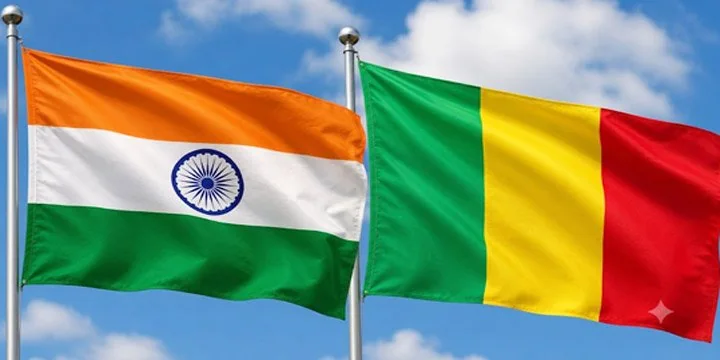
India and Mali institutionalised their economic partnership through the inaugural India–Mali Forum for the Promotion of Exports, held in Bamako under the theme "Reinforcing Trade and Strategic Partnerships." The Forum aims to strengthen bilateral trade… Bilateral trade crossed US$326.61 million in FY 2025–26, registering a 55% growth over the previous year. Mali also announced a Dedicated Investment Forum (3–4 December 2026) to attract global investors.
Why in News?
- India and Mali institutionalised their economic partnership through the inaugural India–Mali Forum for the Promotion of Exports, held in Bamako under the theme "Reinforcing Trade and Strategic Partnerships."
- The Forum aims to strengthen bilateral trade, investment, business cooperation, and strategic economic engagement.
- Bilateral trade crossed US$326.61 million in FY 2025–26, registering a 55% growth over the previous year.
- Mali also announced a Dedicated Investment Forum (3–4 December 2026) to attract global investors.
OVERVIEW
Theme
"Reinforcing Trade and Strategic Partnerships"
Venue
Organisers
The Forum was jointly organised by:
- Ministry of Industry and Trade, Mali
- Embassy of India in Bamako
- Malian Agency for the Promotion of Exports (APEX-Mali)
Participants
The Forum brought together:
- Senior Government officials of India and Mali
- Around 30 Indian business leaders
- Representatives of industry and trade organisations
Leadership
- Mali: Prime Minister of the Transition Government, Major General Abdoulaye Maïga
- India: Joint Secretary (FT-Africa), Department of Commerce
INDIA MALI TRADE
| Indicator |
Details |
| Bilateral Trade (FY 2025–26) |
US$326.61 million |
| Annual Growth |
55% |
The significant rise reflects expanding commercial engagement between the two countries.
- Raw Cotton
- Finished Leather
- Cashew
- Lead
- Gum Arabic
- Sesame
India's Exports to Mali
- Pharmaceuticals
- Cotton Fabrics
- Two-wheelers
- Three-wheelers
- Bicycles
INDIA’S DUTY FREE TARIFF PREFERENTIAL SCHEME
About
India provides
Duty-Free Tariff Preference (DFTP) to Least Developed Countries (LDCs), including Mali.
Benefits
- Duty-free market access
- Increased export competitiveness
- Promotion of South-South trade
- Strengthening bilateral economic cooperation
UNTAPPED TRADE POTENTIAL
| Particular |
Value |
| Mali's Global Exports |
US$4 Billion |
| Untapped Export Potential in India |
US$3.96 Billion |
Bilateral trade remains far below its actual potential.
BUSINESS ENGAGEMENT DURING THE FORUM
The Forum included
multiple interaction platforms:
Business-to-Business (B2B)
Discussions covered:
- Renewable Energy
- Pharmaceuticals
- Textiles
- Mining
- Automobile Manufacturing
Government-to-Government (G2G)
Discussions focused on:
- Institutional cooperation
- Trade facilitation
- Long-term economic partnership
- Future investment roadmap
Business-to-Government (B2G)
Focus Areas:
- Investment facilitation
- Regulatory cooperation
- Trade promotion
- Market access
INDUSTRIAL EXHIBITION
- The Forum also showcased products from Indian manufacturers.
Key Participants
- Sonalika Tractors
- Mahindra
- Tata Motors
The exhibition highlighted India's manufacturing capabilities and suitability for African markets.
Investment Opportunities Presented by Mali
During the Forum:
- APEX-Mali presented Ready-Made Business Plans.
- Projects were designed for immediate foreign investment.
- Focus was placed on attracting long-term industrial partnerships.
PRIORITY SECTORS FOR COOPERATION
1. Cotton & Textiles
Potential areas:
- Cotton processing
- Textile manufacturing
- Value addition
- Supply-chain integration
2. Mining
Key minerals include:
- Gold
- Lithium
- Iron Ore
- Bauxite
- Manganese
India can contribute through:
- Mining technology
- Equipment
- Processing expertise
3. Renewable Energy
Areas of cooperation:
- Solar Energy
- Clean Energy Infrastructure
- Sustainable Energy Projects
4. Agro-Industry & Shea Processing
Focus Areas:
- Shea processing
- Food processing
- Agricultural value addition
India also requested Mali to reconsider the
Shea Nut Export Ban.
5. Pharmaceuticals
Mali requested:
- Faster registration of Indian medicines
- Greater access to affordable pharmaceuticals
6. Social Infrastructure
Future cooperation will include:
- Healthcare
- Education
- Skill Development
- Capacity Building
India's Key Requests
India highlighted the need for:
- Protection of Indian nationals
- Security of Indian investments
- Reconsideration of the Shea Nut Export Ban
Mali's Key Requests
- Mali sought India's assistance in:
- Digitisation of Certificate of Origin System
To improve:
- Export documentation
- Trade facilitation
- Customs efficiency
Registration of Pharmaceuticals
- To accelerate approval of Indian medicines.
VISION MALI 2063
Mali reaffirmed its long-term development vision by aiming to become:
- A regional investment hub
- A secure business destination
- A gateway to West Africa
ABOUT MALI
Location
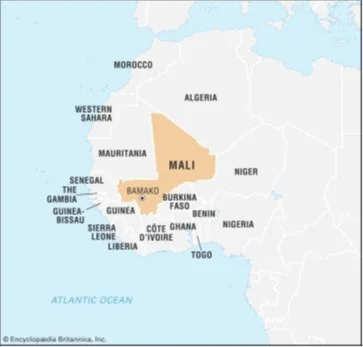
- Landlocked country in West Africa
- Situated in the Sahara and Sahel regions
Neighbouring Countries
- Algeria
- Niger
- Burkina Faso
- Côte d'Ivoire
- Guinea
- Senegal
- Mauritania
 Capital
Major Rivers
Capital
Major Rivers
- Niger River
- Senegal River
Highest Peak
Climate
Influenced by:
- Harmattan Winds
- Alizé Winds
Major Physiographic Regions
- Sahara Desert
- Sahel
- Sudanian Savanna
Economy
Major sectors include:
- Gold Mining (Largest Export)
- Cotton
- Livestock
- Fishing
Major Minerals
- Gold
- Iron Ore
- Bauxite
- Manganese
- Lithium
HISTORICAL IMPORTANCE
Mali was once part of the:
- Ghana Empire
- Mali Empire
- Songhai Empire
Timbuktu
Renowned for:
- Trans-Saharan Trade
- Islamic Learning
- Cultural Exchange
SIGNIFICANCE OF INDIA MALI RELATIONSHIP
The Forum is significant because it:
- Institutionalises bilateral economic cooperation.
- Expands India's engagement with West Africa.
- Supports South-South Cooperation.
- Diversifies India's trade and investment partnerships.
- Strengthens supply chains in mining, textiles, pharmaceuticals, and renewable energy.
- Enhances India's economic diplomacy in Africa.
CHALLENGES
- Bilateral trade remains below potential.
- Political and security challenges in Mali.
- Limited logistics and transport connectivity.
- Regulatory and market-access barriers.
- Delays in pharmaceutical approvals.
- Restrictions on certain agricultural exports.
- Need for stronger investment protection mechanisms.
WAY FORWARD
- Strengthen institutional dialogue through regular India–Mali trade forums.
- Expand cooperation in cotton, mining, renewable energy, pharmaceuticals, agro-processing, and infrastructure.
- Facilitate easier market access and faster regulatory approvals.
- Encourage greater private sector participation and investment.
- Leverage the December 2026 Investment Forum to convert business opportunities into concrete projects.
- Deepen India's engagement with West Africa through development partnership, technology transfer, and sustainable economic cooperation.
- Prelims: Key facts, institutions, locations and terminology in the article.
- Mains: Connect the topic with Environment, Economy, International Relations.
- Revision: Use the article headings to prepare concise notes and answer-writing points.
Test your understanding
Questions from this article
Prelims practiceWith reference to INDIA MALI INAUGURAL FORUM FOR PROMOTION OF EXPORTS, consider the following statements:
- India and Mali institutionalised their economic partnership through the inaugural India–Mali Forum for the Promotion of Exports, held in Bamako under the theme "Reinforcing Trade and Strategic Partnerships."
- The Forum aims to strengthen bilateral trade, investment, business cooperation, and strategic economic engagement.
- Bilateral trade crossed US$326.61 million in FY 2025–26, registering a 55% growth over the previous year.
Which of the statements given above are correct?
- 1 and 2 only
- 2 and 3 only
- 1 and 3 only
- 1, 2 and 3
View answer
Answer: (d) 1, 2 and 3. All three statements are drawn from the article.
Mains practiceDiscuss the background, key issues and significance of INDIA MALI INAUGURAL FORUM FOR PROMOTION OF EXPORTS for India.
Answer in 250 words.
View answer approach
- Why in News?
- OVERVIEW
- INDIA MALI TRADE
- INDIA’S DUTY FREE TARIFF PREFERENTIAL SCHEME
- UNTAPPED TRADE POTENTIAL
Frequently asked questionsFrequently asked questions
Why is India Mali Inaugural Forum For Promotion Of Exports in the news?
India and Mali institutionalised their economic partnership through the inaugural India–Mali Forum for the Promotion of Exports, held in Bamako under the theme "Reinforcing Trade and Strategic Partnerships." The Forum aims to strengthen bilateral trade… Bilateral trade crossed US$326.61 million in FY 2025–26, registering a 55% growth over the previous year.
What are the key facts about India Mali Inaugural Forum For Promotion Of Exports?
Mali also announced a Dedicated Investment Forum (3–4 December 2026) to attract global investors. OVERVIEW Theme "Reinforcing Trade and Strategic Partnerships" Venue Bamako, Mali Organisers The Forum was jointly organised by: Ministry of Industry and Trade, Mali Embassy of India in Bamako Malian Agency for the Promotion of Exports (APEX-Mali) Participants… Major Exports Mali's Exports to India Raw Cotton Finished Leather Cashew Lead Gum Arabic Sesame India's Exports to Mali Pharmaceuticals Cotton Fabrics Two-wheelers Three-wheelers Bicycles INDIA’S DUTY FREE TARIFF PREFERENTIAL SCHEME About India provides…
Why is India Mali Inaugural Forum For Promotion Of Exports important for UPSC preparation?
The topic connects current developments with Environment, Economy, International Relations and is relevant for both objective revision and analytical answer writing.