UPSC Current Affairs
Birch Trees Being Replaced By Fir Trees
climate change is affecting the Himalayan forests. Birch trees are being replaced by fir trees in some areas of the central Himalayas. This is changing the region’s forest structure and could impact local ecosystems.
VRAuthor Desk
2 min read
climate change is affecting the Himalayan forests. Birch trees are being replaced by fir trees in some areas of the central Himalayas. This is changing the region’s forest structure and could impact local ecosystems.
climate change is affecting the
Himalayan forests.
Birch trees are being replaced by
fir trees in some areas of the central Himalayas. This is changing the region’s forest structure and could impact local ecosystems.
WHAT IS HAPPENING?
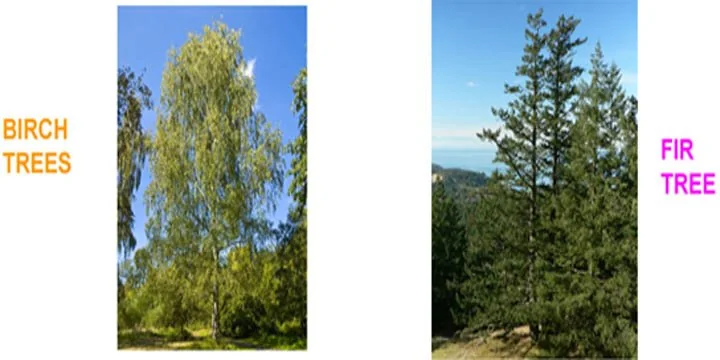
- Birch trees (which are deciduous and lose leaves in winter) are traditionally found in higher regions of the Himalayas.
- Fir trees (which are evergreen and keep their leaves) are now growing faster and higher up the mountains.
This shift is likely due to
warming temperatures and
drier conditions, which are benefiting fir trees but harming birch trees.
WHY ARE FIR TREES GROWING FASTER?
- Fir trees are better suited to warmer and drier conditions than birch trees. They can survive in areas where temperatures are rising and rainfall is reducing.
- Birch trees, on the other hand, need more moisture to grow, but they are facing problems due to increased heat and less water.
How Fast Is This Change Happening?
- Over the last 200 years, fir trees have climbed 11 cm per year, while birch trees have moved only 6 cm per year.
- As a result, fir trees are becoming more common and are expected to eventually dominate the Himalayan tree line.
OTHER FACTORS
- The Himalayan region is one of the fastest-warming areas in the world. Rising temperatures and declining rainfall are changing the landscape.
- In particular, the Annapurna valley (in the rain shadow) receives less rain and has seen increasing temperatures.
Other Factors Affecting the Trees:
- Snowmelt is happening earlier in spring due to warmer weather. This affects soil moisture needed for tree growth, especially for birch trees that depend on water from melted snow.
- Fir trees are less impacted by these changes, allowing them to grow more easily in the changing climate.
OTHER CONSEQUENCES
The shift from
birch (deciduous) to
fir (evergreen) will likely change how the ecosystem functions:
- Decomposition (how plant material breaks down) may slow down with more fir trees because fir leaves take longer to decompose.
- Water use will change since fir trees are better at using water in drier conditions.
- Carbon and nitrogen cycling (important processes in soil) will also be affected by this change in tree species.
Other Risks from Climate Change:
- Other climate impacts such as hotter droughts, snow fungi, landslides, and forest fires may further harm the trees, especially the more vulnerable birch.
- Prelims: Key facts, institutions, locations and terminology in the article.
- Mains: Connect the topic with Environment, Economy, Polity & Governance.
- Revision: Use the article headings to prepare concise notes and answer-writing points.
Test your understanding
Questions from this article
Prelims practiceWith reference to Birch Trees Being Replaced By Fir Trees, consider the following statements:
- Birch trees (which are deciduous and lose leaves in winter) are traditionally found in higher regions of the Himalayas.
- Fir trees (which are evergreen and keep their leaves) are now growing faster and higher up the mountains.
- Fir trees are better suited to warmer and drier conditions than birch trees. They can survive in areas where temperatures are rising and rainfall is reducing.
Which of the statements given above are correct?
- 1 and 2 only
- 2 and 3 only
- 1 and 3 only
- 1, 2 and 3
View answer
Answer: (d) 1, 2 and 3. All three statements are drawn from the article.
Mains practiceDiscuss the background, key issues and significance of Birch Trees Being Replaced By Fir Trees for India.
Answer in 250 words.
View answer approach
- WHAT IS HAPPENING?
- WHY ARE FIR TREES GROWING FASTER?
- How Fast Is This Change Happening?
- OTHER FACTORS
- Other Factors Affecting the Trees:
Frequently asked questionsFrequently asked questions
Why is Birch Trees Being Replaced By Fir Trees in the news?
climate change is affecting the Himalayan forests. Birch trees are being replaced by fir trees in some areas of the central Himalayas.
What are the key facts about Birch Trees Being Replaced By Fir Trees?
This is changing the region’s forest structure and could impact local ecosystems. Birch trees (which are deciduous and lose leaves in winter) are traditionally found in higher regions of the Himalayas. Fir trees (which are evergreen and keep their leaves) are now growing faster and higher up the mountains.
Why is Birch Trees Being Replaced By Fir Trees important for UPSC preparation?
The topic connects current developments with Environment, Economy, Polity & Governance and is relevant for both objective revision and analytical answer writing.