UPSC Current Affairs
AMBAJI MARBLE GETS GI TAG
Ambaji marble, sourced from the Ambaji region in Banaskantha district, Gujarat, has been awarded a Geographical Indication (GI) tag. The tag was granted by the Geographical Indications Registry under the Ministry of Commerce and Industry. The application was filed by the Ambaji Marbles Quarry and Factory Association.
VRAuthor Desk
2 min read
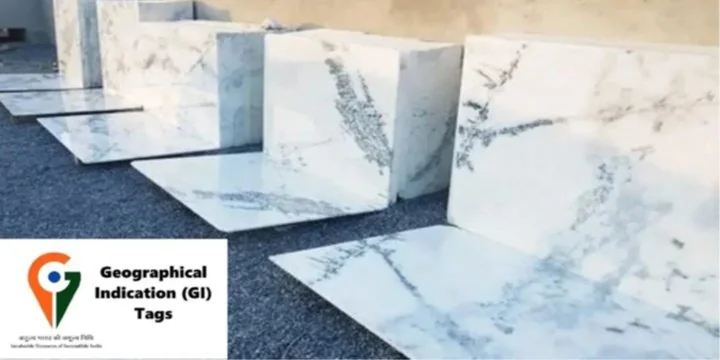
Ambaji marble, sourced from the Ambaji region in Banaskantha district, Gujarat, has been awarded a Geographical Indication (GI) tag. The tag was granted by the Geographical Indications Registry under the Ministry of Commerce and Industry. The application was filed by the Ambaji Marbles Quarry and Factory Association.
1. What happened?
Ambaji marble, sourced from the
Ambaji region in
Banaskantha district, Gujarat, has been awarded a
Geographical Indication (GI) tag.
- The tag was granted by the Geographical Indications Registry under the Ministry of Commerce and Industry.
- The application was filed by the Ambaji Marbles Quarry and Factory Association.
This GI status officially recognises Ambaji marble as a product with
unique qualities linked to its geographical origin.
WHAT IS GI TAG?
A
Geographical Indication (GI) tag is a label given to products:
- that originate from a specific location,
- have unique characteristics, and
- enjoy a reputation due to that origin.
Examples: Darjeeling tea, Kanchipuram silk, Mysore sandalwood.
WHAT DOES GI TAG HELP IN?
- protecting the product from imitation
- improving its market value
- boosting exports
- supporting local communities and industries
WHY IS AMBAJI MARBLE SPECIAL?
Ambaji marble is known for:
- Pure white colour
- High shine and beauty
- Superior strength
- High calcium content
- Exceptional durability
According to experts, Ambaji’s marble mines are almost
1,200–1,500 years old.
HISTORICAL IMPORTANCE
- Used in the Dilwara Jain Temples, Mount Abu
- Used widely in religious structures in India
- Believed to be used in the Ram Temple, Ayodhya
- Exported for temple construction in Miami, Los Angeles, Boston, New Zealand, and England
Industrialists note that while stones in even the
Taj Mahal show signs of ageing,
Ambaji marble has not lost its purity, even after centuries.
BENEFITS OF GI TAG
The GI tag will:
- Protect the identity of Ambaji marble
- Increase demand in global markets
- Boost exports
- Strengthen local industries
- Support artisans and quarry workers
- Prevent cheaper or fake stones from being sold as Ambaji marble
- Prelims: Key facts, institutions, locations and terminology in the article.
- Mains: Connect the topic with Economy, Polity & Governance.
- Revision: Use the article headings to prepare concise notes and answer-writing points.
Test your understanding
Questions from this article
Prelims practiceWith reference to AMBAJI MARBLE GETS GI TAG, consider the following statements:
- The tag was granted by the Geographical Indications Registry under the Ministry of Commerce and Industry.
- The application was filed by the Ambaji Marbles Quarry and Factory Association.
- that originate from a specific location,
Which of the statements given above are correct?
- 1 and 2 only
- 2 and 3 only
- 1 and 3 only
- 1, 2 and 3
View answer
Answer: (d) 1, 2 and 3. All three statements are drawn from the article.
Mains practiceDiscuss the background, key issues and significance of AMBAJI MARBLE GETS GI TAG for India.
Answer in 250 words.
View answer approach
- 1. What happened?
- WHAT DOES GI TAG HELP IN?
- HISTORICAL IMPORTANCE
Frequently asked questionsFrequently asked questions
Why is Ambaji Marble Gets Gi Tag in the news?
Ambaji marble, sourced from the Ambaji region in Banaskantha district, Gujarat, has been awarded a Geographical Indication (GI) tag. The tag was granted by the Geographical Indications Registry under the Ministry of Commerce and Industry.
What are the key facts about Ambaji Marble Gets Gi Tag?
The application was filed by the Ambaji Marbles Quarry and Factory Association. This GI status officially recognises Ambaji marble as a product with unique qualities linked to its geographical origin. A Geographical Indication (GI) tag is a label given to products: that originate from a specific location, have unique characteristics, and enjoy a reputation due to that origin.
Why is Ambaji Marble Gets Gi Tag important for UPSC preparation?
The topic connects current developments with Economy, Polity & Governance and is relevant for both objective revision and analytical answer writing.