UPSC Current Affairs
Ahmedabad Air Crash: A Safety Wakeup Call
Context: The recent crash landing of an Air India Boeing 787 Dreamliner (Flight AI 171) from Ahmedabad to London, shortly after takeoff on June 12, 2025, resulted in significant casualties. It has also highlighted critical aviation safety concerns and broader systemic challenges, particularly during high-risk flight phases. Incident Overview: Aircraft: Air India Boeing 787 Dreamliner (Flight AI 171).
VRAuthor Desk
5 min read
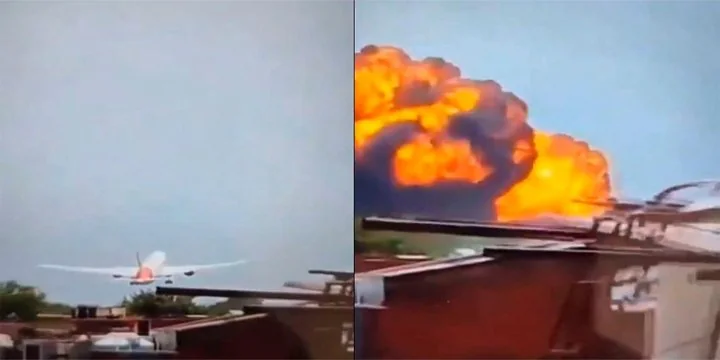
Context: The recent crash landing of an Air India Boeing 787 Dreamliner (Flight AI 171) from Ahmedabad to London, shortly after takeoff on June 12, 2025, resulted in significant casualties. It has also highlighted critical aviation safety concerns and broader systemic challenges, particularly during high-risk flight phases. Incident Overview: Aircraft: Air India Boeing 787 Dreamliner (Flight AI 171).
Context:
- The recent crash landing of an Air India Boeing 787 Dreamliner (Flight AI 171) from Ahmedabad to London, shortly after takeoff on June 12, 2025, resulted in significant casualties.
- It has also highlighted critical aviation safety concerns and broader systemic challenges, particularly during high-risk flight phases.
- Incident Overview:
- Aircraft: Air India Boeing 787 Dreamliner (Flight AI 171).
- Route: Ahmedabad to London Gatwick.
- Event: Faced technical issues and crashed shortly after takeoff.
- Casualties: Almost all 241 passengers and crew killed except 1.
- Location: Crashed into Meghani Nagar, a densely populated residential and medical college area near Ahmedabad airport, causing ground-level casualties.
- Cause: Not immediately known.
- Immediate Emergency Signalled:
- The pilot issued a "Mayday" call within seconds of takeoff, indicating a life-threatening emergency.
- No further communication followed, suggesting instant system failure or structural damage.
- Breakdown in Real-Time Air-Ground Coordination:
- Despite the Mayday call, Air Traffic Control (ATC) could not establish further contact.
- Raises concerns over the efficacy of emergency protocols between cockpit and ATC during critical moments.
- Highly Experienced Pilot:
- The Captain had over 8,200 flying hours, including 1,100 hours on the Boeing 787.
- This experience profile makes human error less likely, shifting focus towards mechanical failure or technical glitch.
- Crash in Civilian Zone:
- Impact in a residential and medical college area highlights the urgent need for safe buffer zones around airports in urban areas.
- DGCA and Safety Regulation Challenges:
- Directorate General of Civil Aviation (DGCA) acknowledged the emergency but could not intervene effectively.
- Reveals the need for stronger monitoring systems, quicker response infrastructure, and regular audits of high-risk aircraft.
KEY AVIATION TERMINOLOGIES
- Mayday Call:
- An emergency radio signal used by aircraft and ships to request urgent help.
- Must be used only for genuine emergencies; false calls carry severe penalties.
- Directorate General of Civil Aviation (DGCA):
- An attached office of the Ministry of Civil Aviation, Government of India.
- Functions:
- Regulatory Body for Aviation Safety: Ensures safety of aircraft, passengers, airline operations in India.
- Controls Air Transport Services: Regulates flights within India and those to/from the country.
- Enforces Aviation Laws: Ensures airlines follow air safety rules and maintain aircraft standards.
- Black Box (Flight Recorders):
- Essential tools for accident investigation.
- Aircraft must have two types:
- Cockpit Voice Recorder (CVR): Captures conversations and cockpit sounds.
- Flight Data Recorder (FDR): Stores over 80 types of flight data (altitude, speed, heading, autopilot status, etc.).
- Location: Usually at the tail end of the aircraft for maximum protection.
- Construction: Stored in strong, protected units with insulation to resist fire, water, and impact.
WHY ACCIDENTS GENERALLY OCCUR DURING TAKEOFF OR LANDING?
- Statistical Evidence: Data from IATA (2005–2023) and Boeing (2015–2024) consistently shows most crashes happen during landing (53% IATA) and takeoff/initial climb (8.5% IATA, 20% Boeing fatal accidents).
- Cruise phase has the lowest fatal accident rate despite highest exposure.
- Contributing Factors:
- Limited Time & Space for Correction:
- Pilots have minimal time and space to react during these phases.
- No altitude buffer to correct errors or system failures (unlike cruise altitude where planes can glide).
- Aircraft Under Maximum Stress:
- Takeoff: Engines and airframe experience maximum pressure to generate lift.
- Landing: Aircraft must simultaneously manage speed, alignment, descent, and runway conditions.
- External Risk Factors:
- Lower altitudes are more prone to bird strikes, turbulence, wind shear, and poor visibility.
- Pilot Workload:
- Landings are particularly demanding, requiring complex, real-time decisions.
- Stall Risk (Especially during takeoff):
- Wing Stall: Occurs when an aircraft’s wing suddenly loses lift.
- This happens when the angle of attack (angle between wing and oncoming air) becomes too steep (typically >15-20 degrees).
- Leads to turbulent airflow over the wing, detachment, sudden lift drop, and loss of altitude.
BOEING 787 DREAMLINER: FEATURES & SCRUTINY
- Aircraft Type: Next-generation, long-haul jet (introduced 2007).
- Key Features: Carbon fibre composite structure (lighter), 25% more fuel efficient than older models, improved cabin comfort.
- Scrutiny: Crash intensifies scrutiny on Boeing, already under pressure from prior 737 MAX crashes.
- Safety Concerns & Incidents:
- FAA investigations into production practices.
- Whistleblower allegations (Sam Salehpour on fuselage fastening, John Barnett on substandard parts).
- Past incidents: 2013 global grounding due to lithium-ion battery fires, 2024 Latam Airlines 787 plunge (human error).
ECONOMIC IMPACT OF THE CRASH
- Fall in Boeing's Share Price: Immediate ~8% drop in pre-market trading, reflecting investor fears about safety and future sales.
- Rise in Aviation Insurance Premiums:
- Seen as a "significant event" by global insurance industry.
- Likely to lead to higher premiums worldwide, especially for wide-body aircraft like the 787.
- Stricter policy renewals and terms of coverage.
- Reinsurance Cost Escalation:
- Insurance for large aircraft is typically shared globally via reinsurance.
- This crash could increase reinsurance costs, particularly if similar incidents occur.
- Financial Liability for Air India & Tata Group:
- Potential liability burden exceeding ₹500 crore (compensation, legal costs, aircraft damage).
- Reputation and financial stress despite swift humanitarian response.
- Impact on Aircraft Manufacturing Sector:
- May further delay deliveries or affect demand for Boeing’s 787 models.
- Impacts global aviation production and supply chains.
- Impact on India’s Aviation Sector:
- Potential downgrade in global rankings.
- Stricter regulations and increased scrutiny from international aviation bodies.
- Decline in foreign investments due to safety concerns.
WAY FORWARD
- Proactive Aircraft Health Checks: Implement modern tools for early detection of technical problems before every flight.
- Enhanced Training: Improve pilot and ATC staff training for emergencies, incorporating regular practice and mock drills.
- Airport Buffer Zones: Enforce stricter regulations to avoid construction of homes/schools too close to airports to minimize ground casualties.
- Aircraft Audits: Ensure older aircraft strictly follow safety rules and undergo more frequent inspections.
- Smart Technology Integration: Utilize advanced technology for early warning of engine or system malfunctions.
- Transparent Investigations: Ensure crash investigations are open, prompt, and transparent, using findings to improve safety rules and protocols.
- International Cooperation: Strengthen collaboration with international aviation bodies (ICAO, FAA, NTSB, AAIB) for best practices and incident analysis.
- Prelims: Key facts, institutions, locations and terminology in the article.
- Mains: Connect the topic with Economy, International Relations, Polity & Governance.
- Revision: Use the article headings to prepare concise notes and answer-writing points.
Test your understanding
Questions from this article
Prelims practiceWith reference to Ahmedabad Air Crash: A Safety Wakeup Call, consider the following statements:
- The recent crash landing of an Air India Boeing 787 Dreamliner (Flight AI 171) from Ahmedabad to London, shortly after takeoff on June 12, 2025, resulted in significant casualties.
- It has also highlighted critical aviation safety concerns and broader systemic challenges, particularly during high-risk flight phases.
- Incident Overview: Aircraft: Air India Boeing 787 Dreamliner (Flight AI 171). Route: Ahmedabad to London Gatwick. Event: Faced technical issues and crashed shortly after takeoff. Casualties: Almost all 241 passengers and…
Which of the statements given above are correct?
- 1 and 2 only
- 2 and 3 only
- 1 and 3 only
- 1, 2 and 3
View answer
Answer: (d) 1, 2 and 3. All three statements are drawn from the article.
Mains practiceDiscuss the background, key issues and significance of Ahmedabad Air Crash: A Safety Wakeup Call for India.
Answer in 250 words.
View answer approach
- Context:
- KEY AVIATION TERMINOLOGIES
- WHY ACCIDENTS GENERALLY OCCUR DURING TAKEOFF OR LANDING?
- BOEING 787 DREAMLINER: FEATURES & SCRUTINY
- ECONOMIC IMPACT OF THE CRASH
Frequently asked questionsFrequently asked questions
Why is Ahmedabad Air Crash: A Safety Wakeup Call in the news?
Context: The recent crash landing of an Air India Boeing 787 Dreamliner (Flight AI 171) from Ahmedabad to London, shortly after takeoff on June 12, 2025, resulted in significant casualties. It has also highlighted critical aviation safety concerns and broader systemic challenges, particularly during high-risk flight phases.
What are the key facts about Ahmedabad Air Crash: A Safety Wakeup Call?
Incident Overview: Aircraft: Air India Boeing 787 Dreamliner (Flight AI 171). Route: Ahmedabad to London Gatwick. Event: Faced technical issues and crashed shortly after takeoff.
Why is Ahmedabad Air Crash: A Safety Wakeup Call important for UPSC preparation?
The topic connects current developments with Economy, International Relations, Polity & Governance and is relevant for both objective revision and analytical answer writing.