UPSC Current Affairs
AGARWOOD: INDIA’S CULTURAL, ECOLOGICAL & ECONOMIC ASSET
Introduction: Why in News Agarwood—also known as Oud, Gaharu, or Agar—is increasingly recognized as an important cultural, ecological, and economic resource for India. However, rising global demand, overharvesting, and unregulated trade have placed immense pressure on natural populations. In response, the Government of India has launched a series of initiatives aimed at promoting sustainable cultivation, regulated exports, and the conservation of wild stocks.
VRAuthor Desk
4 min read
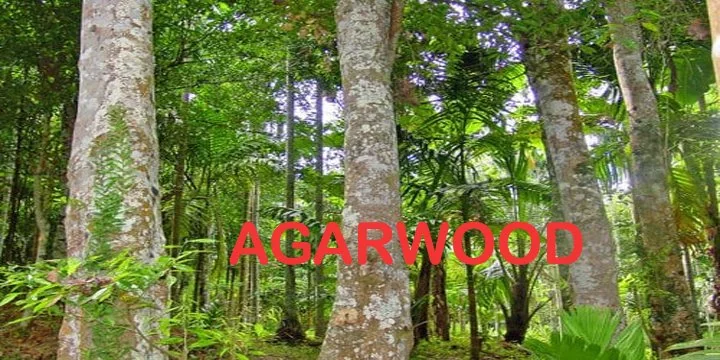
Introduction: Why in News Agarwood—also known as Oud, Gaharu, or Agar—is increasingly recognized as an important cultural, ecological, and economic resource for India. However, rising global demand, overharvesting, and unregulated trade have placed immense pressure on natural populations. In response, the Government of India has launched a series of initiatives aimed at promoting sustainable cultivation, regulated exports, and the conservation of wild stocks.
Introduction: Why in News
- Agarwood—also known as Oud, Gaharu, or Agar—is increasingly recognized as an important cultural, ecological, and economic resource for India.
- However, rising global demand, overharvesting, and unregulated trade have placed immense pressure on natural populations.
- In response, the Government of India has launched a series of initiatives aimed at promoting sustainable cultivation, regulated exports, and the conservation of wild stocks.
SIGNIFICANCE OF AGARWOOD
Cultural and Religious Importance
- Agarwood is often described as the "world’s most valuable incense".
- It has been used for millennia in Hinduism, Islam, Christianity, and Buddhism during rituals, meditation, and spiritual ceremonies.
Medicinal Value
- Agarwood is mentioned in Ayurvedic classics such as the Charaka Samhita and in classical Sanskrit literature, including the works of Kalidasa (5th century CE).
- It also features in Traditional Chinese Medicine and the Unani system.
- Scientific studies have identified over 150 bioactive compounds, including sesquiterpenoids and chromones, which exhibit anti-inflammatory, antioxidant, and anti-diabetic
Economic and Commercial Importance
- Agarwood is a high-value product in West Asia, especially in Saudi Arabia, the UAE, and other Gulf countries, where it is used in the form of oils, wood chips, attars, and bakhoors.
- International luxury perfume brands such as Gucci, Tom Ford, and others prominently feature Oud in their fragrance lines.
- Its trade contributes significantly to the rural economy, especially in Northeast India.
ORIGIN & PRODUCTION
Biological Source
- Agarwood is formed in trees of the Aquilaria and Gyrinops genera (family: Thymelaeaceae).
- The resin is a defense response to infection by specific molds (g., Phaeoacremonium or Phialophora parasitica) or physical damage.
Natural Occurrence and Yield
- Only 2–7% of wild trees naturally develop resin suitable for commercial use.
- This rarity contributes to its high market value.
Geographic Distribution
- Agarwood is found in India, Cambodia, Vietnam, Malaysia, Indonesia, Laos, and Bhutan.
- In India, species such as Aquilaria malaccensis and Aquilaria khasiana grow predominantly in Northeast India—in states like Assam, Tripura, Arunachal Pradesh, Nagaland, Mizoram, and Manipur.
- The capital of Tripura, Agartala, is named after the historical prevalence of agarwood.
- Indigenous communities possess traditional knowledge for identifying and utilizing resin-producing trees.
CHALLENGES & CONSERVATION CONCERNS
Overharvesting and Risk of Extinction
- Due to escalating global demand, overexploitation has nearly eradicated wild agarwood in India by the 20th century.
- Wild populations are now on the brink of extinction.
Unsustainable Harvesting Practices
- Traditional methods involve felling trees to inspect the heartwood, causing significant ecological damage.
- Natural resin takes nearly 10 years to develop, making premature harvesting unsustainable.
LEGAL & CONSERVATION STATUS
| Framework |
Status |
| CITES (Convention on International Trade in Endangered Species) |
Appendix II |
| IUCN Red List |
Critically Endangered |
| Wildlife (Protection) Act, 1972 |
Schedule IV |
GOVERNMENT INITIATIVES & POLICY RECOMMENDATIONS
Promotion of Cultivation
- The government is promoting cultivation in both Northeast India and Southern states such as Kerala, Tamil Nadu, and Telangana.
- These efforts aim to increase supply through sustainable agroforestry models, thereby reducing pressure on wild populations.
CITES Non-Detriment Finding (NDF)
- India submitted a Non-Detriment Finding (NDF) to prevent inclusion of agarwood in the Review of Significant Trade (RST) under CITES.
- This submission enables India to announce a new export quota for agarwood products, allowing regulated international trade.
Conservation of Wild Populations
- The government has introduced safeguards:
- Prohibition on seed/sapling collection from wild forests and protected areas.
- Harvesting is permitted only from home gardens, community plantations, or private agroforestry plots.
PROPOSAL FOR AGARWOOD BOARD
The establishment of a
dedicated Agarwood Board—similar to boards for coffee or turmeric—is recommended. Its functions would include:
- Trade regulation and elimination of malpractice.
- Setting quality standards for harvesting and inoculation protocols.
- Overseeing nurseries and ensuring sapling availability.
- Protecting farmers and small cultivators from exploitative practices.
- Facilitating scientific research, traditional knowledge protection, and community participation.
RESEARCH & TECHNOLOGY DEVELOPMENT
India is encouraged to:
- Initiate R&D on sustainable harvesting, inoculation methods, and genetic enhancement, drawing inspiration from projects such as the University of Minnesota Agarwood Initiative.
- Develop AI-based wood identification tools (e.g., Xylotron), DNA fingerprinting, and isotope analysis for traceability and enforcement.
- Validate medicinal applications of agarwood through national programs like BioE3 and the Anusandhan National Research Foundation.
- Prelims: Key facts, institutions, locations and terminology in the article.
- Mains: Connect the topic with Environment, Economy, Polity & Governance.
- Revision: Use the article headings to prepare concise notes and answer-writing points.
Test your understanding
Questions from this article
Prelims practiceWith reference to AGARWOOD: INDIA’S CULTURAL, ECOLOGICAL & ECONOMIC ASSET, consider the following statements:
- Agarwood—also known as Oud, Gaharu, or Agar—is increasingly recognized as an important cultural, ecological, and economic resource for India.
- However, rising global demand, overharvesting, and unregulated trade have placed immense pressure on natural populations.
- In response, the Government of India has launched a series of initiatives aimed at promoting sustainable cultivation, regulated exports, and the conservation of wild stocks.
Which of the statements given above are correct?
- 1 and 2 only
- 2 and 3 only
- 1 and 3 only
- 1, 2 and 3
View answer
Answer: (d) 1, 2 and 3. All three statements are drawn from the article.
Mains practiceDiscuss the background, key issues and significance of AGARWOOD: INDIA’S CULTURAL, ECOLOGICAL & ECONOMIC ASSET for India.
Answer in 250 words.
View answer approach
- SIGNIFICANCE OF AGARWOOD
- ORIGIN & PRODUCTION
- CHALLENGES & CONSERVATION CONCERNS
- LEGAL & CONSERVATION STATUS
- GOVERNMENT INITIATIVES & POLICY RECOMMENDATIONS
Frequently asked questionsFrequently asked questions
Why is Agarwood: India’S Cultural, Ecological & Economic Asset in the news?
Introduction: Why in News Agarwood—also known as Oud, Gaharu, or Agar—is increasingly recognized as an important cultural, ecological, and economic resource for India. However, rising global demand, overharvesting, and unregulated trade have placed immense pressure on natural populations.
What are the key facts about Agarwood: India’S Cultural, Ecological & Economic Asset?
In response, the Government of India has launched a series of initiatives aimed at promoting sustainable cultivation, regulated exports, and the conservation of wild stocks. SIGNIFICANCE OF AGARWOOD Cultural and Religious Importance Agarwood is often described as the "world’s most valuable incense". It has been used for millennia in Hinduism, Islam, Christianity, and Buddhism during rituals, meditation, and spiritual ceremonies.
Why is Agarwood: India’S Cultural, Ecological & Economic Asset important for UPSC preparation?
The topic connects current developments with Environment, Economy, Polity & Governance and is relevant for both objective revision and analytical answer writing.