The Bhakti Movement was a religious reform and socio-cultural movement in medieval India that emphasised personal devotion (bhakti) to God as a path to liberation. It challenged excessive ritualism, brahmanical dominance and caste-based discrimination. The movement focused on devotional songs, poetry and teachings in regional languages to transform Indian religious traditions, literature, music and society.
What is bhakti movement ?
Bhakti is a Sanskrit word that comes from the Sanskrit root “bhaj”, which means “to share,” or “to belong to,”. In the religious context, it refers to a deep personal relationship between a devotee and the divine.
The Bhakti movement was not a single and organised movement but it consisted of diverse traditions that developed around different forms of gods and across different regions. Two core paths of devotion in Bhakti movement were:
- Saguna Bhakti: Believes in a personal God who takes human or physical forms, such as Rama, Krishna, or Shiva. They use idols, pictures, rituals etc for worship of particular gods. In Saguna Bhakti also there were various strands like Nayanars(who worshipped shiva) and Alvars(who worshipped Vishnu). Prominent saints include Meera bai, Chaitanya Mahaprabhu.
- Nirguna Bhakti: Saints who view god as infinite, formless and attributeless cosmic energy are believed to be pursuing Nirguna bhakti. They reject idols, temples and external rituals. Prominent saints include Kabir, Guru Nanak.
Factors Behind the Rise and Growth of Bhakti movement
Bhakti movement was a kind of social awakening in the medieval India, prime reason for its origin was prevailing socio-cultural conditions:
- Reaction against ritualism: hinduism was dominated by excessive rituals, brahmanical supremacy, sanskrit language usage and alienation of common people.
- Oppression of the Caste System: Society was stifled with a rigid caste hierarchy and untouchability. The movement offered an egalitarian approach where devotion to God was open to everyone regardless of birth, status, or gender
- Influence of Islam and Sufism: The arrival of Islam and sufi saints introduced ideas of monotheism and human brotherhood, inspiring a syncretic approach among Hindu reformers.
- Growth of regional languages: Saints used Tamil, Kannada, Marathi, Hindi dialects, Bengali, Assamese, Punjabi and other languages to communicate with wider audiences.
- Rise of Artisans and Merchant Classes: Urban growth and expanding trade created a stable class of urban artisans and merchants who lacked high social standing under traditional feudalism, making them strong patrons of egalitarian and non-conformist spiritual ideas.
Evolution of the Bhakti Movement
The Bhakti Movement evolved gradually over several centuries, from early traditions in ancient religious literature to more organised and practical in medieval India. It originated through the devotional world of Alavars and Nayanars and subsequently developed into diverse regional traditions across India.
Early roots of Bhakti in Ancient India
The intellectual roots of Bhakti movement can be traced back to the Ancient traditions. The Bhagavad Gita presents devotion to God as an important path to liberation alongside knowledge and action. The epics and Puranas further developed narratives of Vishnu, Krishna, Shiva and other deities that encouraged personal devotion.
Emergence of Bhakti in South India (6th-9th centuries)
Organised devotional traditions first originated in Tamil speaking south India. The Alvars and Nayanars became central figures in this development. The significance of these traditions lay in their use of Tamil rather than relying exclusively on Sanskrit religious learning. . The movement flourished under the Pallavas, Pandyas and Cholas and later influenced the development of Bhakti traditions in northern India.
The Alvars: Vaishnava Bhakti Saints
- The Alvars were a group of twelve prominent Tamil poet-saints devoted to Lord Vishnu and his incarnations
- Their teachings helped establish the foundations of the Sri Vaishnava tradition.
- The only woman among the twelve Alvars was Andal. She expressed profound devotion to Vishnu, particularly Krishna, through works such as Tiruppavai.
- The hymns of the Alvars were compiled into the Nalayira Divya Prabandham, a collection of approximately 4,000 Tamil devotional verses. It is often described as the Tamil Veda.
The Nayanars: Shaiva Bhakti Saints
- The Nayanars were a group of sixty-three prominent Tamil saints devoted to Lord Shiva.
- Karaikkal Ammaiyar was one of the earliest prominent women saints in the Tamil Shaiva tradition, renowned for her intense devotion to Shiva.
- The hymns of Appar, Sambandar and Sundarar were compiled into the Tevaram
Philosophical consolidation (11th–13th centuries)
This is the phase during which the traditional devotional schools that emerged in south India gradually developed into systematic philosophical schools. They provided intellectual foundations to the bhakti movement.
Major Philosophical Schools of the Bhakti Movement:
Philosopher | Philosophy |
Adi Shankaracharya (8th century) 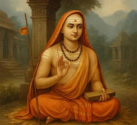
| Advaita Vedanta: Shankaracharya propounded the philosophy of non-dualism (Advaita), according to which Brahman is the ultimate reality and the individual soul is ultimately identical with Brahman. He considered ignorance (Avidya) the cause of bondage and knowledge (Jnana) the means of liberation.
|
Ramanujacharya (11th-12th century) 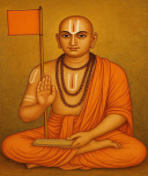
| Vishishtadvaita: Ramanujacharya developed the philosophy of qualified non-dualism (Vishishtadvaita). He argued that Brahman, identified with Vishnu or Narayana, is the supreme reality, while individual souls and the material universe are real and inseparably dependent on God. He emphasised devotion (Bhakti) and surrender as important paths to liberation
|
Madhvacharya (13th century) 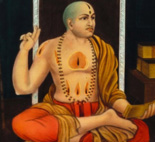
| Dvaita Vedanta: Madhvacharya propounded dualism (Dvaita), maintaining that God, individual souls and matter are distinct realities. Vishnu is the supreme being, and the soul can never become identical with God. He emphasised devotion, divine grace and the supremacy of Vishnu as the means towards liberation.
|
Nimbarkacharya 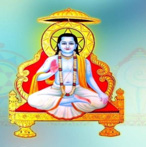
| Dvaitadvaita: Nimbarkacharya's philosophy is known as dualistic non-dualism (Dvaitadvaita) It maintains that the individual soul and the universe are both different from and dependent on Brahman. His tradition placed particular emphasis on devotion to Radha and Krishna, contributing to the development of Krishna-centred Bhakti.
|
Vallabhacharya (15th–16th century) 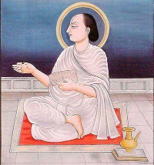
| Shuddhadvaita: Vallabhacharya developed the philosophy of pure non-dualism (Shuddhadvaita), identifying Krishna as the Supreme Brahman. Unlike the view that the world is merely an illusion, Vallabha regarded the world as a real manifestation of Brahman. He founded the Pushtimarg tradition, which emphasised loving devotion to Krishna through divine grace (Pushti), worship and loving service (Seva).
|
Chaitanya Mahaprabhu 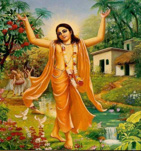
| Achintya Bhedabheda: Chaitanya Mahaprabhu popularised devotion to Radha and Krishna, especially through congregational chanting (Sankirtana). His tradition is associated with Achintya Bhedabheda, or the inconceivable simultaneous oneness and difference between God and the individual soul. It made emotional devotion, chanting and collective worship central to Krishna Bhakti, particularly in Bengal and Odisha.
|
Spread of Bhakti Movement
The Bhakti Movement, which emerged in South India gradually spread to other parts of India. It evolved from regional devotional traditions into a broad religious and socio-cultural movement.
1. Spread to Karnataka (10th-12th centuries)
The Virashaiva or Lingayat movement, associated with Basavanna (Basava) in the 12th century, challenged caste-based discrimination, ritualism and the dominance of Brahmanical religious practices in the Karnataka region. Its followers emphasised devotion to Shiva, equality among devotees and the dignity of labour.
- Major saints: Basavanna, Allama Prabhu and Akka Mahadevi.
- Literary contribution: The saints composed Vachanas in Kannada.
2. Spread to Maharashtra (13th–17th centuries)
In Maharashtra, the Bhakti Movement developed around the worship of Vithoba (Vitthal) at Pandharpur. The Varkari tradition promoted devotion through pilgrimage, devotional singing and collective worship. It also contributed to the growth of Marathi literature and questioned social distinctions.
- Major saints: Jnaneshwar (Dnyaneshwar), Namdev, Eknath, Tukaram and Chokhamela.
- Literary contribution: Jnaneshwar composed the Jnaneshwari, a Marathi commentary on the Bhagavad Gita, while Tukaram became famous for his Abhangas (devotional verses).
3. Spread to North India (14th–16th centuries)
The Bhakti Movement gained considerable momentum in North India during the late medieval period. Ramananda is traditionally associated with the spread of Rama-centred devotion in North India. His teachings are often linked with the idea that devotion was open to people across caste and social boundaries. Two forms of worship- Saguna bhakti and Nirguna Bhakti become prominent in north India.
- Kabir, Guru Ravidas, Guru Nanak were prominent saints of Nirguna Bhakti.
- Tulsidas, Surdas, Mirabai were part of saguna bhati tradition.
4. Spread to Eastern India (15th–16th centuries)
In Eastern India, the Bhakti Movement developed distinctive traditions of Vaishnavism and Krishna devotion.
- Bengal: Chaitanya Mahaprabhu (1486–1533) popularised devotion to Radha and Krishna through Sankirtana, the collective chanting of divine names.
- Assam: Srimanta Sankardeva (15th–16th centuries) developed Ekasarana Nama Dharma, centred on devotion to Krishna, congregational prayer and devotional performance.
- Odisha: The Jagannath tradition at Puri provided an important centre of devotional worship. Chaitanya also spent a significant part of his later life in Puri.
5. Spread to Gujarat and Rajasthan
In Gujarat and Rajasthan, the movement became particularly associated with Krishna devotion.
- Narsinh Mehta (15th century): A Gujarati saint-poet known for his devotional compositions and the famous bhajan Vaishnava Jana To.
- Mirabai (approximately 16th century): A Rajput princess and Krishna devotee whose poetry expressed complete surrender to Krishna and challenged conventional expectations of royal and domestic life.
Impact of Bhakti Movement
The impact of the bhakti movement was multidimensional from religious to cultural to social.
- Religious impact: The movement strengthened personal devotion as an important path to spiritual liberation rather than elaborate rituals.
- Impact on the caste system: Several saints challenged caste-based discrimination, Saints such as Kabir, Ravidas, and Basava taught that salvation was open to all, regardless of birth. This weakened the idea that only upper castes or Brahmins had spiritual authority.
- Reduced priestly control: People were encouraged to connect with God directly through devotion, prayer, and singing. This reduced dependence on priests.
- Greater role for women: Women saints such as Mirabai, Andal, and Akka Mahadevi expressed their faith publicly through songs and poetry. Their participation challenged some traditional gender restrictions.
- Growth of regional languages: Saints preached in languages people understood such as Tamil, Marathi, Hindi, Punjabi, and Bengali, This helped develop regional literature and made religious ideas accessible to ordinary people.
- Development of music and poetry: Bhajans, kirtans, and devotional songs became important forms of worship. This created a rich tradition of religious music, poetry, and art.
- Religious harmony: Saints like Kabir and Guru Nanak criticised strict rituals in both Hinduism and Islam and emphasised a common spiritual truth.
- Social reform and service: Ideas such as equality, compassion, seva (service), charity, and community kitchens helped create a spirit of social responsibility.
Criticism and limitations of the Bhakti Movement
The main criticism is that the Bhakti movement inspired equality in religion but did not fully change society.
Main criticisms:
- It did not abolish caste: Many saints preached equality before God, but untouchability and caste-based discrimination continued in daily life. The movement often focused on spiritual equality rather than removing caste from society.
- Limited social change: Its main goal was personal devotion and salvation, not organised political or economic reform.
- Gender inequality remained: Although women saints such as Mirabai and Akka Mahadevi were important, the movement generally did not challenge patriarchal family structures or women’s restricted social roles.
- Assimilation into orthodox religion: In many regions, Bhakti sects were later absorbed into Brahmanical traditions.
The Bhakti movement was powerful as a religious and moral protest, but critics argue it was not a complete social revolution because it did not end caste, patriarchy, or economic inequality.
Despite these limitations, the Bhakti Movement left a lasting imprint on Indian society by promoting compassion, spiritual inclusiveness and the dignity of individual devotion. Thus, the movement remains an important milestone in India's composite cultural heritage and continuing quest for social harmony.