UPSC Current Affairs
COLOMBO SECURITY CONCLAVE
On 20 November 2025, India hosted the 7th NSA-level Colombo Security Conclave (CSC) summit. India’s NSA Ajit Doval met his counterparts from: Sri Lanka, Maldives, Mauritius, Bangladesh (full members) Seychelles (observer, now to become full member) Malaysia (guest participant) The CSC is becoming an important forum for cooperation on security in the… CSC is a regional security platform for Indian Ocean countries.
VRAuthor Desk
4 min read

On 20 November 2025, India hosted the 7th NSA-level Colombo Security Conclave (CSC) summit. India’s NSA Ajit Doval met his counterparts from: Sri Lanka, Maldives, Mauritius, Bangladesh (full members) Seychelles (observer, now to become full member) Malaysia (guest participant) The CSC is becoming an important forum for cooperation on security in the… CSC is a regional security platform for Indian Ocean countries.
Date: 3 December 2025
1. Why in News?
- On 20 November 2025, India hosted the 7th NSA-level Colombo Security Conclave (CSC) summit.
- India’s NSA Ajit Doval met his counterparts from:
- Sri Lanka, Maldives, Mauritius, Bangladesh (full members)
- Seychelles (observer, now to become full member)
- Malaysia (guest participant)
- The CSC is becoming an important forum for cooperation on security in the Indian Ocean Region (IOR)
WHAT IS COLOMBO SECURITY CONCLAVE?
- CSC is a regional security platform for Indian Ocean countries.
- It focuses mainly on maritime safety, counterterrorism, cybersecurity, and fighting transnational crime
How it evolved
- 2011: Started as a trilateral group ? India, Sri Lanka, Maldives
- Later slowed due to political changes
- 2020: Revived as CSC focusing on maritime and non-traditional security
- 2022: Mauritius joined
- 2024: Bangladesh became a full member
- 2025: Seychelles being inducted as full member; Malaysia showed interest
CSC Secretariat ?
Colombo, Sri Lanka
OBJECTIVES OF CSC
CSC focuses on
five security pillars plus
marine pollution:
- Maritime Security
- Counterterrorism & De-radicalisation
- Combating Trafficking & Transnational Crime
- Cybersecurity & Critical Infrastructure Protection
- HADR (Humanitarian Assistance & Disaster Relief)
- Marine Pollution Response (additional area)
KEY ACHIEVEMENTS
A. Stronger Institution
- Appointment of the first CSC Secretary-General
- Progress on a CSC Training Academy
B. Better Operational Capacity
- Joint exercises
- Simulation drills
- Training for coast guards
- Indian hydrographers helping members map their waters
C. Improved Maritime Domain Awareness
- Close integration with IFC–IOR
- Better real-time intelligence and surveillance
D. Blue Economy Initiatives
- Virtual Centre of Excellence (2025) to support sustainable use of marine resources.
E. Growing Regional Trust
- More countries want to join the CSC framework
WHY IS 2025 MEETING IMPORTANT?
1. Expansion
- Seychelles joined as a full member ? shows strong regional trust in CSC.
2. India’s Deeper Engagement
- India is strengthening ties with maritime neighbours, especially as China’s presence in the Indian Ocean is rising.
3. Security Focus
The summit highlighted growing importance of:
- maritime security
- joint cooperation
- protecting Indian Ocean trade routes
4. Future Growth
- Malaysia’s participation indicates CSC may continue expanding.
WHY IS IOR IMPORTANT?
Geography
- Extends from Africa’s east coast to Australia’s west coast, including vital sea routes.
Key facts
- 1/3 of the world’s population lives around it
- 2/3 of global oil shipments move through it
- It is India’s trade lifeline
- India has a 4 million sq km EEZ here
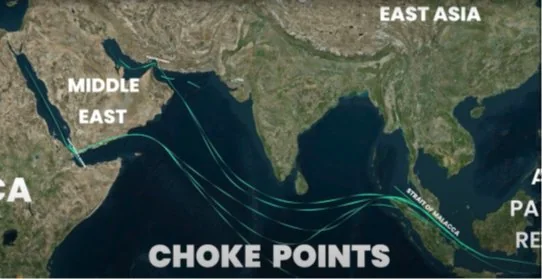
Choke Points
Important narrow passages like:
- Strait of Hormuz
- Strait of Malacca
- Bab-el-Mandeb
These make the region strategically crucial.
INDIA’S STRATEGY IN IOR
1. Policy Frameworks
- Neighbourhood First
- SAGAR (Security and Growth for All in the Region)
- MAHASAGAR Doctrine (2025) ? a broader, long-term vision
2. India as a Net Security Provider
India helps with:
- counter-piracy patrols
- fighting illegal fishing
- maritime terrorism
- information sharing (through IFC–IOR)
3. Close Ties with Littoral States
- Especially with Sri Lanka, Maldives, Mauritius, Seychelles.
4. Strong Regional Leadership
Active role in:
- IORA
- IONS
- BIMSTEC
- QUAD
- IPOI
5. HADR Leadership
- India responds first during disasters.
- Recent examples (2025):
- Operation Sagar Bandhu in Sri Lanka (floods)
- Operation Sadbhav in Myanmar, Laos, Vietnam (Typhoon Yagi floods)
CHALLENGES
1. Different Views on China
- India sees China's activities as a security challenge
- Many CSC members see China mainly as an economic partner
This difference affects coordination.
2. Weak Institutional Structure
- CSC works at NSA level only
- No joint budget or permanent operational mechanism yet
3. Domestic Political Changes
- Shifts in Maldives and Bangladesh affect stability
- Anti-India campaigns can disrupt cooperation
4. Overlap with Other Forums
CSC members also belong to:
Lack of coordination reduces effectiveness.
WAY FORWARD
A. Strengthen CSC Institution
- Hold meetings at Foreign Minister level
- Create clearer mandates and stronger political backing
B. Create a CSC Fund
To support joint patrols, training, and MDA systems.
C. Form Permanent Task Forces
Under each security pillar.
D. Boost Joint Maritime Operations
- Coordinated patrols
- Anti-IUU fishing missions
- HADR drills
E. Use Advanced Technology
- Satellite surveillance
- AI-based maritime tracking
- Better integration with IFC–IOR
F. Handle China Carefully
- Focus CSC on non-traditional security issues so the group stays united.
G. Link Development with Security
Work together on:
- blue economy
- climate resilience
- early warning systems
- fisheries management
H. Controlled Expansion
- Let new countries join gradually as observers first.
- Prelims: Key facts, institutions, locations and terminology in the article.
- Mains: Connect the topic with Environment, Economy, International Relations.
- Revision: Use the article headings to prepare concise notes and answer-writing points.
Test your understanding
Questions from this article
Prelims practiceWith reference to COLOMBO SECURITY CONCLAVE, consider the following statements:
- On 20 November 2025, India hosted the 7th NSA-level Colombo Security Conclave (CSC) summit.
- India’s NSA Ajit Doval met his counterparts from: Sri Lanka, Maldives, Mauritius, Bangladesh (full members) Seychelles (observer, now to become full member) Malaysia (guest participant)
- Sri Lanka, Maldives, Mauritius, Bangladesh (full members)
Which of the statements given above are correct?
- 1 and 2 only
- 2 and 3 only
- 1 and 3 only
- 1, 2 and 3
View answer
Answer: (d) 1, 2 and 3. All three statements are drawn from the article.
Mains practiceDiscuss the background, key issues and significance of COLOMBO SECURITY CONCLAVE for India.
Answer in 250 words.
View answer approach
- 1. Why in News?
- WHAT IS COLOMBO SECURITY CONCLAVE?
- KEY ACHIEVEMENTS
- WHY IS 2025 MEETING IMPORTANT?
- WHY IS IOR IMPORTANT?
Frequently asked questionsFrequently asked questions
Why is Colombo Security Conclave in the news?
On 20 November 2025, India hosted the 7th NSA-level Colombo Security Conclave (CSC) summit. India’s NSA Ajit Doval met his counterparts from: Sri Lanka, Maldives, Mauritius, Bangladesh (full members) Seychelles (observer, now to become full member) Malaysia (guest participant) The CSC is becoming an important forum for cooperation on security in the…
What are the key facts about Colombo Security Conclave?
CSC is a regional security platform for Indian Ocean countries. It focuses mainly on maritime safety, counterterrorism, cybersecurity, and fighting transnational crime How it evolved 2011: Started as a trilateral group ? India, Sri Lanka, Maldives Later slowed due to political changes 2020: Revived as CSC focusing on maritime and non-traditional security 2022: Mauritius joined 2024: Bangladesh became a full member 2025: Seychelles being inducted as full member; Malaysia showed…
Why is Colombo Security Conclave important for UPSC preparation?
The topic connects current developments with Environment, Economy, International Relations and is relevant for both objective revision and analytical answer writing.