HOW CRUSHED STONE COULD HELP FIGHT CLIMATE CHANGE?
Why in News
- On June 24, 2025, reports highlighted that crushed rock is being spread across farmland—from sugar plantations in Brazil to tea estates in India—as part of a novel method to combat climate change.
- This method, known as Enhanced Rock Weathering (ERW), is attracting global attention and investment for its potential to remove carbon dioxide (CO2) from the atmosphere.
WHAT IS ENHANCED ROCK WEATHERING?
- Enhanced Rock Weathering (ERW) is a climate change mitigation technique that aims to accelerate the natural process of rock weathering in order to capture and store atmospheric carbon dioxide.
- It involves spreading finely ground, quick-weathering rocks such as basalt over agricultural land.
- These rocks react with carbonic acid (formed when CO2 dissolves in rainwater or soil moisture), triggering a chemical reaction that locks CO2 into bicarbonates, which eventually form limestone.
HOW ERW WORKS?
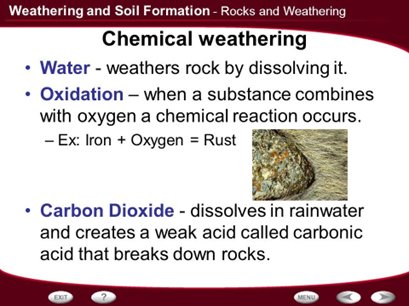
- Under natural conditions, rocks undergo weathering when rainwater containing dissolved CO2 forms carbonic acid (H2 CO3 ) and reacts with minerals in the rocks.
- This process binds carbon and washes it into oceans where it can precipitate as limestone (CaCO3 ).
 ERW speeds up this natural carbon capture process by:
- Using rocks like basalt, which weather quickly.
- Grinding them into a fine powder to increase surface area and reaction speed.
- Spreading them over farmland where moisture and microbial activity facilitate the reaction.
Effectiveness of ERW
- The effectiveness of ERW as a carbon removal method is still being evaluated.
- According to a U.S. study, applying 50 tonnes of basalt per hectare annually could remove up to 10.5 tonnes of CO2 over four years.
- However, field trials in Malaysia (on oil palm plantations) and Australia (on sugarcane farms) showed much lower CO2 removal rates, indicating that initial estimates may have been overly optimistic.
EFFICIENCY OF ERW
The efficiency of ERW depends on several factors:
- The type and grain size of the rock used.
- Soil composition and land management practices.
- Climate conditions, especially temperature and rainfall.
CHALLENGES IN MEASUREMENT
- One of the major challenges in ERW is accurately measuring the amount of carbon dioxide removed from the atmosphere.
- The most commonly used method measures cations (positively charged ions) released during the weathering process.
- However, these cations are released not only by reactions with carbonic acid but also by other stronger acids present in soil.
- As a result, there is a risk of overestimating the actual amount of carbon captured through ERW.
- Experts suggest that more scientific funding and improved verification techniques are needed to accurately quantify carbon removal through this method.
ADDITIONAL BENEFITS OF ERW
ERW provides multiple co-benefits beyond carbon capture:
- It increases soil alkalinity, which can boost crop yields and improve soil structure.
- The application of rock dust adds essential nutrients to the soil, aiding long-term soil health.
- Even if the rock reacts with non-carbonic acids, it may still neutralize acidic runoff, reducing ocean acidification and potentially preventing indirect CO2 emissions from water bodies.
- Moreover, basalt is abundantly available and often a quarrying byproduct, making the process relatively cost-effective and scalable.
RISKS & CONCERNS
While ERW is generally considered safe, there are some associated risks:
- Some types of quick-weathering rocks may contain toxic heavy metals, which could contaminate soil or water.
- Workers applying the finely ground rock must wear protective gear to avoid inhaling dust.
- The greatest concern is the overestimation of carbon credits. If companies purchase ERW-based credits based on inflated carbon capture figures, they may fail to truly offset their emissions, resulting in a net increase in atmospheric CO2.
GLOBAL IMPLEMENTATION OF ERW
ERW projects are being piloted and implemented in several countries across Europe, North America, Latin America, and Asia.
- In India, crushed basalt is being applied to tea plantations in Darjeeling.
- In Brazil, a project recently delivered the world’s first verified carbon-removal credits from an ERW initiative.
- In the United States, ERW is being trialed in soybean and maize fields.
Note: Connect with Vajirao & Reddy Institute to keep yourself updated with latest UPSC Current Affairs in English.
Note: We upload Current Affairs Except Sunday.