UPSC Current Affairs
CENTER DEFERS SHARAVATHY PUMPED STORAGE HYDROELECTRIC PROJECT
Context The Government of India has put on hold the proposal to divert 54 hectares of forest land for the 2,000 MW Sharavathy Pumped Storage Hydroelectric Project (PSHP) in Karnataka, citing serious ecological concerns. The decision was taken at the 11th meeting of the Forest Advisory Committee (FAC) under the Union Ministry of Environment, Forest and Climate Change (MoEFCC) on October 27, 2025. The minutes of the meeting warned of “enormous damage” to the biodiversity of the Western Ghats, one of the world’s 34 recognized global biodiversity hotspots.
VRAuthor Desk
4 min read
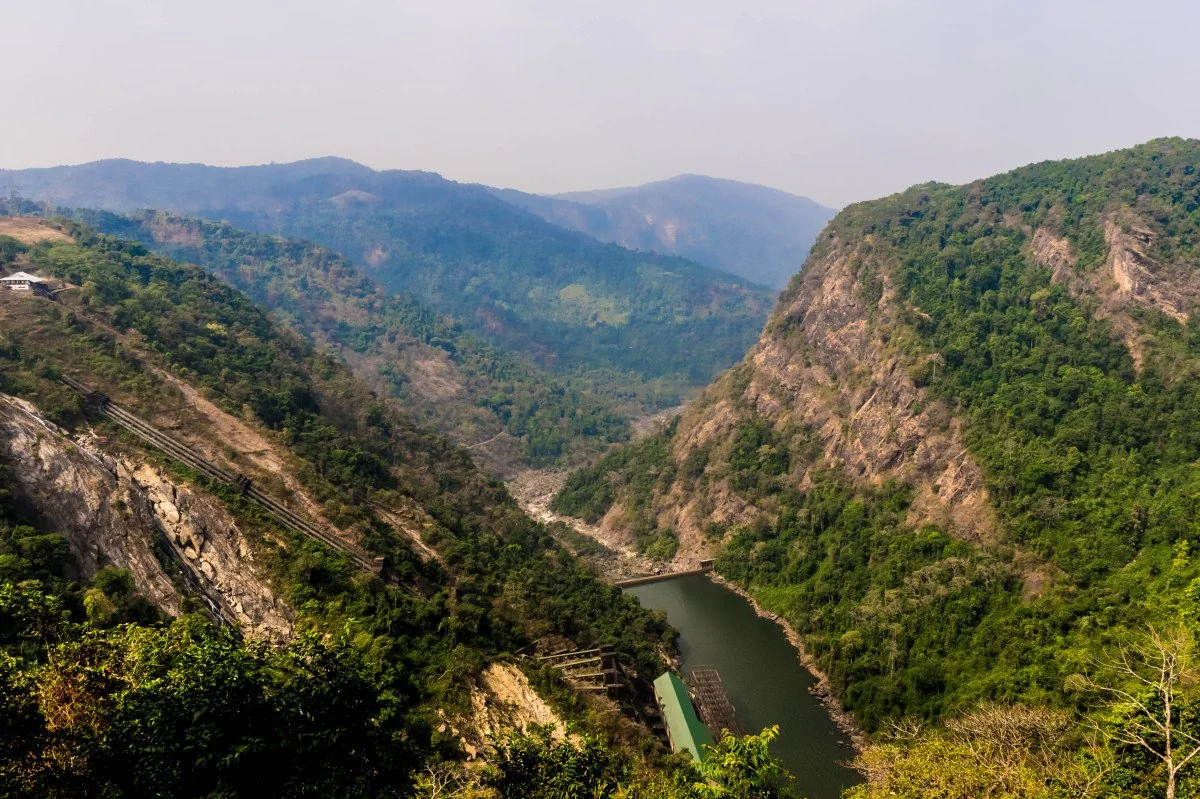
Context The Government of India has put on hold the proposal to divert 54 hectares of forest land for the 2,000 MW Sharavathy Pumped Storage Hydroelectric Project (PSHP) in Karnataka, citing serious ecological concerns. The decision was taken at the 11th meeting of the Forest Advisory Committee (FAC) under the Union Ministry of Environment, Forest and Climate Change (MoEFCC) on October 27, 2025. The minutes of the meeting warned of “enormous damage” to the biodiversity of the Western Ghats, one of the world’s 34 recognized global biodiversity hotspots.
Context
- The Government of India has put on hold the proposal to divert 54 hectares of forest land for the 2,000 MW Sharavathy Pumped Storage Hydroelectric Project (PSHP) in Karnataka, citing serious ecological concerns.
- The decision was taken at the 11th meeting of the Forest Advisory Committee (FAC) under the Union Ministry of Environment, Forest and Climate Change (MoEFCC) on October 27, 2025.
- The minutes of the meeting warned of “enormous damage” to the biodiversity of the Western Ghats, one of the world’s 34 recognized global biodiversity hotspots.
PROJECT OVERVIEW
| Parameter |
Details |
| Project Name |
Sharavathy Pumped Storage Hydroelectric Project (PSHP) |
| Location |
Sharavathy River Basin, Shivamogga District, Karnataka |
| Capacity |
2,000 MW |
| Type |
Pumped Storage Hydroelectric Project |
| Implementing Agency |
Karnataka Power Corporation Limited (KPCL) |
| Upper Reservoir |
Talakalale Dam |
| Lower Reservoir |
Gerusoppa Dam |
| Key Components |
5 tunnels, 8 pumping stations, underground powerhouse |
| Purpose |
To meet peak power demand, support renewable energy storage, and provide drinking water to Bengaluru |
| Project Model |
Similar to Telangana’s Kaleshwaram Project |
| Forest Land to be Diverted |
~54 hectares |
| Trees Affected |
Over 15,000 trees, many endemic to Western Ghats |
The
Forest Advisory Committee (FAC) deferred approval due to
multiple environmental red flags:
a) Location in an Ecologically Fragile Zone
- Lies within the Sharavathy Valley Lion-Tailed Macaque Sanctuary, in the central Western Ghats — a region of immense biodiversity.
- Forest types include tropical wet evergreen, semi-evergreen, and shola grasslands — ecosystems that cannot be restored once destroyed.
b) Habitat Loss and Endangered Species Threat
- Habitat supports species such as:
- Lion-Tailed Macaque (endangered, endemic)
- Tiger, Leopard, Sloth Bear, Wild Dog
- King Cobra, Malabar Giant Squirrel, Hornbills
- A wildlife census recorded 730 Lion-Tailed Macaques (LTMs) in the sanctuary.
- FAC warned that loss of canopy cover will fragment habitats, threatening survival of LTMs — already restricted to small forest pockets.
c) Ecological Irreversibility
- Wet evergreen forests are “climax ecosystems” — complex, mature, and impossible to replicate through compensatory afforestation (CA).
- FAC stated that the proposed CA sites are ecologically different from the habitats being lost.
d) Geological and Engineering Risks
- Project involves deep tunneling (up to 3.2 km) and excavation up to 500 m.
- Lies in Seismic Zone 3, raising landslide and erosion risks due to slope cutting and blasting, especially during heavy monsoons.
- The combination of seismic vulnerability + high rainfall could be disastrous for both ecology and human settlements.
e) Legal and Procedural Issues
- Transmission line routes may violate the Forest (Conservation) Act, 1980.
- Forest clearance for these lines is not yet obtained.
- Deputy Inspector General of Forests (Regional Office, Bengaluru) and the Chief Wildlife Warden, Karnataka, have both not recommended the project.
f) FAC Recommendations
- Project deferred pending:
- Detailed hydrological and geological studies.
- A scientifically designed wildlife mitigation plan.
- Redesign of project layout to minimize tree felling.
- Consultations with Chief Wildlife Warden and adherence to approved Wildlife Management Plan.
ECOLOGICAL & LEGAL CONCERNS
| Concern |
Details |
| Biodiversity Threat |
Project threatens rare, endemic species of the Western Ghats. |
| Loss of Climax Forests |
These forests are centuries old and not replicable through replantation. |
| Violation of Forest (Conservation) Act, 1980 |
Possible breach in transmission line alignment and forest diversion procedures. |
| Seismic & Hydrological Risks |
Excavations in fragile, high-rainfall terrain could trigger landslides. |
| Ecosystem Services Loss |
Potential impact on carbon sequestration, soil stability, and watershed regulation. |
ABOUT SHARAVATHI RIVER
| Feature |
Details |
| Origin |
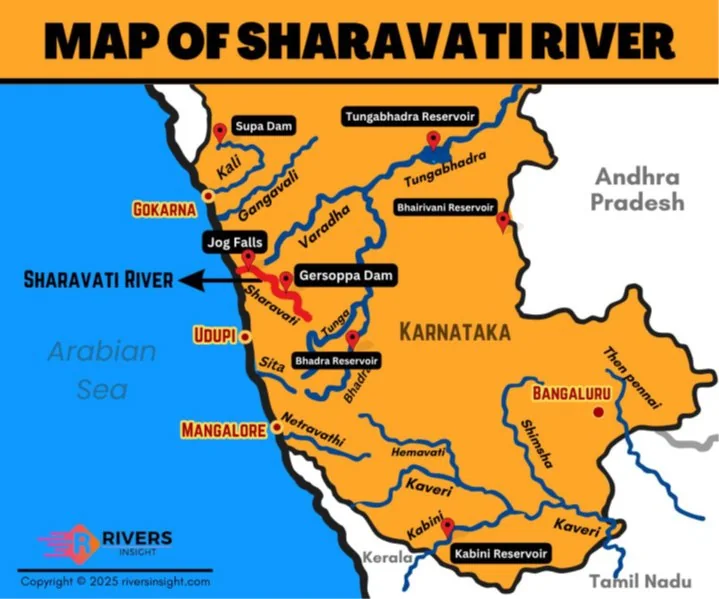
Western Ghats, Shivamogga District, Karnataka |
| Flow Direction |
Westward-flowing river — one of the few in India |
| Mouth |
Empties into the Arabian Sea near Honnavar, Uttara Kannada district |
| Total Length |
~128 km |
| Basin Area |
~2,985 sq km |
| Major Tributaries |
Nandihole, Haridravathi, Mavinahole, Hilkunji, Yennehole, Hurlihole, Nagodihole |
| Notable Feature |
Forms the Jog Falls (253 m) — one of India’s highest waterfalls |
| Ecosystem |
Mix of evergreen forests, grasslands, and rocky outcrops within the Western Ghats |
WESTERN GHATS: GLOBAL BIODIVERSITY HOTSPOT
- Spread across 6 states: Gujarat, Maharashtra, Goa, Karnataka, Kerala, and Tamil Nadu.
- Recognized as one of the world’s 34 biodiversity hotspots by Conservation International.
- Home to over 7,400 plant species and 139 mammal species, with many endemic to the region.
- Designated as a UNESCO World Heritage Site (2012).
- Acts as a climate regulator and major watershed for peninsular India.
IMPORTANCE OF PUMPED STORAGE PROJECT
| Aspect |
Purpose/Benefit |
| Energy Storage |
Stores surplus energy during off-peak hours, releases it during peak demand. |
| Grid Stability |
Helps integrate variable renewable energy sources like solar and wind. |
| Sustainability Challenge |
Must balance energy security with ecological integrity. |
WAY FORWARD
- Reassess Project Design: Explore alternative, less sensitive sites for pumped storage.
- Comprehensive Impact Studies: Include biodiversity, seismic, and hydrological assessments.
- Adopt Green Alternatives: Promote distributed solar + battery systems for energy storage.
- Strengthen Ecosystem-Based Management: Implement Western Ghats Ecology Expert Panel (WGEEP) and Kasturirangan Report
- Community Engagement: Ensure participation of local and tribal communities in decision-making.
- Prelims: Key facts, institutions, locations and terminology in the article.
- Mains: Connect the topic with Environment, Economy, International Relations.
- Revision: Use the article headings to prepare concise notes and answer-writing points.
Test your understanding
Questions from this article
Prelims practiceWith reference to CENTER DEFERS SHARAVATHY PUMPED STORAGE HYDROELECTRIC PROJECT, consider the following statements:
- The Government of India has put on hold the proposal to divert 54 hectares of forest land for the 2,000 MW Sharavathy Pumped Storage Hydroelectric Project (PSHP) in Karnataka, citing serious ecological concerns.
- The decision was taken at the 11th meeting of the Forest Advisory Committee (FAC) under the Union Ministry of Environment, Forest and Climate Change (MoEFCC) on October 27, 2025.
- The minutes of the meeting warned of “enormous damage” to the biodiversity of the Western Ghats, one of the world’s 34 recognized global biodiversity hotspots.
Which of the statements given above are correct?
- 1 and 2 only
- 2 and 3 only
- 1 and 3 only
- 1, 2 and 3
View answer
Answer: (d) 1, 2 and 3. All three statements are drawn from the article.
Mains practiceDiscuss the background, key issues and significance of CENTER DEFERS SHARAVATHY PUMPED STORAGE HYDROELECTRIC PROJECT for India.
Answer in 250 words.
View answer approach
- PROJECT OVERVIEW
- ECOLOGICAL & LEGAL CONCERNS
- ABOUT SHARAVATHI RIVER
- WESTERN GHATS: GLOBAL BIODIVERSITY HOTSPOT
- IMPORTANCE OF PUMPED STORAGE PROJECT
Frequently asked questionsFrequently asked questions
Why is Center Defers Sharavathy Pumped Storage Hydroelectric Project in the news?
Context The Government of India has put on hold the proposal to divert 54 hectares of forest land for the 2,000 MW Sharavathy Pumped Storage Hydroelectric Project (PSHP) in Karnataka, citing serious ecological concerns. The decision was taken at the 11th meeting of the Forest Advisory Committee (FAC) under the Union Ministry of Environment, Forest and Climate Change (MoEFCC) on October 27, 2025.
What are the key facts about Center Defers Sharavathy Pumped Storage Hydroelectric Project?
The minutes of the meeting warned of “enormous damage” to the biodiversity of the Western Ghats, one of the world’s 34 recognized global biodiversity hotspots. PROJECT OVERVIEW Parameter Details Project Name Sharavathy Pumped Storage Hydroelectric Project (PSHP) Location Sharavathy River Basin, Shivamogga District, Karnataka Capacity 2,000 MW Type Pumped Storage Hydroelectric Project Implementing Agency Karnataka… Forest types include tropical wet evergreen, semi-evergreen, and shola grasslands — ecosystems that cannot be restored once destroyed.
Why is Center Defers Sharavathy Pumped Storage Hydroelectric Project important for UPSC preparation?
The topic connects current developments with Environment, Economy, International Relations and is relevant for both objective revision and analytical answer writing.